


Anderson LimaSoftware Engineer & Architect
October 24, 2026
9 min read
0 views

A team needs to add observability to a service. The task looks small, yet it depends on another group granting access, specialists configuring the system and security approving the change. The team accountable for the product waits in queues it cannot control. Adding people or demanding more autonomy may not solve the problem: how responsibilities are distributed is part of the system producing the delay.
In Team Topologies, Matthew Skelton and Manuel Pais ask readers to examine that system. The book provides a language for discussing who should own a value stream, how much complexity a team can manage and how two groups should interact. I recommend it to people involved in organizational design, architecture, platform engineering or engineering management. Its best use is diagnosis and experimentation; its worst use is turning four names into mandatory boxes on a new organization chart.
This review uses the second edition, published by IT Revolution on September 23, 2025. The first edition appeared in 2019. The current edition retains the core structure and adds case studies, a new foreword and afterword, according to the publisher. The authors' book page also records that the second edition corrected errata from the first.
The book combines an introduction to teams as a unit of delivery with patterns for organizational design and interaction. It is not a manual for carrying out a reorganization in one move. Its recurring question is how to make the flow of change clearer and more sustainable by reducing dependencies that force teams to negotiate every task.
That ambition makes the book relevant beyond engineering, but context still matters. A pattern for organizing software flows does not prove that a structure will work in a particular company. Readers must compare the ideas with their product, architecture, regulation, available people and operational constraints.
The model describes four team types, identified by their primary responsibility:
These types help ask why a team exists and who benefits. They are not job titles, career stages or immutable departments. A small organization may combine responsibilities; that does not remove the need to make boundaries, capacity and context-switching costs explicit. In a large company, a platform can be a coordinated grouping of several teams rather than one central team.
The stream-aligned type is a useful reference because it brings work closer to an outcome for users. It does not mean every team must master every system or maintain every piece of infrastructure. A genuinely specialized subsystem may warrant another boundary. That decision calls for evidence about real complexity and dependencies, not the fashionable design of the moment.
Team types become more useful when each relationship has a clear intent. The book distinguishes collaboration, facilitation and consuming a service:
A relationship can change. Collaboration may help discover what internal platform users need. Facilitation may support the first adoption. Once the flow is understood, part of the capability can become a documented service. Keeping intense collaboration forever is costly; turning an unknown problem into a rigid service can push the complexity back onto the people who need to solve it.
These modes are working agreements, not labels alone. A service relationship needs to explain what is available, how to get support, which risks remain with the consumer and how changes will be communicated. Facilitation needs a learning objective. Collaboration needs a shared problem, a date to revisit the arrangement and the freedom to end it.
Free and paid products to turn ideas into a foundation you can actually ship.
13 products available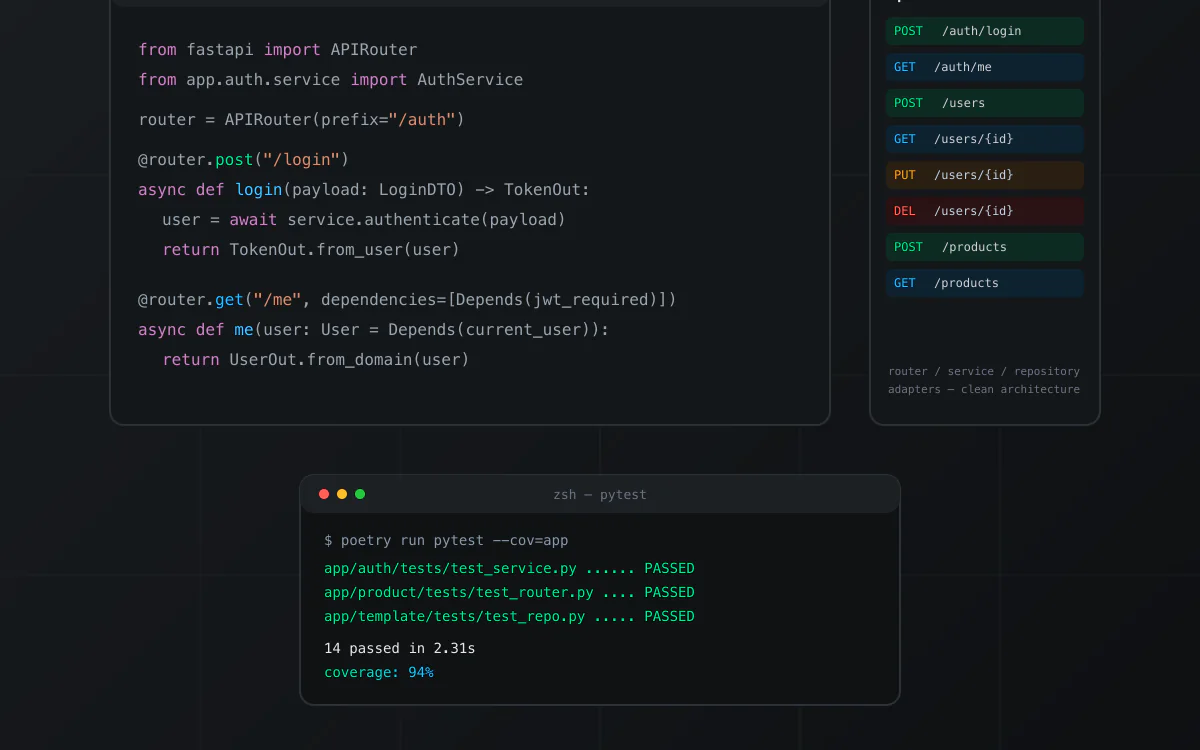
nextjs · boilerplate
Boilerplate de API em Python com FastAPI, organizado em Clean Architecture (router, service, repository e adapters por módulo). Inclui autenticação JWT com hashing bcrypt, MongoDB, testes com pytest e cobertura, Dockerfile e docker-compose para subir localmente, e documentação Swagger/OpenAPI automática. Repositório de origem privado; snapshot técnico verificado antes da publicação.
View product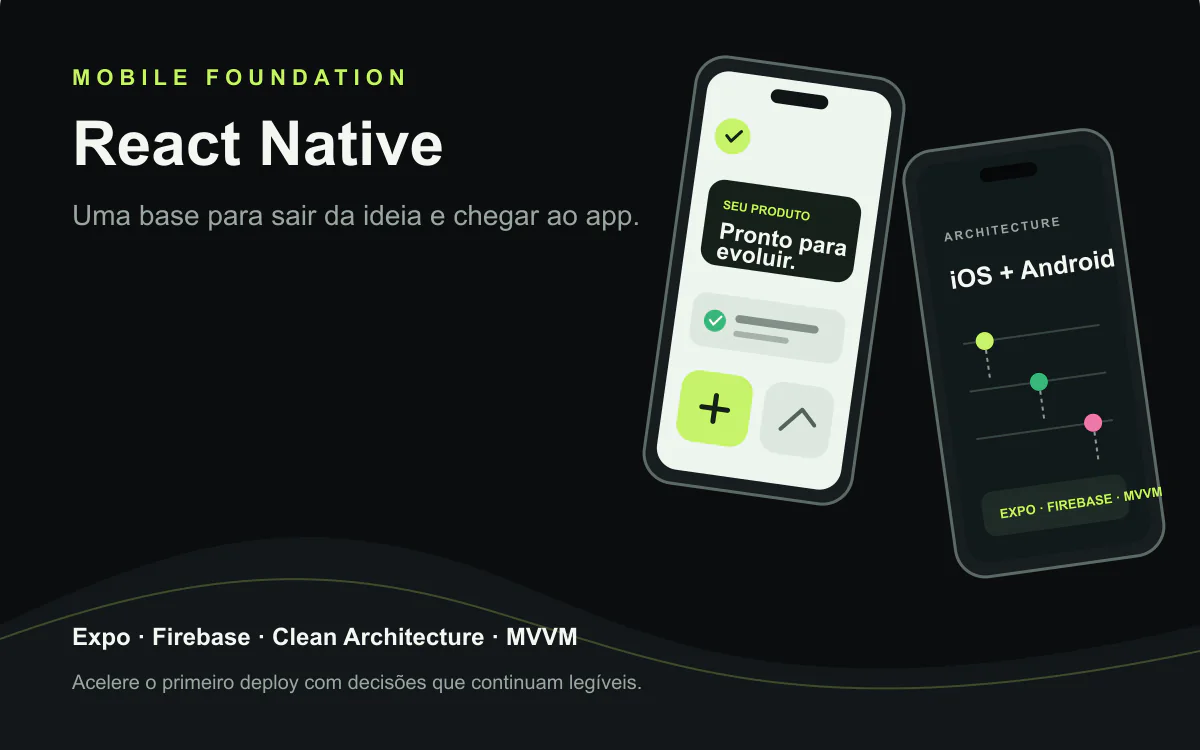
react · boilerplate
A React Native foundation for iOS and Android apps with Expo, Clean Architecture, MVVM, Firebase, and native modules. Technical reference from VaiDeFut, with public Google Play distribution and a documented iOS publishing flow.
View product
nextjs · boilerplate
A free open-source kit for getting started with coding agents across Claude Code, Codex, Gemini, Copilot, and OpenCode. The public repository confirms an MIT license.
View product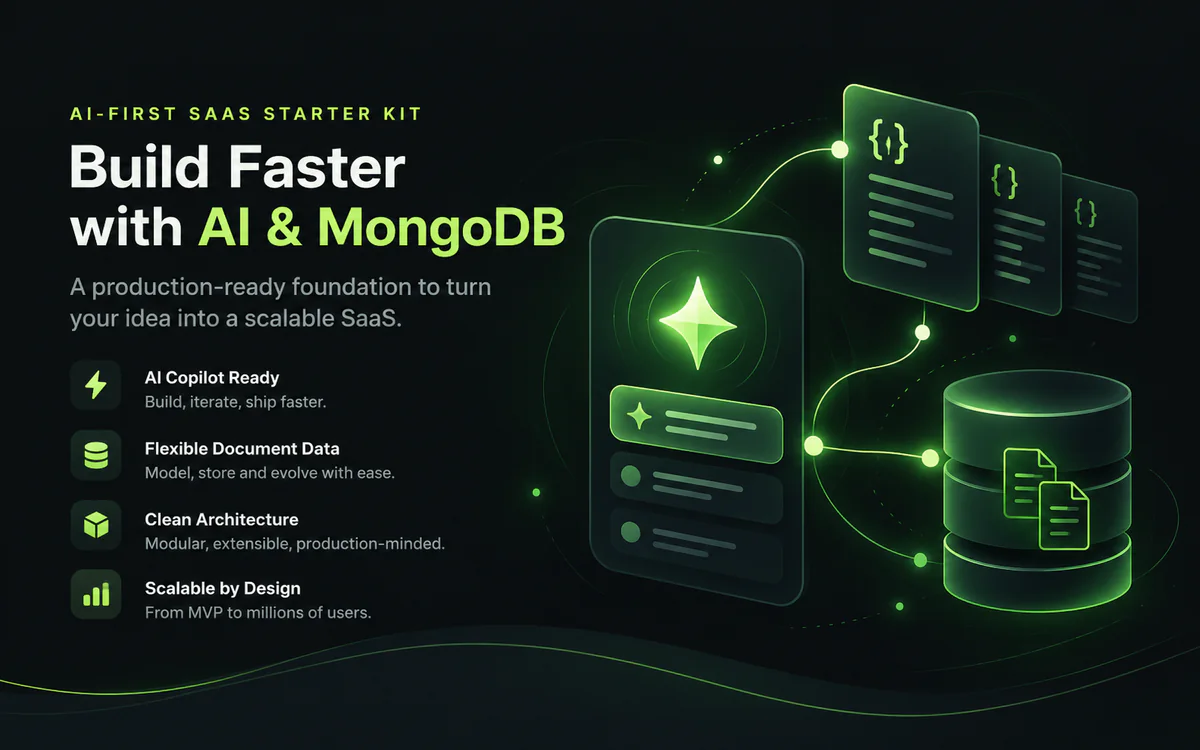
nextjs · boilerplate
A white-label AI-first foundation for shipping SaaS products with Next.js, chat, RAG, memory, tenants, and documentation. The verified snapshot documents Supabase rather than MongoDB; that limitation is explicit. MongoDB, Redis, and RabbitMQ require a compatible integration/configuration.
View product
nextjs · boilerplate
An advanced white-label, multi-tenant AI-first foundation for accelerating products with Next.js, chat, RAG, memory, and documentation. The verified snapshot does not prove a distinct Ultra layer; that limitation stays explicit while provider, cache, and queue swaps remain visible.
View product
nextjs · boilerplate
A white-label, multi-tenant foundation for turning an idea into an AI-first SaaS with Next.js, chat, RAG, memory, and documented security. The verified snapshot uses Supabase; the name identifies the source repository. Provider, cache, and queue boundaries stay explicit; Redis and RabbitMQ are configurable integrations.
View product
react · portfolio
A one-time contribution that supports free technical content, research, and the continuity of relevant projects published by Anderson Lima. You choose the amount; there is no subscription.
View product
react · boilerplate
A free React starter for building a reliable test suite from the first commit, combining Vitest, Testing Library, Playwright, Vite, TypeScript, Zustand, React Query, MirageJS, and PWA. The repository does not declare an SPDX license; review its terms before commercial use.
View product
react · portfolio
A public React, TypeScript, and Vite monorepo for exploring a component library with a native-inspired visual language. The current README is minimal and does not declare an SPDX license; treat it as a free preview.
View product
nextjs · saas
An AI-first SaaS boilerplate with Next.js, Supabase, Stripe, and provider routing to move from the first prompt toward a real deployment faster. AI, data, email, cache, and queue adaptations stay explicit; Redis and RabbitMQ are configurable integrations.
View product
react · saas
A React + TypeScript starter for multi-tenant SaaS with Firebase, Atomic Design, themes, PWA, product screens, MirageJS, and Gemini chat extensible to other providers. Validate production requirements, costs, and integrations before publishing.
View product
react · boilerplate
A public React starter with TypeScript, Zustand, React Query, Tailwind CSS, PWA, and documented AI integrations. The repository does not declare an SPDX license; review its terms before commercial use.
View product
nextjs · saas
A Next.js, TypeScript, and Tailwind CSS SaaS landing page with SEO, themes, i18n, PWA, and integration points for auth, Stripe, and AI. A clear foundation for leaving the blank screen behind and shaping your positioning.
View productContinue exploring similar topics

Use Frederick Brooks to inspect dependencies, integration and training before trying to recover a deadline by adding people.
Use Peopleware to investigate interruptions, trust and working conditions without reducing people to individual metrics.

Apply Michael Nygard's approach to timeouts, isolation and recovery through a controlled failure exercise.
A 47-point checklist to find bugs, security risks, and performance issues before launch.
Production-tested templates trusted by developers. Save weeks of setup on your next project.
The argument about cognitive load shifts the conversation from “this team is not delivering” to “how many technologies, domains, interfaces and responsibilities must this team keep in mind?” Adding a system, an on-call duty, a security obligation or an internal consumer increases the effort required to understand and make decisions. The problem can exist before it appears as an individual failure or a delayed card.
This does not turn cognitive load into a universal number. A quick perception survey can start a conversation, but it cannot measure capacity, health or quality on its own. Combine reports from people operating the system with observable signals: interruptions, tasks requiring specialists, rework, simultaneous work and recurring questions. Do not use those signals to rank teams; use them to locate complexity that could be removed, shared or better supported.
The book connects this human limit with technical boundaries. If every product change requires coordinating several repositories and teams, the architecture may reflect a tightly coupled communication structure. That connection is not destiny: teams can change contracts, interfaces and responsibilities. Organizational topologies should evolve as goals and dependencies change, instead of being treated as a permanent snapshot.
Consider a fictional exercise. Over four weeks, a team records eight requests to enable telemetry on services. Six follow the same configuration. Each consumes 45 minutes from the product team to adjust and verify parameters, plus 30 minutes from a specialist. That is 4.5 hours of product-team effort and 3 hours of specialist time. The six repeated requests have a median wait of three business days. The other two are special cases that still require analysis.
The diagnosis points to repeatable work, but it does not prove that the platform team should take over all observability. First talk with requesters and providers: which steps verify security, which fields vary, where errors occurred and which operations must remain under the consuming service's control?
One testable hypothesis is to offer documented defaults for the six repeated cases and preserve specialist support for exceptions. Pilot with a small number of teams. Record time to first valid telemetry, number of interactions, support minutes, configuration failures and whether consumers can correct an alert. Compare equivalent tasks before and after; include work the new platform might transfer to another group.
The exercise does not report a later result. Reduced waiting is a question to test, not an assumed win. If the new path still requires a meeting, manual permission and intervention for each service, the queue only changed names. If it removes necessary controls, apparent speed buys operational risk. The service improves when consumers can complete the common path with confidence while exceptions remain visible.
The strength of Team Topologies is making cross-team dependencies central to software design. Rather than telling teams to “communicate better,” its language offers questions about purpose, autonomy, capacity and interaction. That helps distinguish an enabling team from a group receiving tickets indefinitely, or a platform from a team that merely centralizes permissions.
The risk is treating the taxonomy as a recipe. A platform that publishes tools without researching its consumers can create a larger catalog, maintenance costs and new obligations. A stream-aligned team without access to users, operations or domain knowledge may remain dependent on invisible approvals. A complicated-subsystem team can become a bottleneck if every specialist decision must pass through it.
The authors also warn against misusing platforms, such as overloading them with every shared responsibility or creating services without understanding their consumers. Their discussion of platform-team misuses reinforces that purpose and interaction matter more than a name. Read it as a critical companion, especially before announcing an internal platform.
The model does not, by itself, provide product design, detailed architecture, budgets, a hiring strategy or a transition plan. A new team boundary may take months to mature and require changes in ownership, knowledge and support. Reorganizing before understanding the flow can interrupt work and erase useful relationships. Start with an observed dependency and test a small change.
I recommend it to people responsible for software, platform, architecture and product teams who need to reduce waiting without hiding risk. Familiarity with a delivery flow and concrete examples of work crossing boundaries help. Beginners can follow the vocabulary, but application becomes clearer when there is a real system to examine.
Readers seeking a universal organization chart should begin with a different question: what work must flow to the people using the product? The book cannot replace conversations with teams or business decisions. Its value is in structuring those conversations and providing patterns that can be adapted or rejected for explicit reasons.
Accelerate relates organizational and technical capabilities to delivery performance; Peopleware broadens the view of working conditions. Team Topologies adds a lens for designing dependencies and responsibilities. Read together, these books help ask who decides, who operates, where work waits and how to tell whether a change reduced real effort.
Start with a recurring flow, not the whole organization chart. Record inputs, outputs, waiting, decisions and participants. Tentatively classify each group's purpose; then write down the intended interaction and the capability that must remain with the service consumer.
Choose a recurring dependency, state a hypothesis about its cause and agree on how to assess the effect. Track waiting time, quality, support and people's ability to operate. Revisit the boundary if it does not improve work on both sides.
I recommend Team Topologies as a practical vocabulary for redesigning relationships before moving boxes. It offers strong patterns, but readers need to resist turning them into universal, fixed types. The book has served you when you can explain which flow you want to improve, what cost the team carries and what evidence would change your mind.