


Anderson LimaSoftware Engineer & Architect
October 24, 2026
8 min read
0 views

A shipping provider slows down. The store keeps accepting requests, each waiting for connections and responses. Queues grow until product queries unrelated to shipping suffer too. An external failure has found a path into shared capacity.
Michael T. Nygard's Release It! deserves attention for putting that path at the center of design. I recommend it to developers who can deliver a feature and need to understand how it fails, contains damage and recovers. Its value is discussing behavior under pressure before an incident turns it into a requirement.
This review considers Release It! Second Edition: Design and Deploy Production-Ready Software, published in January 2018 according to Pragmatic Bookshelf. It combines failure cases, stability antipatterns, protective patterns and deployment and operational concerns.
Read cases by asking how failure propagated, not merely which component initiated it. A slow dependency can trigger the incident while unlimited queues, shared resources and unbudgeted repetition explain why an entire area stopped responding.
The book is not a complete reliability specification for every organization. It helps recognize risks and choose interventions; service objectives, capacity and operational responsibilities remain team decisions.
The official Stability Antipatterns extract discusses integration points, coupling and failure propagation. The important question is what happens after the initial fault, including blocked work and pressure transferred elsewhere.
In our original scenario, a shipping query holds a connection while waiting. Without limits, new requests arrive and wait too. Sharing execution capacity with other endpoints can trap unrelated operations behind that work. One socket timeout cannot describe every preceding queue wait.
Reactions can also cross instances: removing an overloaded instance redistributes load to survivors. Without capacity and admission control, this can accelerate another failure. Follow resources and routing decisions instead of attributing every delay to the vendor.
Assume a read-only shipping quote that creates neither reservation nor transport contract. The application targets a response within 1000 ms. For this hypothetical exercise, allocate 100 ms to preparation, at most 300 ms to the dependency segment and 100 ms to preparing the response. These are teaching choices, not measurements or production recommendations.
The 300 ms segment includes local capacity waiting: at most 20 ms for admission, with the remainder for the call. The overall deadline begins at request entry. It does not restart when another layer retries or when a connection finally becomes available.
| Illustrative time | Event | Expected decision |
|---|---|---|
0 ms | Request arrives; deadline 1000 ms | Record overall budget |
100 ms | Preparation completes | Attempt shipping admission |
120 ms | Slot obtained at the last permitted moment | Call has at most 280 ms remaining |
400 ms | Vendor has not replied | Stop waiting and report unavailability |
500 ms | Local response prepared | State that no valid quote exists |
This sequence cannot establish a latency objective. It assumes preparation and response take the indicated times. If they also block, enforce the deadline across the whole flow and recognize when the budget can no longer be met.
A timeout limits one wait; a deadline specifies how long work remains useful. Libraries can have separate connection and read timeouts as well as pool waiting. Setting only one permits the total to exceed the application's intention.
Stopping the wait at deadline does not establish that vendor work stopped. Check cancellation, connection termination and local task completion. A client returning errors while leaving background tasks running can respond quickly and still exhaust resources progressively.
Because this query is read only, repetition should not purchase transport again. It still consumes remote processing and may observe a changed tariff. Operations with effects would also need operation identity and unknown-outcome handling; timeout cannot justify assuming nothing happened.
Free and paid products to turn ideas into a foundation you can actually ship.
13 products available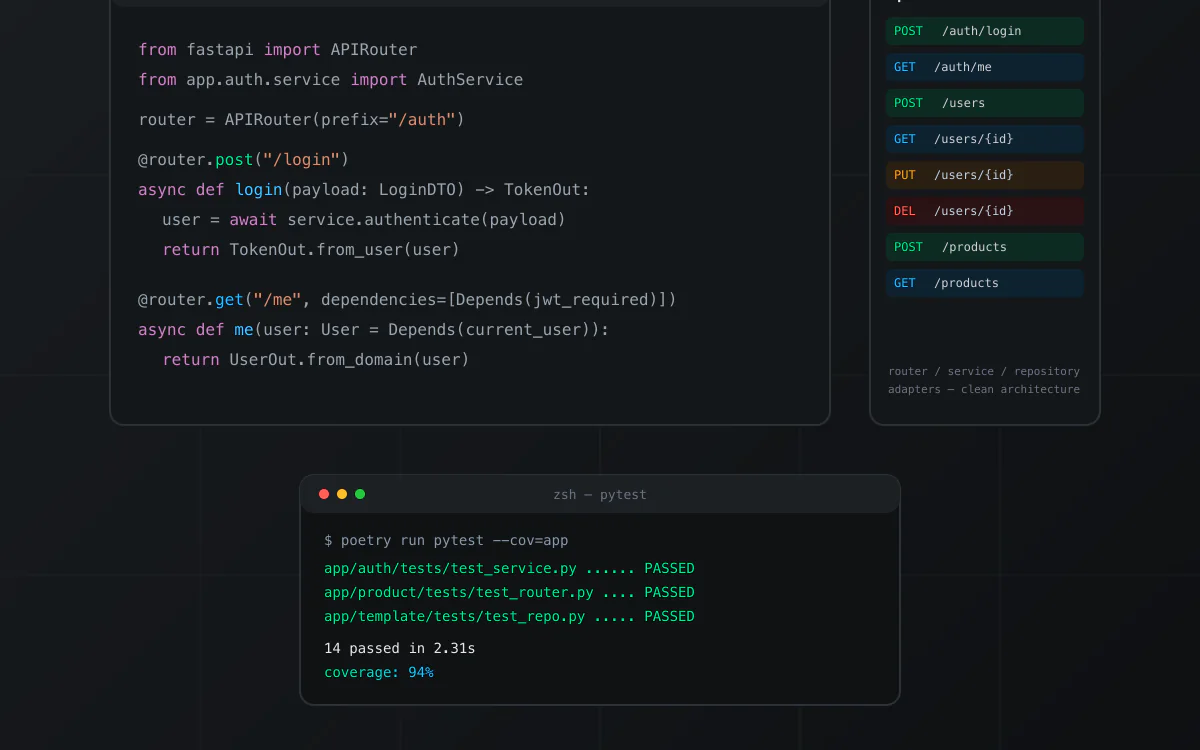
nextjs · boilerplate
Boilerplate de API em Python com FastAPI, organizado em Clean Architecture (router, service, repository e adapters por módulo). Inclui autenticação JWT com hashing bcrypt, MongoDB, testes com pytest e cobertura, Dockerfile e docker-compose para subir localmente, e documentação Swagger/OpenAPI automática. Repositório de origem privado; snapshot técnico verificado antes da publicação.
View product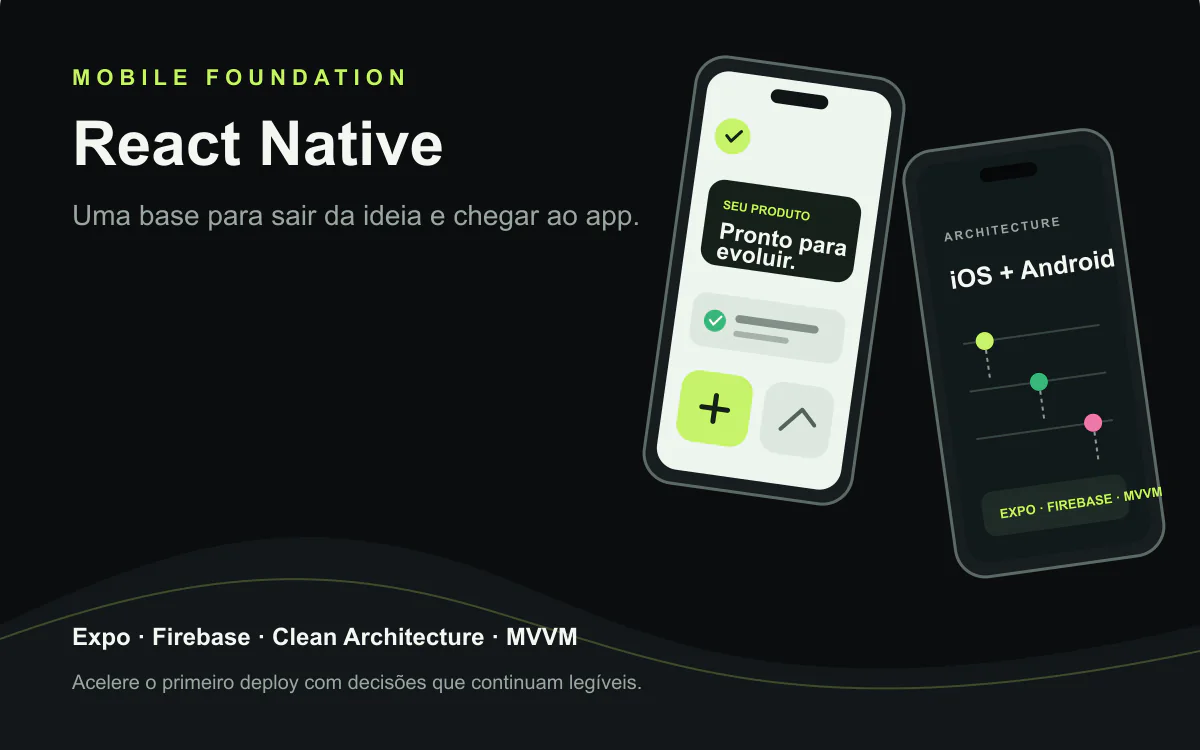
react · boilerplate
A React Native foundation for iOS and Android apps with Expo, Clean Architecture, MVVM, Firebase, and native modules. Technical reference from VaiDeFut, with public Google Play distribution and a documented iOS publishing flow.
View product
nextjs · boilerplate
A free open-source kit for getting started with coding agents across Claude Code, Codex, Gemini, Copilot, and OpenCode. The public repository confirms an MIT license.
View product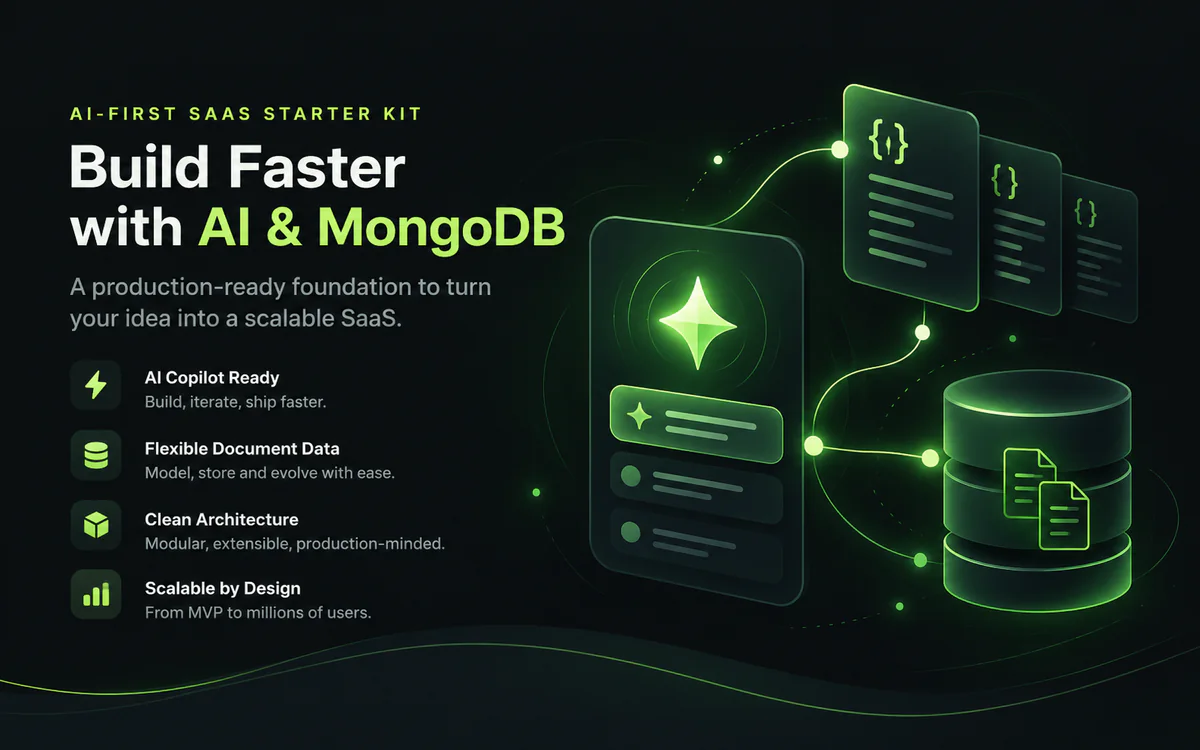
nextjs · boilerplate
A white-label AI-first foundation for shipping SaaS products with Next.js, chat, RAG, memory, tenants, and documentation. The verified snapshot documents Supabase rather than MongoDB; that limitation is explicit. MongoDB, Redis, and RabbitMQ require a compatible integration/configuration.
View product
nextjs · boilerplate
An advanced white-label, multi-tenant AI-first foundation for accelerating products with Next.js, chat, RAG, memory, and documentation. The verified snapshot does not prove a distinct Ultra layer; that limitation stays explicit while provider, cache, and queue swaps remain visible.
View product
nextjs · boilerplate
A white-label, multi-tenant foundation for turning an idea into an AI-first SaaS with Next.js, chat, RAG, memory, and documented security. The verified snapshot uses Supabase; the name identifies the source repository. Provider, cache, and queue boundaries stay explicit; Redis and RabbitMQ are configurable integrations.
View product
react · portfolio
A one-time contribution that supports free technical content, research, and the continuity of relevant projects published by Anderson Lima. You choose the amount; there is no subscription.
View product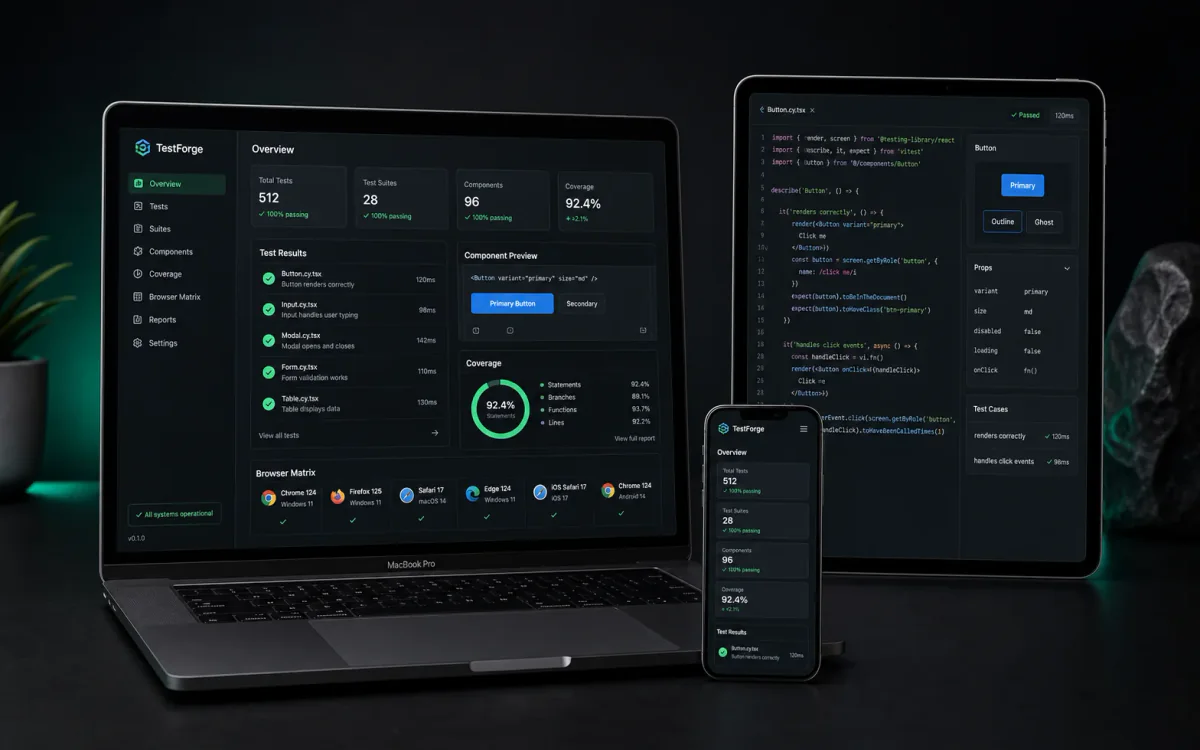
react · boilerplate
A free React starter for building a reliable test suite from the first commit, combining Vitest, Testing Library, Playwright, Vite, TypeScript, Zustand, React Query, MirageJS, and PWA. The repository does not declare an SPDX license; review its terms before commercial use.
View product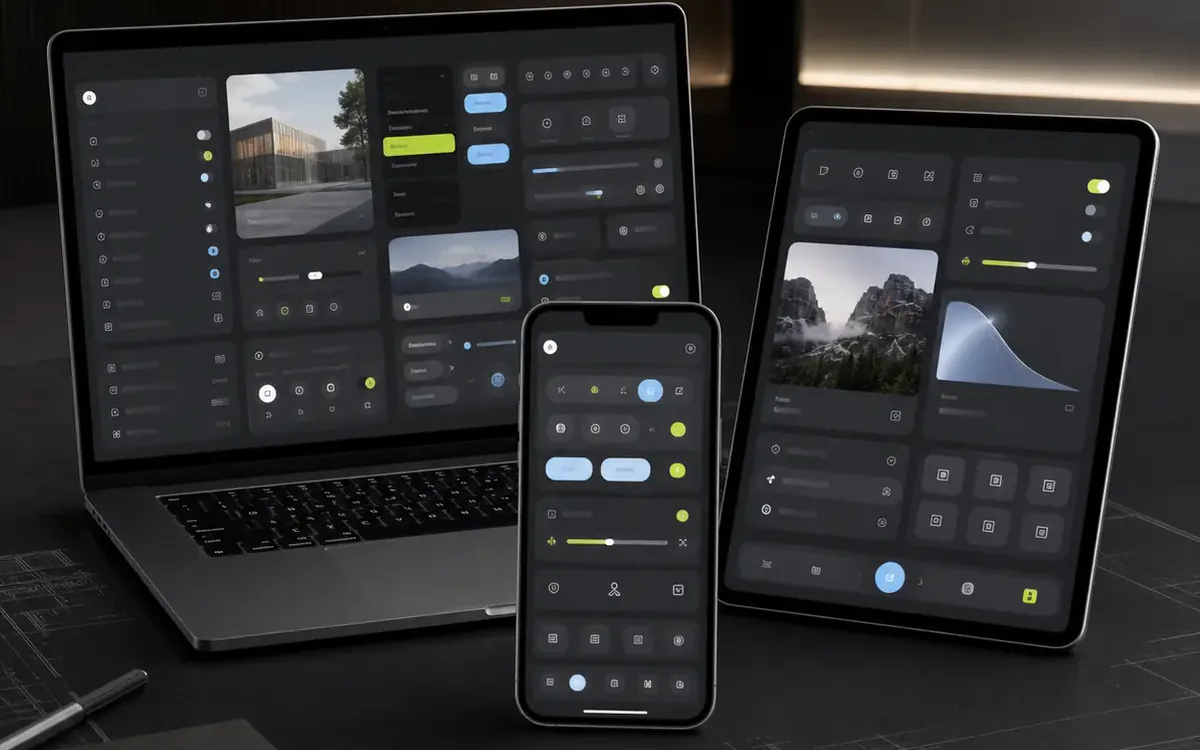
react · portfolio
A public React, TypeScript, and Vite monorepo for exploring a component library with a native-inspired visual language. The current README is minimal and does not declare an SPDX license; treat it as a free preview.
View product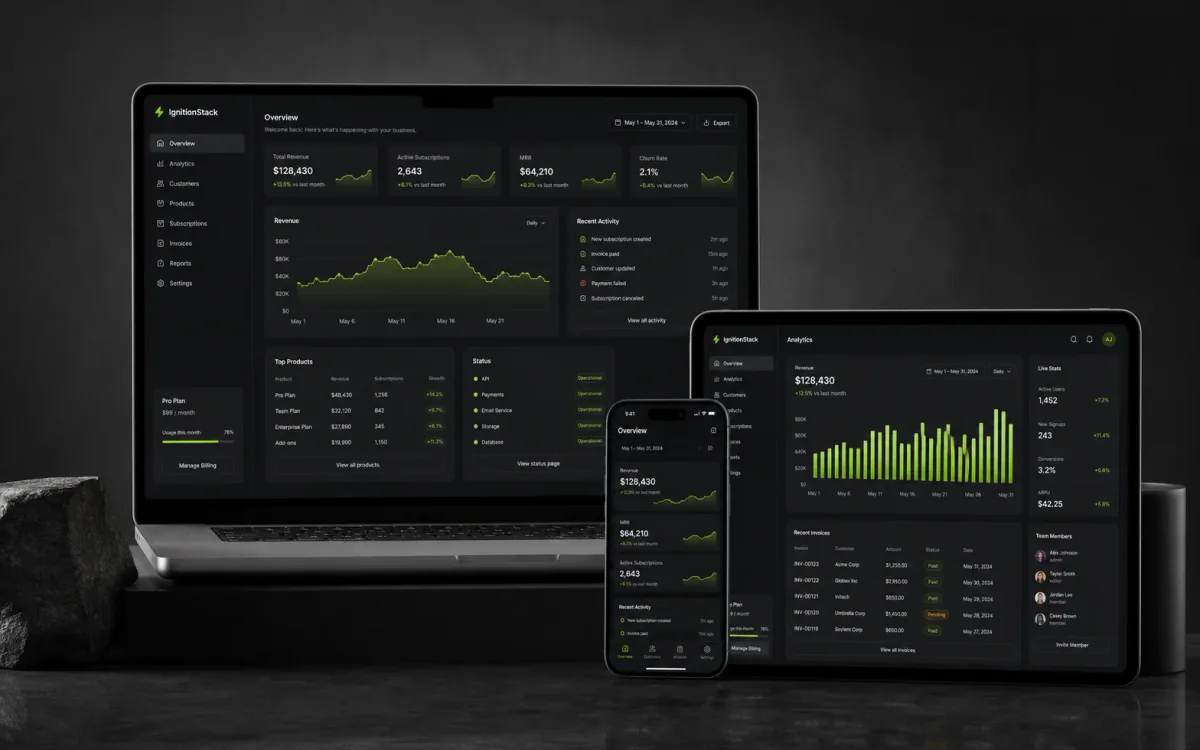
nextjs · saas
An AI-first SaaS boilerplate with Next.js, Supabase, Stripe, and provider routing to move from the first prompt toward a real deployment faster. AI, data, email, cache, and queue adaptations stay explicit; Redis and RabbitMQ are configurable integrations.
View product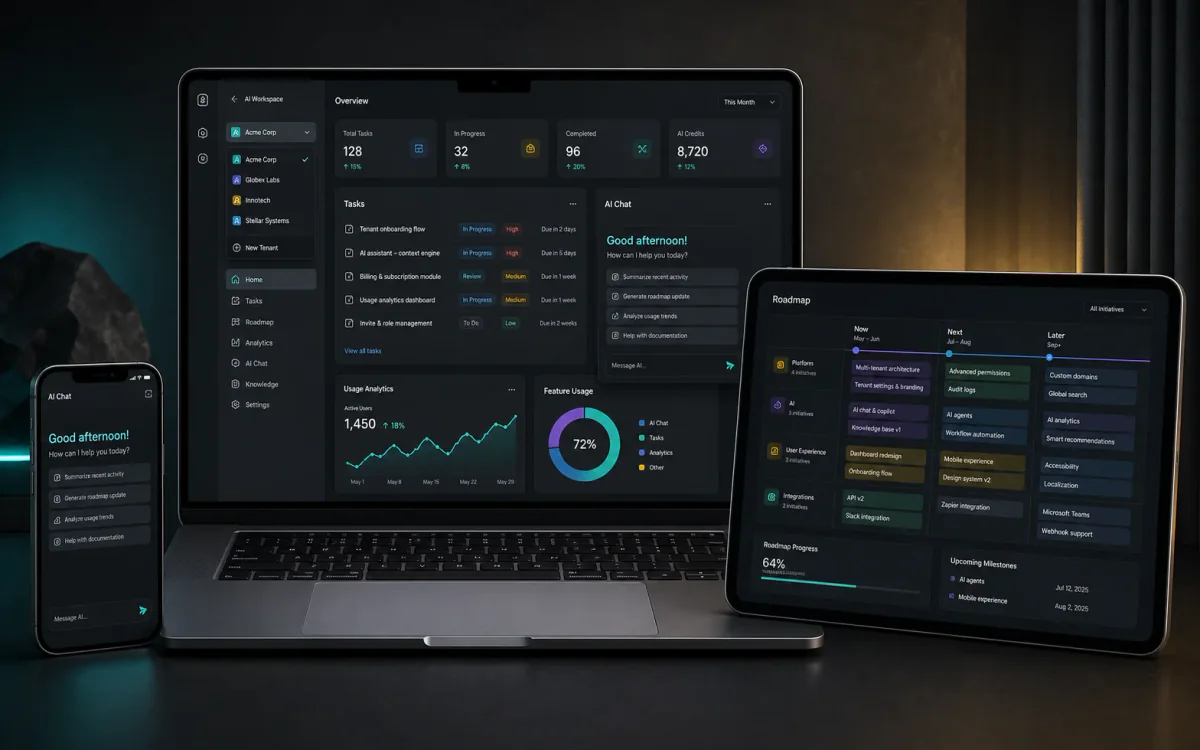
react · saas
A React + TypeScript starter for multi-tenant SaaS with Firebase, Atomic Design, themes, PWA, product screens, MirageJS, and Gemini chat extensible to other providers. Validate production requirements, costs, and integrations before publishing.
View product
react · boilerplate
A public React starter with TypeScript, Zustand, React Query, Tailwind CSS, PWA, and documented AI integrations. The repository does not declare an SPDX license; review its terms before commercial use.
View product
nextjs · saas
A Next.js, TypeScript, and Tailwind CSS SaaS landing page with SEO, themes, i18n, PWA, and integration points for auth, Stripe, and AI. A clear foundation for leaving the blank screen behind and shaping your positioning.
View productContinue exploring similar topics

Turn passive study into a learning project with direct practice, feedback and spaced retrieval.

Critical review of Rob Fitzpatrick: investigate real episodes, separate facts from hypotheses and do not mistake interviews for market validation.

Use Frederick Brooks to inspect dependencies, integration and training before trying to recover a deadline by adding people.
A 47-point checklist to find bugs, security risks, and performance issues before launch.
Production-tested templates trusted by developers. Save weeks of setup on your next project.
For the exercise, cap active local shipping calls at eight per instance and queued requests at ten. Reject new admission when the queue is full and remove requests waiting beyond 20 ms. Other application work uses separate capacity. These proposed limits require testing against actual load.
Three instances have a combined configured local ceiling of 24 active calls, not eight globally. Nor does this automatically bound remote work continuing after cancellation. Release a slot when its local resource really finishes; releasing at timeout response can conceal still-running tasks.
A circuit breaker adds another decision: suspend attempts after observed failures and allow controlled recovery probes. It replaces neither bounded queues nor concurrency caps. Calls can accumulate before opening; reopening without admission control can saturate the dependency again.
Define counted errors and distinguish outages from valid business refusals. No quote for a destination need not indicate a sick provider. Error-rate decisions need a window, minimum sample and transitions operators understand.
For a teaching policy, consider the latest ten transport outcomes, requiring ten observations: five failures open the circuit for ten seconds. Afterward, one probe per instance tests recovery. Success closes the circuit and resets the window; failure reopens it for ten seconds. Measure intervals with a monotonic clock. These parameters have not been calibrated, and one successful probe may be insufficient to safely resume the full workload. Treat them as explicit choices to challenge during a rehearsal.
Calls already running do not disappear when the circuit opens. Local queue rejections are not new observations of the vendor either. Keeping those counts separate avoids interpreting saturation inside the application as evidence that the remote provider failed.
Our initial policy makes no automatic retry after the dependency segment exhausts its 300 ms, including admission. Controlled failure can beat adding another wait with no useful budget left. A result lets users make another deliberate choice according to the product experience.
If retries are later introduced for quick transient failures, designate one responsible layer, cap attempts and retain the original deadline. Increasing delays and random variation can reduce synchronized repetition but consume budget too. They cannot turn a saturated dependency into spare capacity.
Three layers with up to three attempts each can produce up to 27 deepest-layer calls for one operation when they all retry that way. This is an arithmetic bound for that design, not a measurement. Define attempts as including the first call to avoid confusing three attempts with three additional retries.
Invented free shipping is not a valid fallback for an unavailable quote. Our exercise reports explicit unavailability and prevents purchase confirmation without a valid delivery price. Product browsing may continue if its own resources remain protected.
This preserves a rule at commercial cost: some purchases are blocked. Cached quotes require an agreed validity period, destination, item scope and responsibility for price differences. Apparent availability cannot compensate for an unapproved financial promise.
Record causes operationally without exposing internal details to users. Distinguish timeout, capacity rejection, open breaker and a valid no-tariff response in metrics. Combining all as shipping errors obscures which intervention is working.
After a defined interval, allow limited probes while retaining deadlines and capacity limits. Suspend again after failure; after success, resume traffic according to the chosen policy. Observe queues and resource recovery rather than merely celebrating the first successful request.
A fleet probing simultaneously may recreate pressure. Recovery must account for instances and synchronization. Detect protections stuck open after vendor recovery, separating external failure from local configuration.
Assign ownership of limit changes, rollback and intervention signals. Otherwise protective controls become forgotten configuration that only one person can adjust during an incident.
In an isolated environment, use a controllable dependency that responds slowly, refuses connections and later recovers. Record load conditions and these limits. Observe active calls, queue length, admission wait, overall latency and endpoints not using shipping.
Check rejection at configured limits, attempts respecting deadlines and abandoned tasks still occupying resources. Restore the dependency and observe probing and resumption. Confirm that checkout never presents a manufactured tariff.
This article executes no rehearsal. Its numbers and table help specify one. Success would apply only to observed conditions; production capacity and combined faults need additional evidence.
The strength is connecting integration defects with experience and resources. Cases reveal consequences without constituting controlled experiments proving universal recipes. Similarity to a book incident is a reason to investigate rather than copy parameters.
Protections also cost something: early rejection reduces accepted work, isolation reserves capacity and breakers add states and tuning. The 2018 edition provides useful concepts, but concrete libraries and platforms require version-specific evaluation. Distributed resources and shared bottlenecks can escape purely local isolation.
I recommend it to developers familiar with HTTP, pools, concurrency and logs who are beginning to own operations. Beginners can follow small rehearsals; those learning basic requests can consolidate that knowledge first. A local process without remote dependencies may need simple limits rather than all this infrastructure.
DDIA explores data guarantees and mechanisms. The Phoenix Project helps discuss operational work and priorities. Accelerate broadens delivery discussion. Release It! brings these concerns to integration design and failure containment.
Read a case, map resources and waits in a real call, then choose a protection. Define degradation and recovery before rehearsing. Review findings with incident responders and owners of the business rule.
I recommend the book for learning to ask what remains occupied when something goes wrong. You have used it well when you can explain contained damage, rejected work and recovery, supported by evidence proportional to the promise users receive.