

Anderson LimaSoftware Engineer & Architect
October 24, 2026
8 min read
0 views
A team spends the day answering messages and finishes without completing a defect investigation. Every interruption seems justified; nobody knows how many arrived or who owns them. Demanding individual concentration cannot change the route by which work enters.
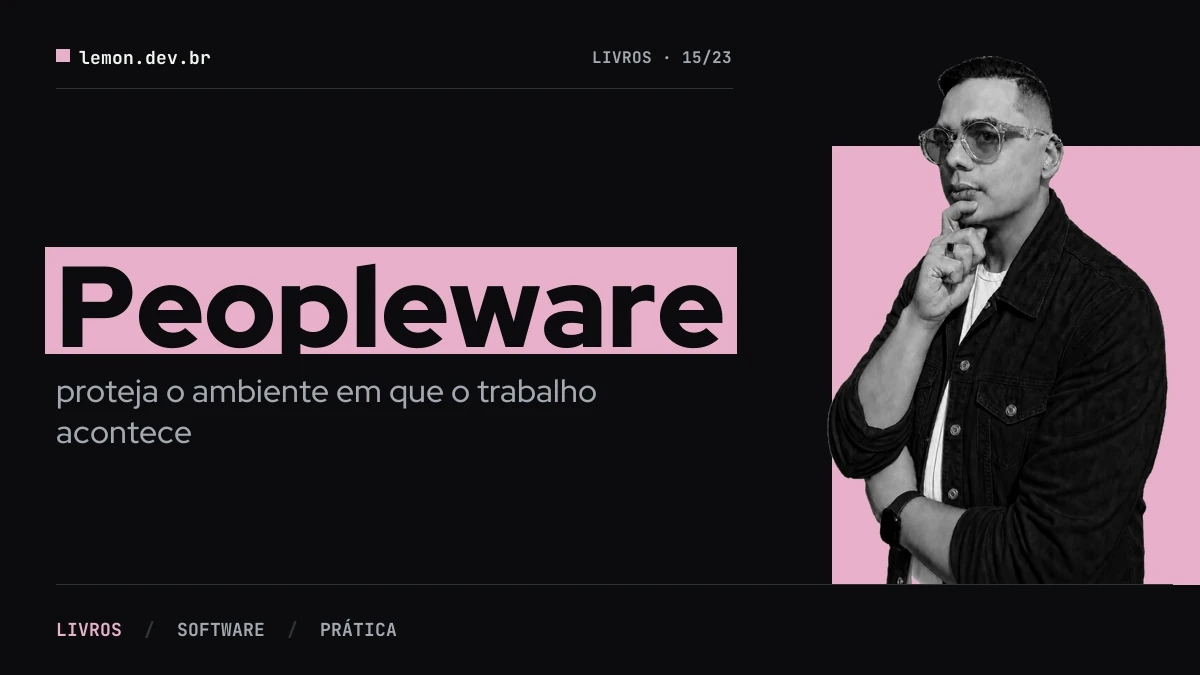
Tom DeMarco and Timothy Lister's Peopleware deserves attention for treating that environment as part of engineering. I recommend it for examining obstacles to cooperation and continuity before attributing delays to insufficient effort. Managers and developers both participate in agreements that make teamwork sustainable.
This review considers the 2013 third edition of Peopleware: Productive Projects and Teams. Pearson's print-edition listing records publication on June 18, 2013. The book addresses management, working environments and the formation and maintenance of teams.
In their preface, the authors describe developing the idea that social difficulties need interventions beyond technology. Use that shift as a diagnostic question. It does not mean slow databases, ambiguous requirements or fragile architecture cease to matter.
Investigation requires reconstructing hypotheses, data relationships and rejected explanations. Answering an interruption may take minutes; recovering the reasoning is additional work. Its cost does not necessarily match message duration and deserves no invented universal number.
Some interruptions help. A colleague may reveal that the investigation targets the wrong component. Distinguish collaboration advancing the task from an implicit requirement for permanent availability. Mandatory silence would not fix the missing context that prompted the question.
Start by observing request channels, urgency and conversations that could be scheduled. A team accepting requests only through personal messages lacks a reliable view of demand. Insufficient capacity, unclear priorities or a recurring question needing documentation may be the real issue.
Consider a fictional team: Ana, Bruno, Carla and Diego. Initially, requesters approach any member. The proposed experiment routes triage to Ana, with Bruno backing up serious incidents. Carla and Diego, plus Bruno outside emergencies, protect 10:00–11:30 and 14:00–15:30 for agreed work.
Support operates 09:00–17:00. Normal requests enter a shared queue with a desired initial acknowledgment within thirty minutes, not a resolution promise. An incident preventing multiple customers from logging in can immediately activate backup. Agree on absence and lunch coverage; the queue cannot depend on Ana being permanently available.
| Fictional time and event | Proposed agreement |
|---|---|
09:20: ordinary usage question | Ana records and acknowledges through the queue |
10:15: multiple customers cannot authenticate | Ana declares an incident and calls Bruno despite focus time |
10:40: question about an upcoming feature | Normal queue, without interrupting Carla and Diego |
14:10: question requiring Carla's knowledge | Ana assesses urgency; if normal, schedules discussion after 15:30 |
15:40: discussion of that question | Carla helps; the outcome returns to the queue and relevant documentation |
These are expected decisions rather than observed results. Continuous demand requiring several people could make this rotation insufficient. If the 14:10 question becomes an incident, classification and escalation must change. The agreement protects continuity without blocking necessary help.
The two blocks offer three nominal hours, not three demonstrated hours of concentration or production. Bruno may lose part of the first to the incident. Ana gets neither block that day. Comparing individual output while ignoring this would punish the person maintaining support coverage.
Rotate responsibility according to capacity and knowledge, recognizing support in planning. Protect time for people leaving the rotation too. An apparently equal distribution can be unfair when one person always handles difficult cases or covers hours incompatible with life outside work.
With four people across five working days, a simple daily rotation assigns someone twice. Do not judge fairness from that week alone: agree on compensation in the next cycle and consider case intensity. A shift containing an incident may also need additional recovery time. Equal shift counts cannot establish a sustainable workload distribution. This matters when reviewing the agreement, since an apparently balanced calendar can conceal very different demands on the people covering it.
If only Carla can answer an entire category, deferring questions cannot eliminate the bottleneck. Pairing and documentation can gradually reduce that dependency. Scheduled collaboration and concentration then reinforce each other rather than treating all communication as waste.
Free and paid products to turn ideas into a foundation you can actually ship.
13 products available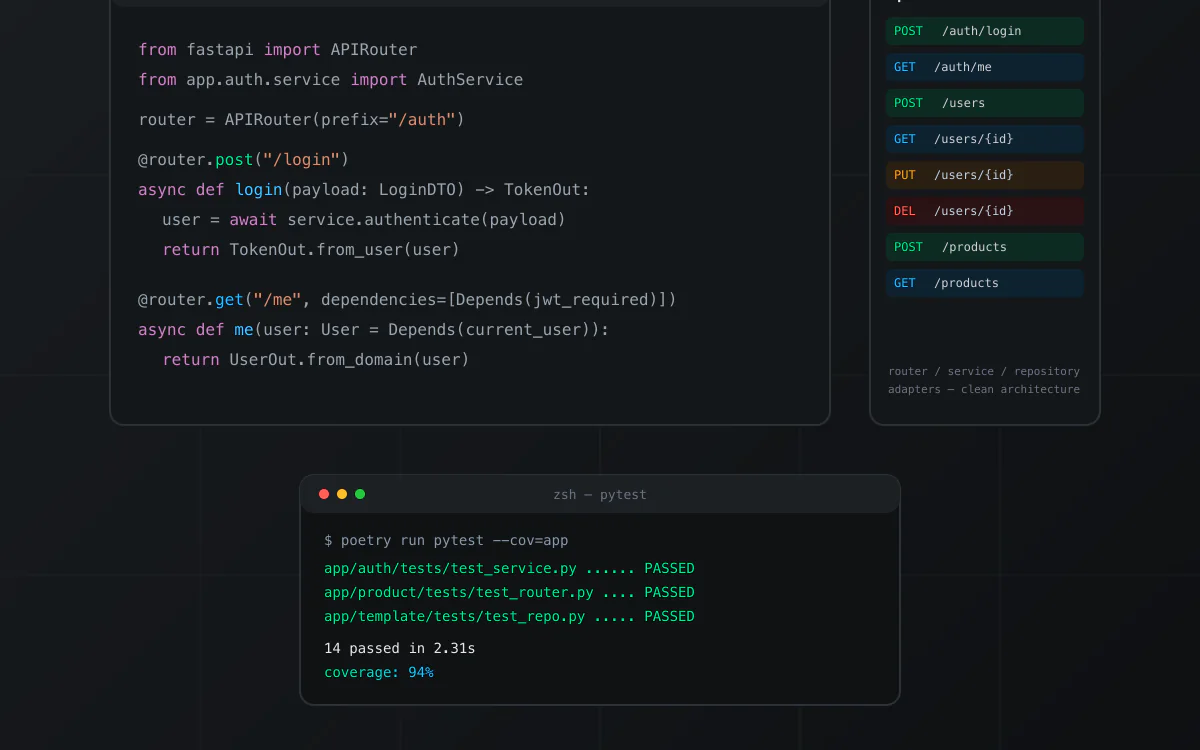
nextjs · boilerplate
Boilerplate de API em Python com FastAPI, organizado em Clean Architecture (router, service, repository e adapters por módulo). Inclui autenticação JWT com hashing bcrypt, MongoDB, testes com pytest e cobertura, Dockerfile e docker-compose para subir localmente, e documentação Swagger/OpenAPI automática. Repositório de origem privado; snapshot técnico verificado antes da publicação.
View product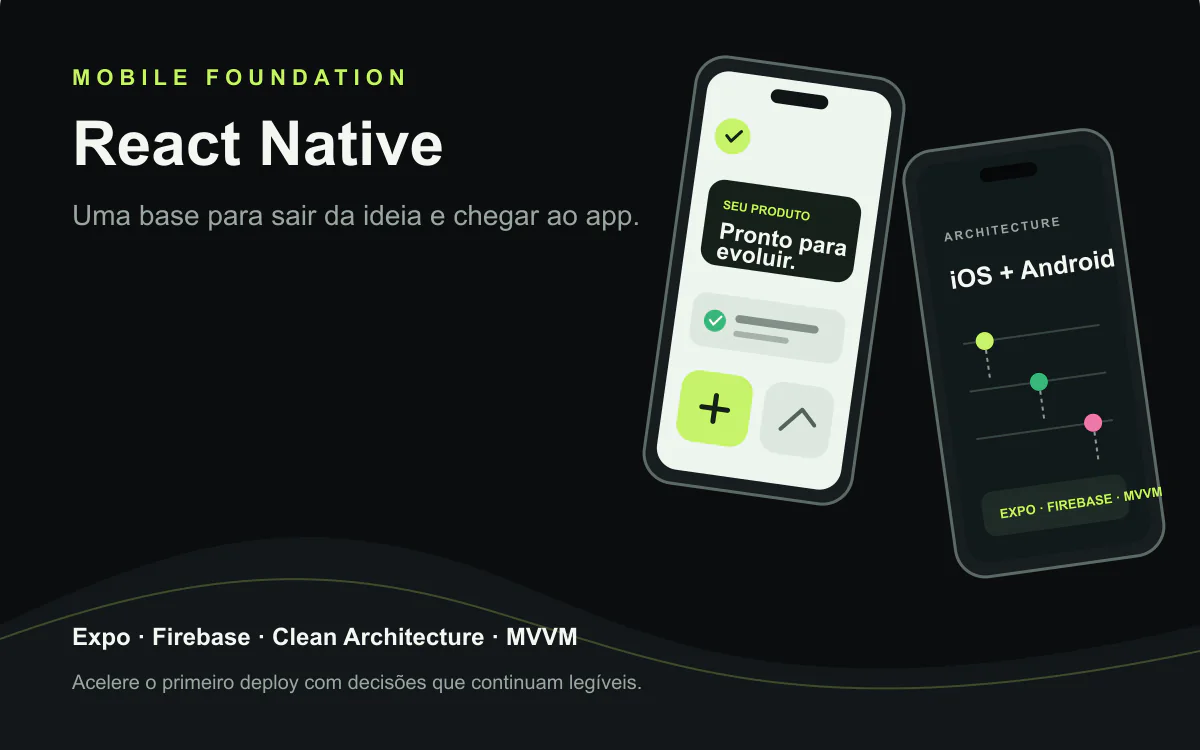
react · boilerplate
A React Native foundation for iOS and Android apps with Expo, Clean Architecture, MVVM, Firebase, and native modules. Technical reference from VaiDeFut, with public Google Play distribution and a documented iOS publishing flow.
View product
nextjs · boilerplate
A free open-source kit for getting started with coding agents across Claude Code, Codex, Gemini, Copilot, and OpenCode. The public repository confirms an MIT license.
View product
nextjs · boilerplate
A white-label AI-first foundation for shipping SaaS products with Next.js, chat, RAG, memory, tenants, and documentation. The verified snapshot documents Supabase rather than MongoDB; that limitation is explicit. MongoDB, Redis, and RabbitMQ require a compatible integration/configuration.
View product
nextjs · boilerplate
An advanced white-label, multi-tenant AI-first foundation for accelerating products with Next.js, chat, RAG, memory, and documentation. The verified snapshot does not prove a distinct Ultra layer; that limitation stays explicit while provider, cache, and queue swaps remain visible.
View product
nextjs · boilerplate
A white-label, multi-tenant foundation for turning an idea into an AI-first SaaS with Next.js, chat, RAG, memory, and documented security. The verified snapshot uses Supabase; the name identifies the source repository. Provider, cache, and queue boundaries stay explicit; Redis and RabbitMQ are configurable integrations.
View product
react · portfolio
A one-time contribution that supports free technical content, research, and the continuity of relevant projects published by Anderson Lima. You choose the amount; there is no subscription.
View product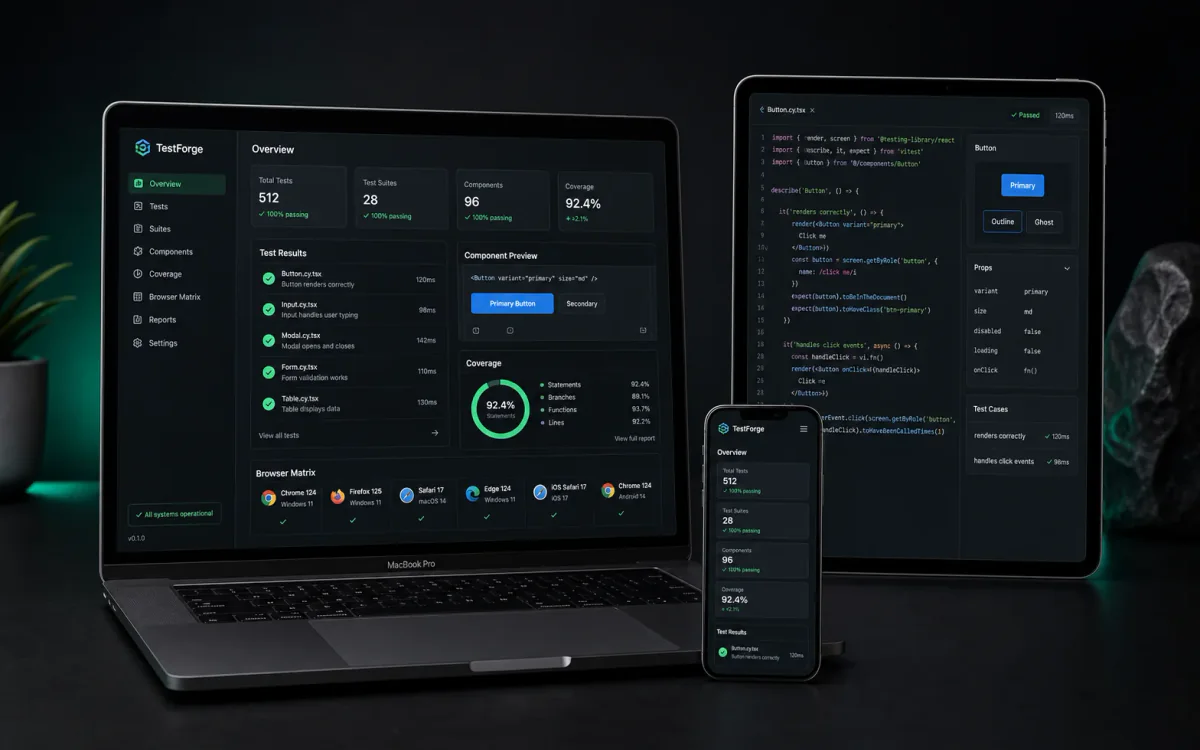
react · boilerplate
A free React starter for building a reliable test suite from the first commit, combining Vitest, Testing Library, Playwright, Vite, TypeScript, Zustand, React Query, MirageJS, and PWA. The repository does not declare an SPDX license; review its terms before commercial use.
View product
react · portfolio
A public React, TypeScript, and Vite monorepo for exploring a component library with a native-inspired visual language. The current README is minimal and does not declare an SPDX license; treat it as a free preview.
View product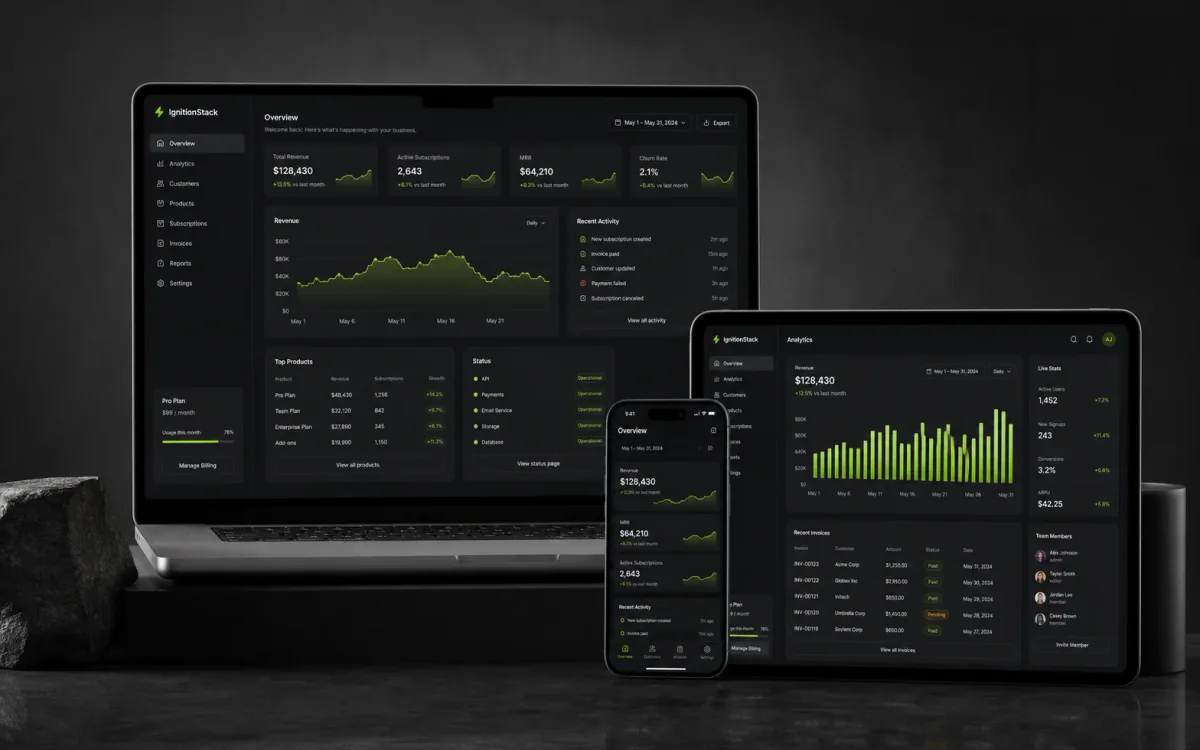
nextjs · saas
An AI-first SaaS boilerplate with Next.js, Supabase, Stripe, and provider routing to move from the first prompt toward a real deployment faster. AI, data, email, cache, and queue adaptations stay explicit; Redis and RabbitMQ are configurable integrations.
View product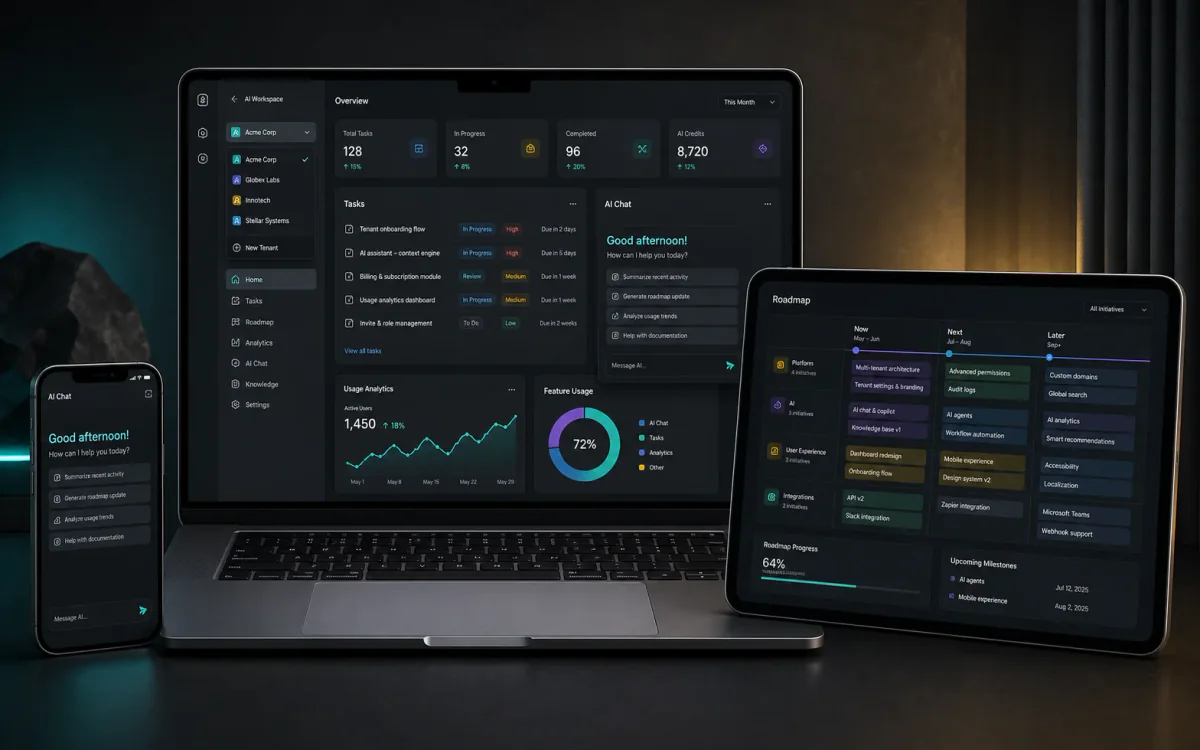
react · saas
A React + TypeScript starter for multi-tenant SaaS with Firebase, Atomic Design, themes, PWA, product screens, MirageJS, and Gemini chat extensible to other providers. Validate production requirements, costs, and integrations before publishing.
View product
react · boilerplate
A public React starter with TypeScript, Zustand, React Query, Tailwind CSS, PWA, and documented AI integrations. The repository does not declare an SPDX license; review its terms before commercial use.
View product
nextjs · saas
A Next.js, TypeScript, and Tailwind CSS SaaS landing page with SEO, themes, i18n, PWA, and integration points for auth, Stripe, and AI. A clear foundation for leaving the blank screen behind and shaping your positioning.
View productContinue exploring similar topics
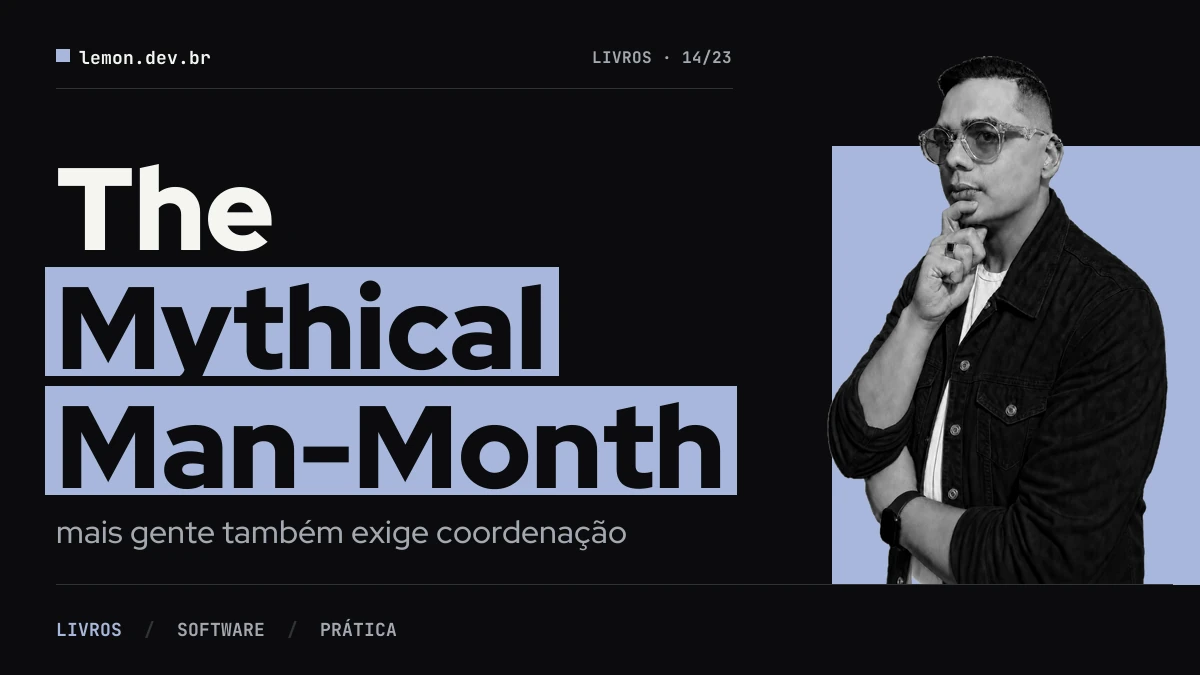
Use Frederick Brooks to inspect dependencies, integration and training before trying to recover a deadline by adding people.
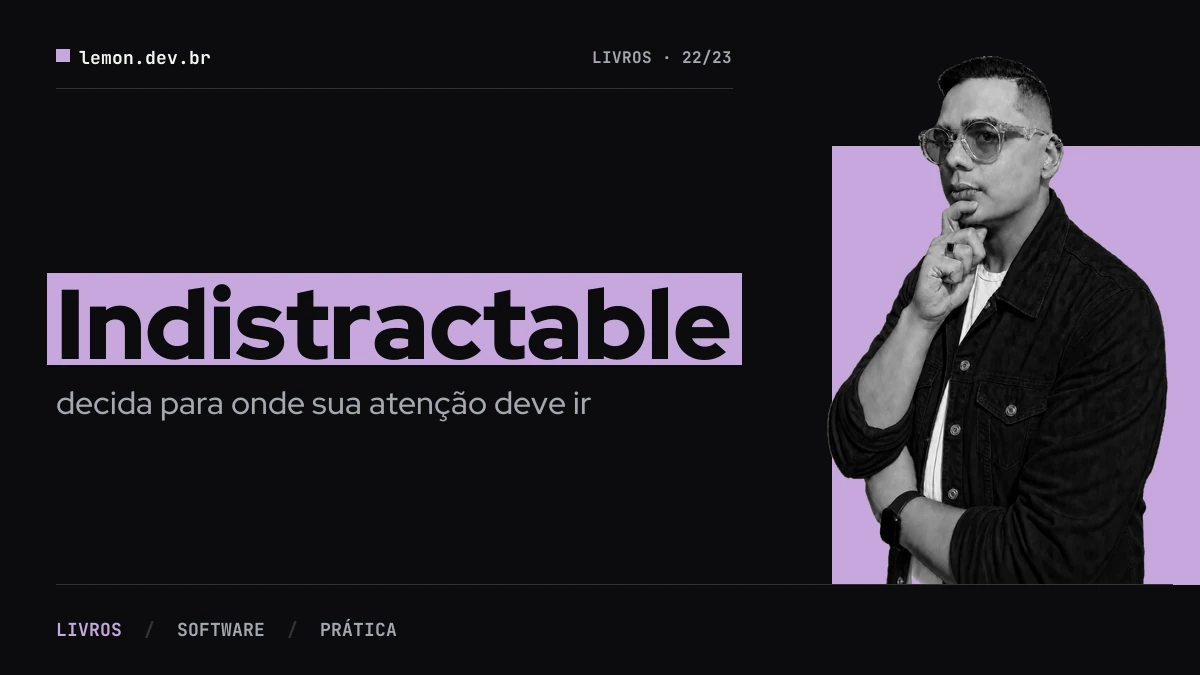
Critical review of Nir Eyal on triggers, planning and shared boundaries for attention in software work.
Use Team Topologies to examine cognitive load, dependencies and internal services before redesigning teams.
A 47-point checklist to find bugs, security risks, and performance issues before launch.
Production-tested templates trusted by developers. Save weeks of setup on your next project.
In Let's Talk About Leadership, DeMarco and Lister discuss leadership treated as extracting more work. That lens challenges practices demanding visible effort without removing delivery obstacles.
If reporting a defect brings humiliation or loses planning priority, someone may postpone speaking. Teams need to admit that a deadline does not fit, a test does not protect a change or support consumed the day. Consistent behavior from responsible people matters more than a declaration of trust.
Responsibility remains specific. A reported defect needs triage, decisions and follow-up. Useful reviews examine enabling decisions and conditions, feasible corrections and verification owners. Turning the discussion into personal judgment makes the next error harder to discover in time.
Observe one week of existing workflow before trying the rotation for another week with defined criteria. Record request quantity and category, acknowledgment time, resolution wait, incidents and team-level planned work completed. Include voluntary accounts of continuity and support load.
Weeks will probably contain different tasks and demand. A simple comparison cannot prove the rotation caused improvement. Absence, an exceptional incident or smaller tasks could explain results. Treat observations as evidence for adjustment rather than announcing a universal improvement percentage.
Separate elapsed time, throughput and quality. A request can await approval for two days and require twenty minutes of execution. Completing more items need not help if they are smaller or reopen with defects. Check reopens, corrective work and adequate support before celebrating a shorter queue.
Assign queue, coverage and urgency-classification ownership. Agree on channels, response expectations and a review date. If requesters keep messaging individuals, leadership should help redirect demand rather than blaming people unable to protect their calendar.
Continuity criteria can be qualitative: could people investigate and finish a stage with fewer restarts? Support criteria must cover adequate acknowledgment and resolution. Sustainability asks whether the person on rotation became overloaded or compensated at night.
Use aggregated team data and preserve private content. Recording keystrokes, screen time or personal messages is unnecessary to demonstrate concentration. Individual ranking is not required and could change incentives, making apparent busyness more valuable than cooperation. Retain only information needed to review workflow.
Then retain, adjust or abandon the agreement. If requesters wait longer or one person absorbs excessive load, revise capacity and priorities. An incident-free week cannot demonstrate working emergency coverage; rehearse escalation separately.
The book includes accounts, arguments and a discussion of Coding War Games. They help investigate environment and performance differences without authorizing transplantation of an observed relationship to every team. A bounded coding task cannot represent all requirements discovery, service operation and change coordination.
I avoid using historical numbers as productivity promises for this case. Measurements, samples and conditions belong alongside conclusions. Two characteristics appearing together cannot alone establish causation or the same intervention effect in a remote setting.
The reading's strength is making neglected variables visible and debatable. Its limitation is requiring contextual translation. Use a book case to formulate an observable question, then confront it with work your own team actually performs.
Office and silence discussions require adaptation. Remote environments include notifications, time zones and response expectations. People may need different flexibility or accessibility arrangements. Calling one communication style protective can exclude people unable to follow it.
Cohesion need not require compulsory friendship, after-hours social availability or permanent agreement. Teams must cooperate and discuss differences respectfully. Pressuring everyone into one style can conceal conflict and restrict different perspectives.
External constraints include contracted support, budgets, incidents and other teams' decisions. Developers cannot solve all of them by disabling notifications. Managers may need to renegotiate service, reduce scope or add capacity. The book helps inspect conditions without removing actual commitments requiring decisions.
I recommend it to managers and team members facing interruptions, internal competition or strain unexplained by code alone. Developers can propose workflow observation without authority to reorganize the company. Managers have additional responsibility for changing priorities and protecting people who surface problems.
No advanced technical prerequisite is necessary. Remembering an interdependent delivery or support replacing planned work helps. If you seek testing or implementation architecture, another book offers a more direct entry point; Peopleware broadens organizational diagnosis.
The Mythical Man-Month supports coordination discussion. Deep Work addresses individual attention. Team Topologies examines team boundaries; Accelerate complements delivery analysis. Peopleware connects human conditions with collective work.
Start with environment and team chapters against a concrete situation. Write who requests work, where it enters and which agreements remain implicit. Bring a small proposal including coverage, limits and review instead of prescribing silence for everyone.
Read leadership and quality to examine problem reporting and resolution. Test one reversible agreement and speak with support providers and requesters. Preserve examples contradicting your first hypothesis: they inform the next design.
I recommend the third edition for questioning environments before judging individuals. You have used it well when continuity and cooperation improve without concealing demand or transferring exhaustion. Teams need conditions supporting both doing work and asking for help.