


Anderson LimaSoftware Engineer & Architect
October 24, 2026
9 min read
0 views

You follow a database lesson and understand every explanation. In the next project, without the video, you cannot explain why a query is slow or which evidence to inspect first. Recognizing a demonstrated solution and producing one for a problem are different tasks. In Ultralearning, Scott H. Young organizes a way to shorten that distance through self-directed projects.
The book is useful to people who need to learn a difficult skill outside a formal course, especially when a change in technology or responsibility calls for demonstrable practice. Its best advice is to bring practice closer to real use without abandoning foundations, feedback or repetition. Do not read its title as a promise of mastery in little time: intensity without goals, guidance or rest can make learning more exhausting without making it better.
Harper Business published Ultralearning: Master Hard Skills, Outsmart the Competition, and Accelerate Your Career in 2019. Young presents ultralearning as self-directed learning, combining accounts of intensive projects with research on learning. The author's official page explains the scope and lists examples; HarperCollins confirms the publication and premise.
Two parts complement one another. Stories show people learning languages, programming, drawing and other skills under unusual conditions. Principles then organize questions readers can apply to their own projects. This alternation keeps the book concrete, but extraordinary examples do not represent typical outcomes. A story can help readers imagine a strategy; it cannot estimate how long another person will take or isolate which principle caused progress.
The author also distinguishes learning deeply from racing through a curriculum in the shortest possible time. In his account, learning projects help define what to learn, for which situation and under what constraints. That makes the idea more useful than a productivity slogan: first narrow the skill, then choose practice that provides evidence of progress.
The nine principles work better as related tools than as a mandatory checklist:
Consider a small goal: analyze a PostgreSQL query plan and justify a candidate index. Over four weeks, with five hours planned each week, the goal is not “become a performance expert.” It is to practice a checkable workflow: predict what a query will do, inspect EXPLAIN, try varied data, compare alternatives and explain the impact on reads and writes.
Free and paid products to turn ideas into a foundation you can actually ship.
13 products available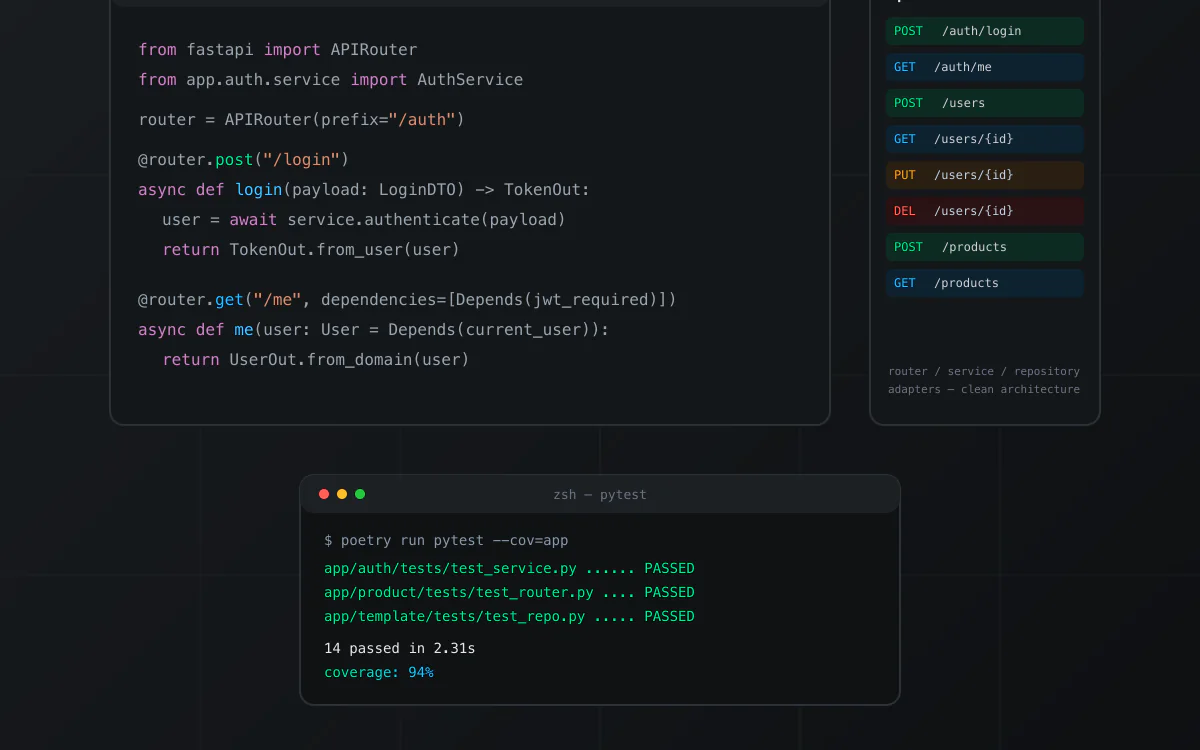
nextjs · boilerplate
Boilerplate de API em Python com FastAPI, organizado em Clean Architecture (router, service, repository e adapters por módulo). Inclui autenticação JWT com hashing bcrypt, MongoDB, testes com pytest e cobertura, Dockerfile e docker-compose para subir localmente, e documentação Swagger/OpenAPI automática. Repositório de origem privado; snapshot técnico verificado antes da publicação.
View product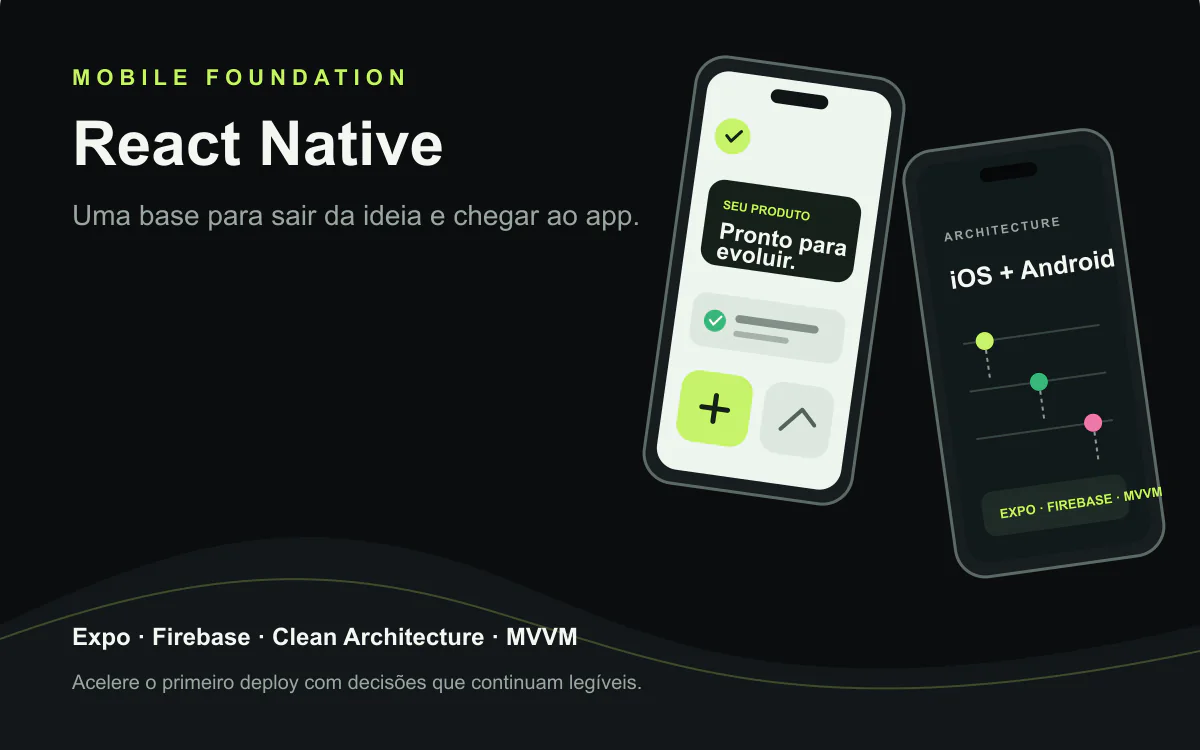
react · boilerplate
A React Native foundation for iOS and Android apps with Expo, Clean Architecture, MVVM, Firebase, and native modules. Technical reference from VaiDeFut, with public Google Play distribution and a documented iOS publishing flow.
View product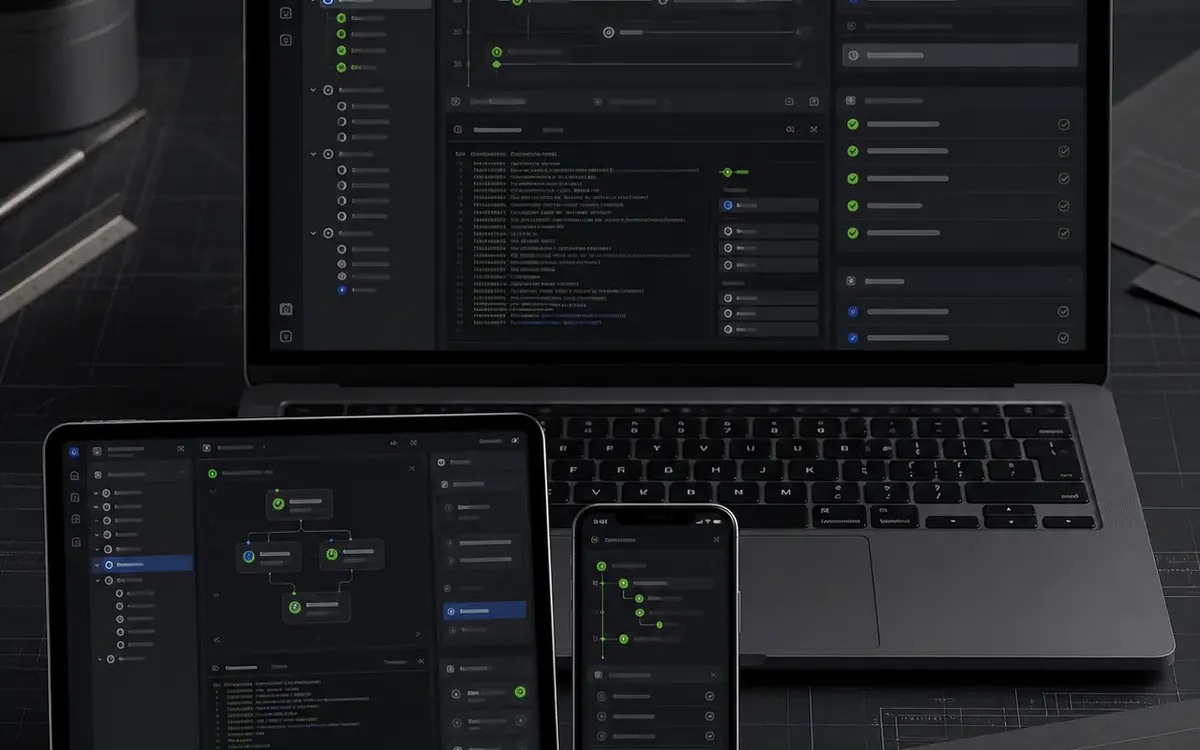
nextjs · boilerplate
A free open-source kit for getting started with coding agents across Claude Code, Codex, Gemini, Copilot, and OpenCode. The public repository confirms an MIT license.
View product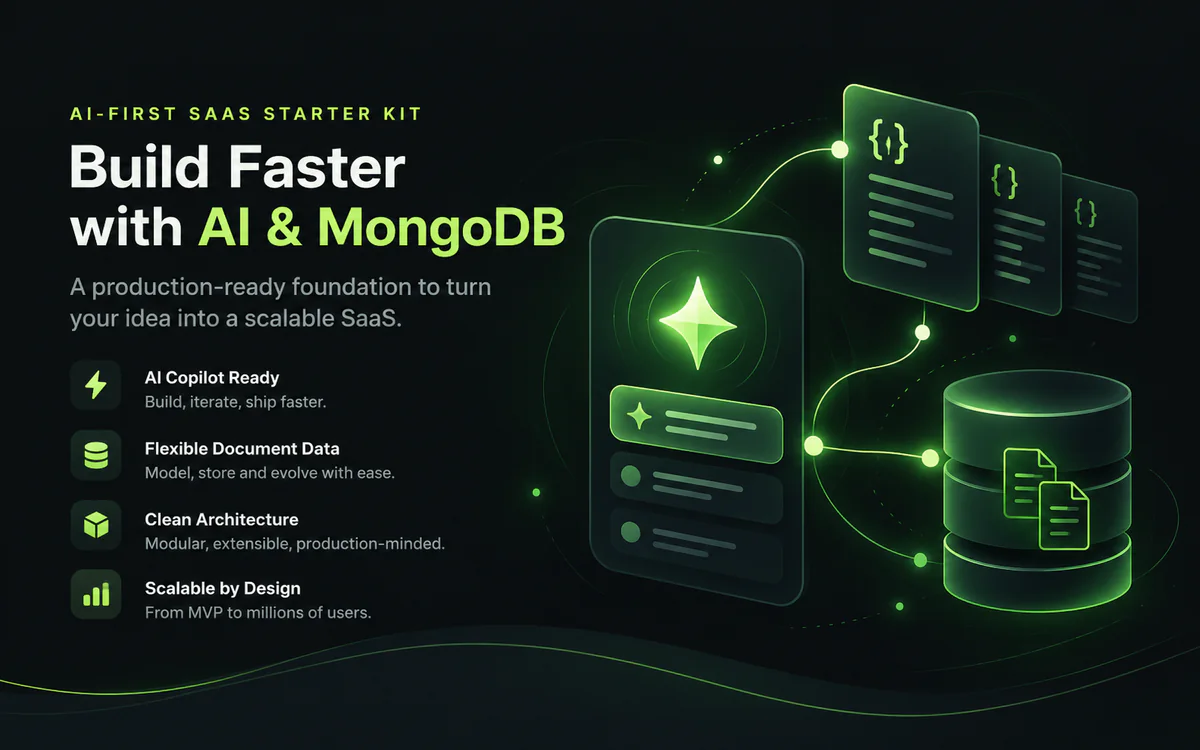
nextjs · boilerplate
A white-label AI-first foundation for shipping SaaS products with Next.js, chat, RAG, memory, tenants, and documentation. The verified snapshot documents Supabase rather than MongoDB; that limitation is explicit. MongoDB, Redis, and RabbitMQ require a compatible integration/configuration.
View product
nextjs · boilerplate
An advanced white-label, multi-tenant AI-first foundation for accelerating products with Next.js, chat, RAG, memory, and documentation. The verified snapshot does not prove a distinct Ultra layer; that limitation stays explicit while provider, cache, and queue swaps remain visible.
View product
nextjs · boilerplate
A white-label, multi-tenant foundation for turning an idea into an AI-first SaaS with Next.js, chat, RAG, memory, and documented security. The verified snapshot uses Supabase; the name identifies the source repository. Provider, cache, and queue boundaries stay explicit; Redis and RabbitMQ are configurable integrations.
View product
react · portfolio
A one-time contribution that supports free technical content, research, and the continuity of relevant projects published by Anderson Lima. You choose the amount; there is no subscription.
View product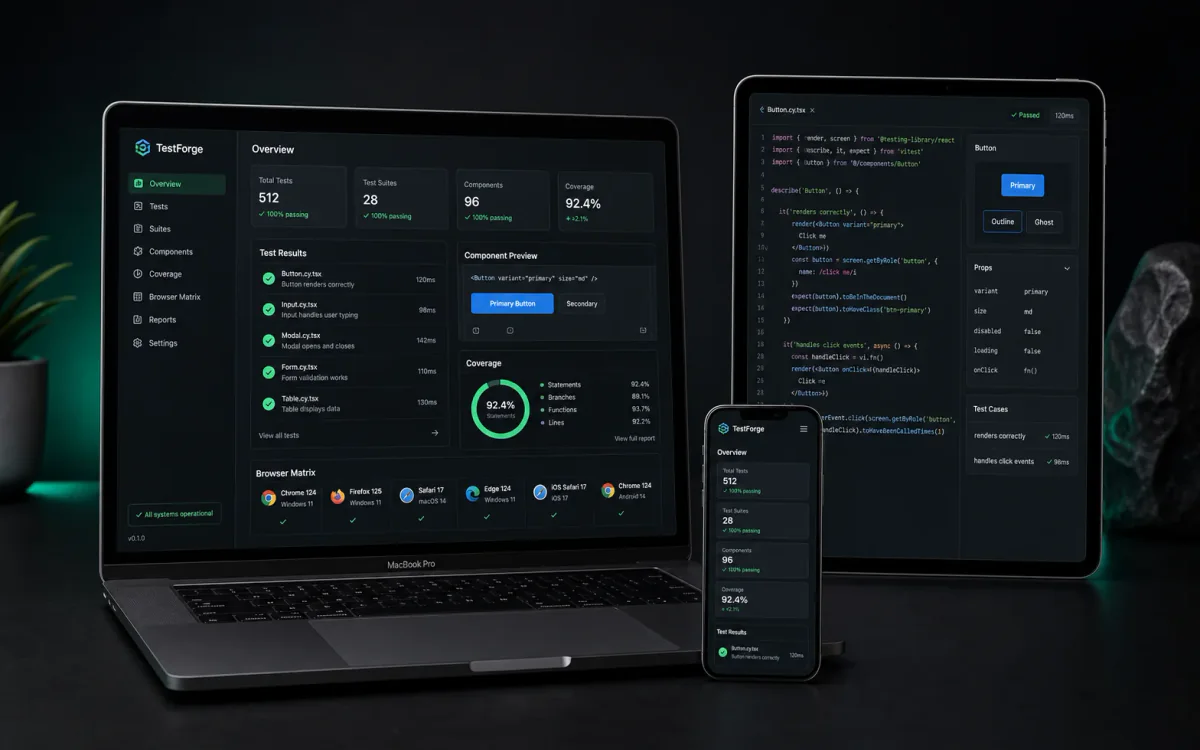
react · boilerplate
A free React starter for building a reliable test suite from the first commit, combining Vitest, Testing Library, Playwright, Vite, TypeScript, Zustand, React Query, MirageJS, and PWA. The repository does not declare an SPDX license; review its terms before commercial use.
View product
react · portfolio
A public React, TypeScript, and Vite monorepo for exploring a component library with a native-inspired visual language. The current README is minimal and does not declare an SPDX license; treat it as a free preview.
View product
nextjs · saas
An AI-first SaaS boilerplate with Next.js, Supabase, Stripe, and provider routing to move from the first prompt toward a real deployment faster. AI, data, email, cache, and queue adaptations stay explicit; Redis and RabbitMQ are configurable integrations.
View product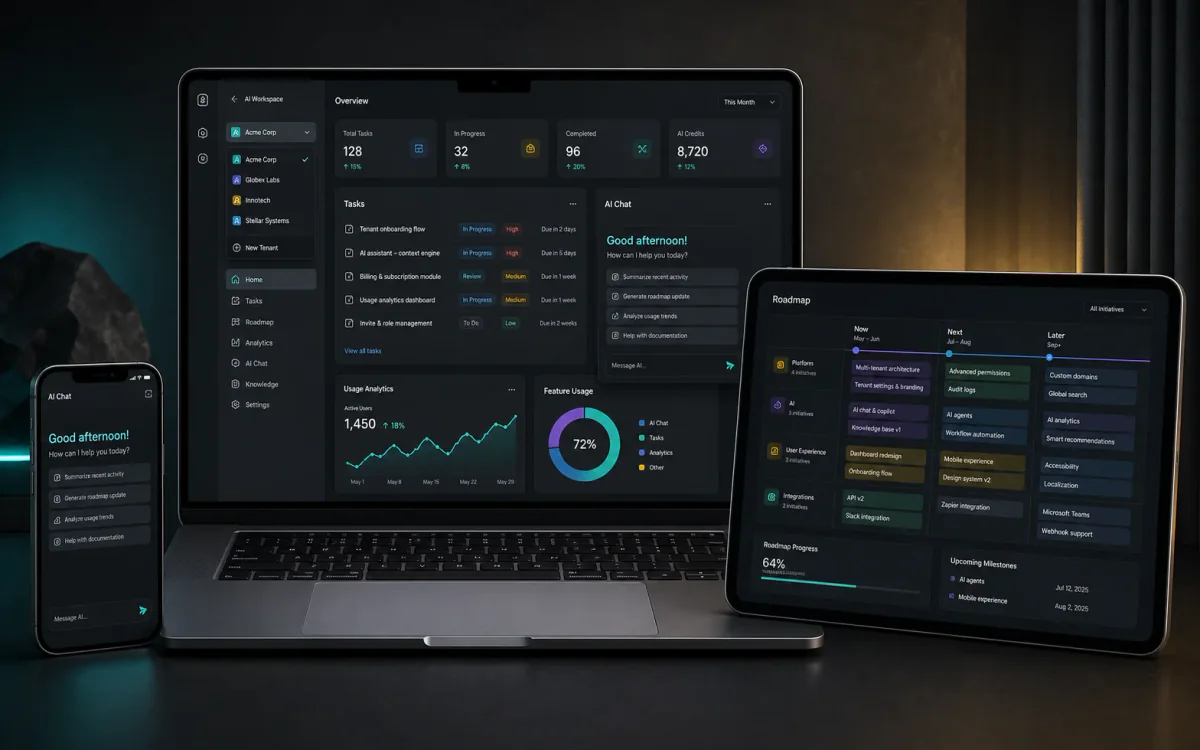
react · saas
A React + TypeScript starter for multi-tenant SaaS with Firebase, Atomic Design, themes, PWA, product screens, MirageJS, and Gemini chat extensible to other providers. Validate production requirements, costs, and integrations before publishing.
View product
react · boilerplate
A public React starter with TypeScript, Zustand, React Query, Tailwind CSS, PWA, and documented AI integrations. The repository does not declare an SPDX license; review its terms before commercial use.
View product
nextjs · saas
A Next.js, TypeScript, and Tailwind CSS SaaS landing page with SEO, themes, i18n, PWA, and integration points for auth, Stripe, and AI. A clear foundation for leaving the blank screen behind and shaping your positioning.
View productContinue exploring similar topics
A critical review of The Clean Coder: estimates, negotiation, testing and responsibility, with a concrete scenario and limits to individual accountability.

Apply Michael Nygard's approach to timeouts, isolation and recovery through a controlled failure exercise.
Critical review of Rob Fitzpatrick: investigate real episodes, separate facts from hypotheses and do not mistake interviews for market validation.
A 47-point checklist to find bugs, security risks, and performance issues before launch.
Production-tested templates trusted by developers. Save weeks of setup on your next project.
Metalearning starts by asking what a competent practitioner would do for this task. Gather official documentation, a set of queries and a way to compare hypotheses. List the knowledge required: filters, cardinality, selectivity, ordering and indexes. An initial diagnostic without notes can reveal gaps, but need not become a public score or comparison with colleagues.
Focus narrows the work to four weeks of protected sessions. Choose one query from a sample dataset and keep the goal stable enough to observe learning. Put new subjects—partitioning, replication or memory tuning—on a later list. Adding everything turns a small project into a course that never ends.
Directness means doing the work itself. Read an explanation or watch a worked plan; then close the example, predict what will happen for a different query and only afterward consult EXPLAIN. Create a candidate index and confirm that the results remain correct. Studying CREATE INDEX syntax alone does not teach when an index helps or adds write cost.
Use drills when the task reveals a recurring difficulty. If you cannot explain why an estimated row count differs from the actual result, investigate statistics and data distribution before trying to optimize every query. Then return to the complete plan. A drill does not replace application; its purpose is to strengthen a component the real workflow requires.
Next, practice retrieval. Before opening your notes, write down what you expect the plan to show and explain why you chose an index. Compare that memory with the actual result. A quantitative review of distributed practice and experimental studies of retrieval show benefits for retaining some kinds of content: Cepeda and colleagues synthesize spacing research, and Karpicke and Roediger study retrieval. This supports memory techniques; it does not prove four weeks are enough to learn database tuning.
Feedback needs to answer a specific question. The database shows whether a hypothesis was used, but runtime on a tiny sample can mislead. Vary the data and inspect the plan, correctness, rows examined and write cost. A code review may reveal that an index adds maintenance or fails to serve neighboring queries. Do not treat a local benchmark as a production forecast.
Retention extends practice beyond the session when an idea seems clear. Return to queries after a few days, try to explain them from memory and solve a variation. This principle does not require flashcards for everything. Use short prompts for concepts that need recall; use full tasks to check whether the skill remains available.
To develop intuition, vary data distributions and predict how the plan might change. Explain why the same structure can help one query and hurt another. A wrong prediction tells you something about your mental model if you check the output and investigate the difference. “Intuition” here means building expectations that survive varied cases, not trusting an untested guess.
Finally, experiment with the method and scope. If documentation and examples do not answer your questions, ask an experienced person for feedback or choose different tasks. Record what changed and which observation would show whether it helped. Changing everything at once makes it hard to know what caused the difference.
Young combines principles that challenge attractive habits: watching more content, rereading until everything feels familiar or choosing comfortable tasks because they create visible progress. Direct practice, focused drills and retrieval check what a person can do without following a step-by-step guide. This fits programming, where understanding a demonstration does not guarantee the ability to diagnose a bug or change code under new conditions.
Learning research gives partial and specific support to some recommendations. A review of learning techniques found broad support for practice testing and distributed study but emphasized that utility depends on content and context; see Dunlosky and colleagues. That evidence helps readers be precise: retrieval and spacing have substantial research behind them, while applying them to a complex skill still requires examples, instruction and assessment aligned with the domain.
The format also suits professionals who do not think of themselves as students. The idea of a self-directed project turns a vague need—“I need to learn databases”—into an observable ability with a task, timeline, feedback and review. Even if the plan is not intensive, the vocabulary helps identify passive study, disconnected exercises and missing feedback.
High-achiever stories make the book engaging but come with case selection. It highlights people who completed ambitious projects; that does not show how many tried, stopped or had different resources. An account of someone's learning can raise useful questions without serving as a controlled comparison. Do not turn one person's method into a promised outcome for everyone.
The self-directed framing can understate the value of instruction and worked examples. When revisiting his ideas in 2023, Young acknowledged that he emphasized practice and gave less space to examples and explanations; he also highlighted the particular challenges of learning without a teacher. In 2024, comparing Ultralearning with his later book Get Better at Anything, he emphasized foundational preparation and earlier access to good teachers and coaches. These are the author's reflections on what he would change, not a complete retraction. Read his review of his learning views and comparison of the books as critical companions.
That caveat improves the advice: do not replace classes, documentation, mentoring or worked examples with unnecessary struggle. Difficult practice helps only when it targets the right gap and provides enough guidance to correct errors. A schedule must fit work, family, health and rest. If the project depends on sacrificing sleep or maintaining impossible intensity, reduce scope or change pace.
I recommend it to people choosing their own learning path who need to turn study into the ability to do something concrete. It is particularly useful to developers changing stacks, preparing to operate a tool or strengthening a technical gap. Beginners can use the principles, but should seek foundations and examples before interpreting every difficulty as a lack of effort.
If you need a structured course, frequent support or a formal credential, this book is not a substitute. If your goal is mastering a broad field, a sequence of projects, mentoring and a curriculum may work better than a concentrated challenge. The recommendation is not to learn everything alone; it is to make more informed decisions about what to practice and how to verify it.
Deep Work discusses conditions for sustained attention; Ultralearning addresses how to organize practice once you have chosen a goal. TDD by Example shows a feedback loop inside a programming task. Together, they help protect time, practice a skill and observe results without assuming that effort equals mastery.
Read the nine principles with a real skill in mind. Write down an observable outcome, prerequisites, available time, examples of quality and who can offer feedback. Choose a small task, alternate complete practice with work on the difficulty most limiting progress, then revisit important knowledge after a few days.
Keep a record of attempts, errors, consulted material and the next question. At the end of the timeline, choose a new task without a tutorial and explain your decisions. If the result depends on copying the project, adjust the practice; if a foundation is missing, study it with guidance before repeating the task.
I recommend Ultralearning as a structure for making study more active and checkable. Its nine principles are not a formula for learning anything quickly. Their value is starting with a real goal, alternating application and foundations, and seeking useful feedback. The book has served you when you can perform a variation, explain your reasoning and recognize the limits of what you learned.