


Anderson LimaSoftware Engineer & Architect
October 24, 2026
10 min read
0 views
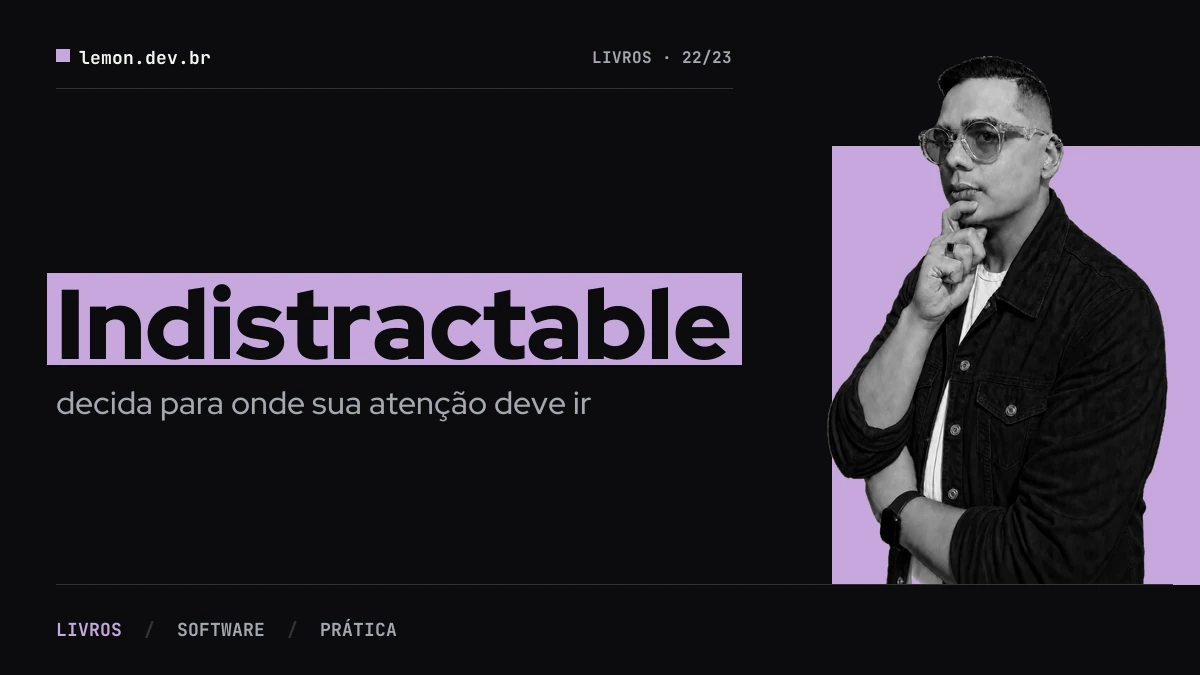
You open a tab to check one detail in an API proposal and return twenty minutes later without the answer. No notification sounded. The specification was ambiguous, formulating the next question felt difficult, and looking for something easier offered temporary relief. That kind of detour helps explain why Nir Eyal’s Indistractable, written with Julie Li, does not stop at telling readers to put away their phones. It asks what they intended to do, what shifted their attention and what change would make it more likely they act on their own choice.
Published in 2019, Indistractable: How to Control Your Attention and Choose Your Life proposes a four-part model: understand internal triggers, make time for traction, reduce external triggers and prevent distraction with pacts. Eyal argues that technology is one source of interruption, but not the only one; the publisher also highlights discomfort and workplace context (Simon & Schuster / BenBella Books, Bloomsbury).
Why read it: it is useful for people who begin tasks with good intentions and finish the day responding to other people’s cues. The book offers a sequence for examining detours without reducing everything to notifications or willpower. It also helps teams discuss the work system when interruptions are part of the organization’s design.
Eyal calls actions that move someone toward what they chose traction and actions that pull them away from that intention distraction. The same activity can belong on either side. Reading a message may be a distraction during a review or traction when the planned task is answering the team. The classification therefore depends on a prior intention and a realistic plan; it does not depend on whether an app seems good or bad.
This distinction avoids demonizing technology. Browsing the web can be part of investigating a bug, while opening the same page without a purpose can be an escape. The practical question is: “What had I chosen to do now, and what changed?” That is more useful than counting screen minutes without knowing whether the time supported work, rest or a relationship.
The first step is managing internal triggers. The book observes that boredom, anxiety, uncertainty, fatigue or discomfort may come before a person seeks another activity. Rather than treating an impulse as a moral flaw, readers can notice what happened before it, name the feeling and choose a response. If a task creates insecurity because acceptance criteria are missing, the next step might be to write a question or request context, not block social media.
The second step is making time for traction. Eyal recommends planning a calendar to reflect how people want to spend their time, including work, rest and relationships. The calendar makes conflicts visible that a task list can hide: four hours of focused work and six hours of meetings will not fit into the same morning. Planning does not guarantee execution, but it creates a reference for reviewing choices and noticing when a schedule was designed without enough capacity.
The third step is reducing external triggers. Notifications, inboxes, conversations and objects in the environment can pull attention. Adjusting alerts, creating checking windows and agreeing on urgency signals can help when someone controls the channel. The book need not be read as “turn everything off”: people on call, providing support or working through an operational queue have to distinguish what should interrupt from what can wait. Eyal himself writes that workplace distraction can point to organizational dysfunction, not only a personal problem (Eyal on distraction at work).
The fourth step is using pacts: prior commitments that make a detour harder or clarify an intention. A pact might be an agreement with another person, a technical barrier or a personal rule. A team could agree on a meeting-free window for an architecture review; someone studying might use a blocker for a period they chose. Pacts involving money or social pressure can create coercion, so they need to be voluntary, proportionate and reversible. A penalty that punishes someone for conditions outside their control is not a neutral productivity tool.
Consider this hypothetical scenario: an engineer needs to review an API proposal used by three clients and identify compatibility failures. During the first attempt, they switch among the proposal, chat and documentation. The task has no bounded next step, and the team treats every customer message as urgent. The engineer records the intention as “compare the new contract with all three consumers and note questions that prevent a safe migration.” That creates a criterion for recognizing traction; it does not label every interruption a failure.
They reserve two 50-minute blocks on different days. Before the first one, they agree with the support owner on coverage for requests that can wait and identify the incident channel that should interrupt the review. The team defines a window for ordinary questions and a contact for compatibility decisions. If no one can cover the service, the engineer shortens the session or chooses a collaborative review instead.
During each block, the engineer notes when they want to switch activities and chooses a broad category: unanswered question, waiting on another person, external interruption or fatigue. They do not record private content or score productivity by absence of breaks. If a question requires domain knowledge, asking someone is the right work. At the end, they leave a note with consumers checked, incompatibilities found and decisions still needed.
After two attempts, the team reviews outcomes and costs: which incompatibilities became clear, how much resume time was needed, which messages required a response and whether coverage created extra work for colleagues. Two blocks are a test choice, not a universal prescription or a promise that the review will finish. If urgent requests were frequent, the issue may be priority or support design. If the task advanced but produced no decision, the next step may be to align contracts, not book more time.
Free and paid products to turn ideas into a foundation you can actually ship.
13 products available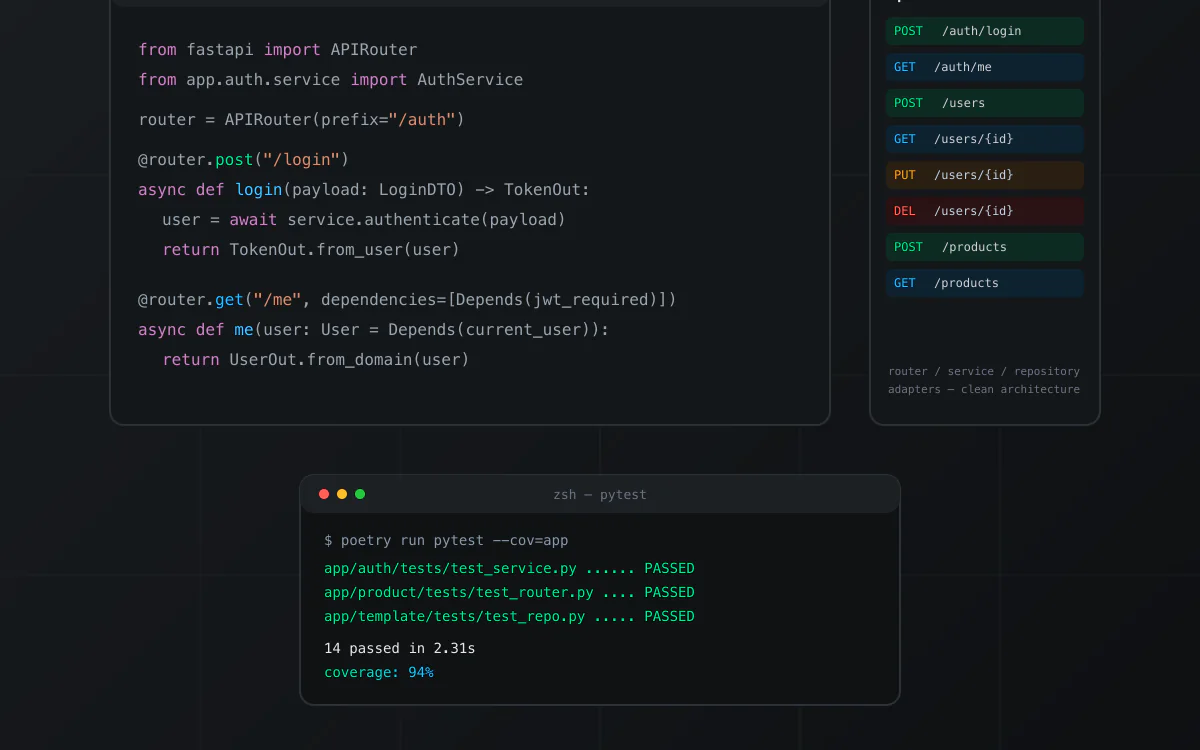
nextjs · boilerplate
Boilerplate de API em Python com FastAPI, organizado em Clean Architecture (router, service, repository e adapters por módulo). Inclui autenticação JWT com hashing bcrypt, MongoDB, testes com pytest e cobertura, Dockerfile e docker-compose para subir localmente, e documentação Swagger/OpenAPI automática. Repositório de origem privado; snapshot técnico verificado antes da publicação.
View product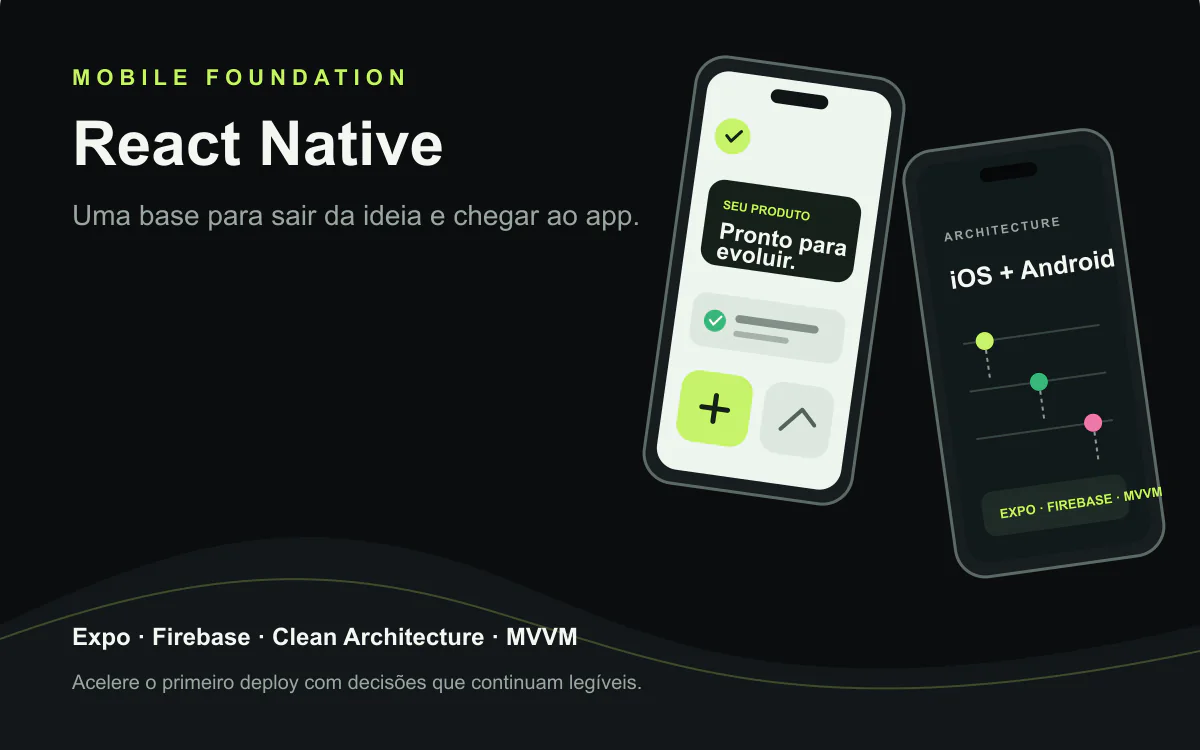
react · boilerplate
A React Native foundation for iOS and Android apps with Expo, Clean Architecture, MVVM, Firebase, and native modules. Technical reference from VaiDeFut, with public Google Play distribution and a documented iOS publishing flow.
View product
nextjs · boilerplate
A free open-source kit for getting started with coding agents across Claude Code, Codex, Gemini, Copilot, and OpenCode. The public repository confirms an MIT license.
View product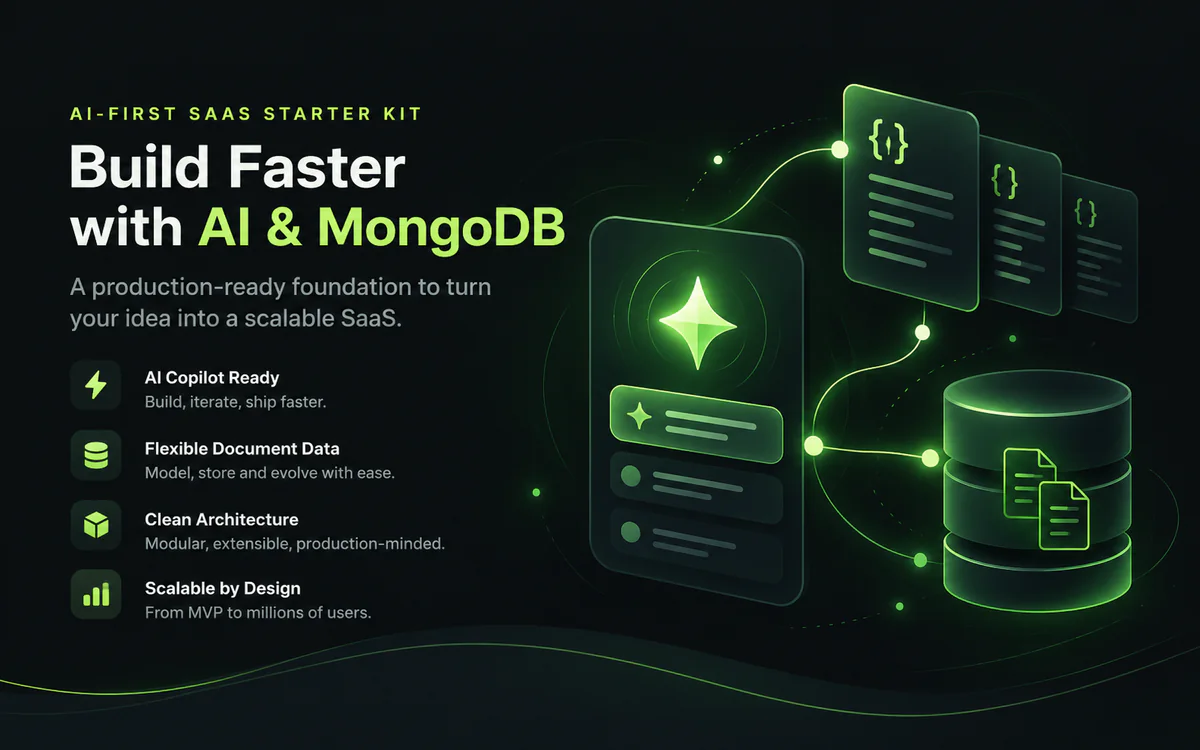
nextjs · boilerplate
A white-label AI-first foundation for shipping SaaS products with Next.js, chat, RAG, memory, tenants, and documentation. The verified snapshot documents Supabase rather than MongoDB; that limitation is explicit. MongoDB, Redis, and RabbitMQ require a compatible integration/configuration.
View product
nextjs · boilerplate
An advanced white-label, multi-tenant AI-first foundation for accelerating products with Next.js, chat, RAG, memory, and documentation. The verified snapshot does not prove a distinct Ultra layer; that limitation stays explicit while provider, cache, and queue swaps remain visible.
View product
nextjs · boilerplate
A white-label, multi-tenant foundation for turning an idea into an AI-first SaaS with Next.js, chat, RAG, memory, and documented security. The verified snapshot uses Supabase; the name identifies the source repository. Provider, cache, and queue boundaries stay explicit; Redis and RabbitMQ are configurable integrations.
View product
react · portfolio
A one-time contribution that supports free technical content, research, and the continuity of relevant projects published by Anderson Lima. You choose the amount; there is no subscription.
View product
react · boilerplate
A free React starter for building a reliable test suite from the first commit, combining Vitest, Testing Library, Playwright, Vite, TypeScript, Zustand, React Query, MirageJS, and PWA. The repository does not declare an SPDX license; review its terms before commercial use.
View product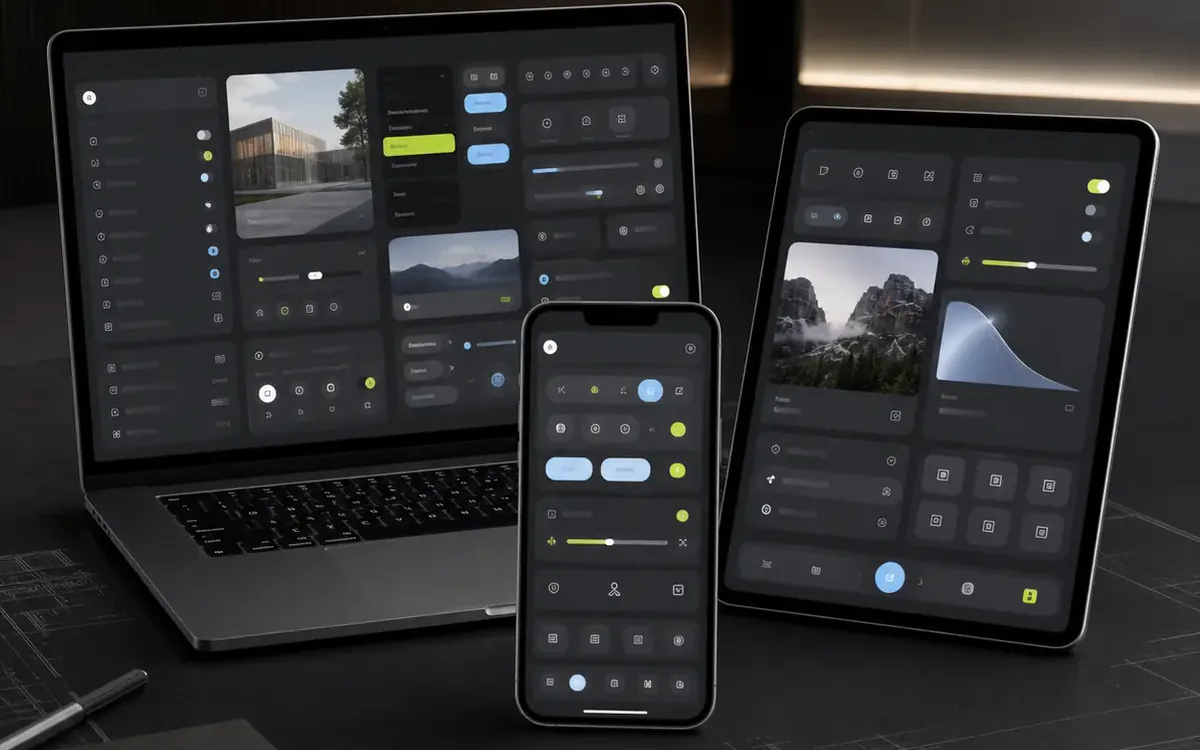
react · portfolio
A public React, TypeScript, and Vite monorepo for exploring a component library with a native-inspired visual language. The current README is minimal and does not declare an SPDX license; treat it as a free preview.
View product
nextjs · saas
An AI-first SaaS boilerplate with Next.js, Supabase, Stripe, and provider routing to move from the first prompt toward a real deployment faster. AI, data, email, cache, and queue adaptations stay explicit; Redis and RabbitMQ are configurable integrations.
View product
react · saas
A React + TypeScript starter for multi-tenant SaaS with Firebase, Atomic Design, themes, PWA, product screens, MirageJS, and Gemini chat extensible to other providers. Validate production requirements, costs, and integrations before publishing.
View product
react · boilerplate
A public React starter with TypeScript, Zustand, React Query, Tailwind CSS, PWA, and documented AI integrations. The repository does not declare an SPDX license; review its terms before commercial use.
View product
nextjs · saas
A Next.js, TypeScript, and Tailwind CSS SaaS landing page with SEO, themes, i18n, PWA, and integration points for auth, Stripe, and AI. A clear foundation for leaving the blank screen behind and shaping your positioning.
View productContinue exploring similar topics
Use Peopleware to investigate interruptions, trust and working conditions without reducing people to individual metrics.

Apply Michael Nygard's approach to timeouts, isolation and recovery through a controlled failure exercise.
Turn passive study into a learning project with direct practice, feedback and spaced retrieval.
A 47-point checklist to find bugs, security risks, and performance issues before launch.
Production-tested templates trusted by developers. Save weeks of setup on your next project.
Its main strength is widening the diagnosis beyond screens. Blocking a website does not solve fatigue, lack of clarity, impossible workload or contradictory expectations. The book also recognizes that deciding in advance reduces the number of improvised choices: calendars, channel settings and commitments can lower friction for actions people already value.
The vocabulary of traction and distraction is simple enough for a team retrospective without labeling someone “disciplined” or “distracted.” It can reveal a missing question, an unnecessary meeting or a communication flow that does not distinguish urgency. For engineering, this connects attention to incidents, dependencies and planning: the problem may not be an inability to focus, but receiving more work than the team can handle.
The book pairs well with Deep Work, by Cal Newport, though the two work at somewhat different scales. Newport asks how to create conditions for demanding concentration and reduce shallow work. Eyal examines the relationship between intention, triggers and everyday detours. Hooked, also by Eyal, analyzes how products can build cycles that encourage return; Indistractable examines how a person decides whether to answer those prompts. Together, they help readers observe both sides of the same design without replacing team policy or product research.
The model is a useful structure for reflection, but should not be confused with a complete scientific explanation for every behavior. The book combines stories, interviews, practical strategies and research references; readers should verify specific claims before treating them as consensus or prescription. The cause of an interruption can be emotional, environmental, operational, clinical or some combination. “Internal trigger” is not enough to explain every difficulty with attention.
The claim that distraction often represents an escape from discomfort may help someone notice that they are avoiding an uncertain task. Applied too broadly, however, it blames people for responding to incentives and conditions others control. An engineer might switch tasks because a legitimate alert arrived, because they lack authorization to proceed or because leadership changed the priority. Test the explanation in context. Persistent health or attention difficulties should not be treated as character flaws or as problems a book can replace professional care for.
An emphasis on individual planning can also hide power relationships. An organized calendar cannot prevent a manager from adding meetings, a support queue from growing or colleagues from bearing the cost of a silence rule. Pacts work best when the people setting priorities participate and acknowledge shared costs. A team measuring “blocks completed” can turn an autonomy tool into surveillance. Success should mean work quality and a real ability to choose, not obedience to a calendar.
Finally, scheduling every minute too rigidly can make a day fragile. Software projects uncover new information, incidents shift priorities and collaboration creates opportunities no one planned for. A calendar should be a revisable plan with room for the unexpected and for rest. If every detour becomes a broken commitment, the method creates more anxiety and less ability to adapt—the opposite of deliberate attention.
Choose a recurring task that tends to remain unfinished. Write an observable intention and a small next step. At the beginning of each period, decide which channels need to interrupt; group the rest into a window that fits your role. For five workdays, note only the type of detour, without names or sensitive content. At the end, compare the intention with the work completed and ask whether the plan fit the real calendar.
Test one adjustment at a time: clarify the next step, remove a nonessential alert, arrange coverage or move a checking window. Look for unintended effects, such as slower support, accumulated messages or effort shifted to someone else. Adjust or reverse the change if its cost exceeds its benefit. This review matters more than following a fixed rule: the model is a decision tool, not a measure of personal worth.
Indistractable is useful for professionals who want to understand their own detours and have some room to organize their time, as well as leaders willing to examine the environment and agreements that create interruptions. People learning to program can use its structure to choose a block, make the next action smaller and identify discomfort that interrupts practice. Software teams can bring the questions to a retrospective: which messages truly need to interrupt, what do we call urgent and who pays the cost of protecting attention?
It is less useful as a promise that anyone can fully control their environment or as a clinical guide to attention difficulties. People on call, in support, caregiving or coordination may need to adapt the ideas to continuous collaboration. In those cases, coverage, priority and workload agreements are part of the solution, not steps that come after individual effort.
Verdict: a clear, actionable book about turning intention into observable choices. Its best use is naming patterns, testing small adjustments and revealing when the organization needs to change the work. Its risk is becoming another system for personal blame when pacts and calendars ignore autonomy, rest and real obligations. Read it with one question in mind: which interruption can I choose to reduce, and which can only be solved by someone who controls the system?