

Anderson LimaSoftware Architect
9 de abril de 2026
21 min de leitura
175 visualizações

Software Architect
Pós-graduado em arquitetura de software e soluções. Conecto profundidade técnica com resultados de negócio para entregar produtos que as pessoas realmente usam. Também mentoro desenvolvedores e criadores em programas ao vivo, podcasts e iniciativas de comunidade focadas em tecnologia inclusiva.
Produtos gratuitos e pagos para transformar ideias em uma base que você consegue executar.
13 produtos disponíveis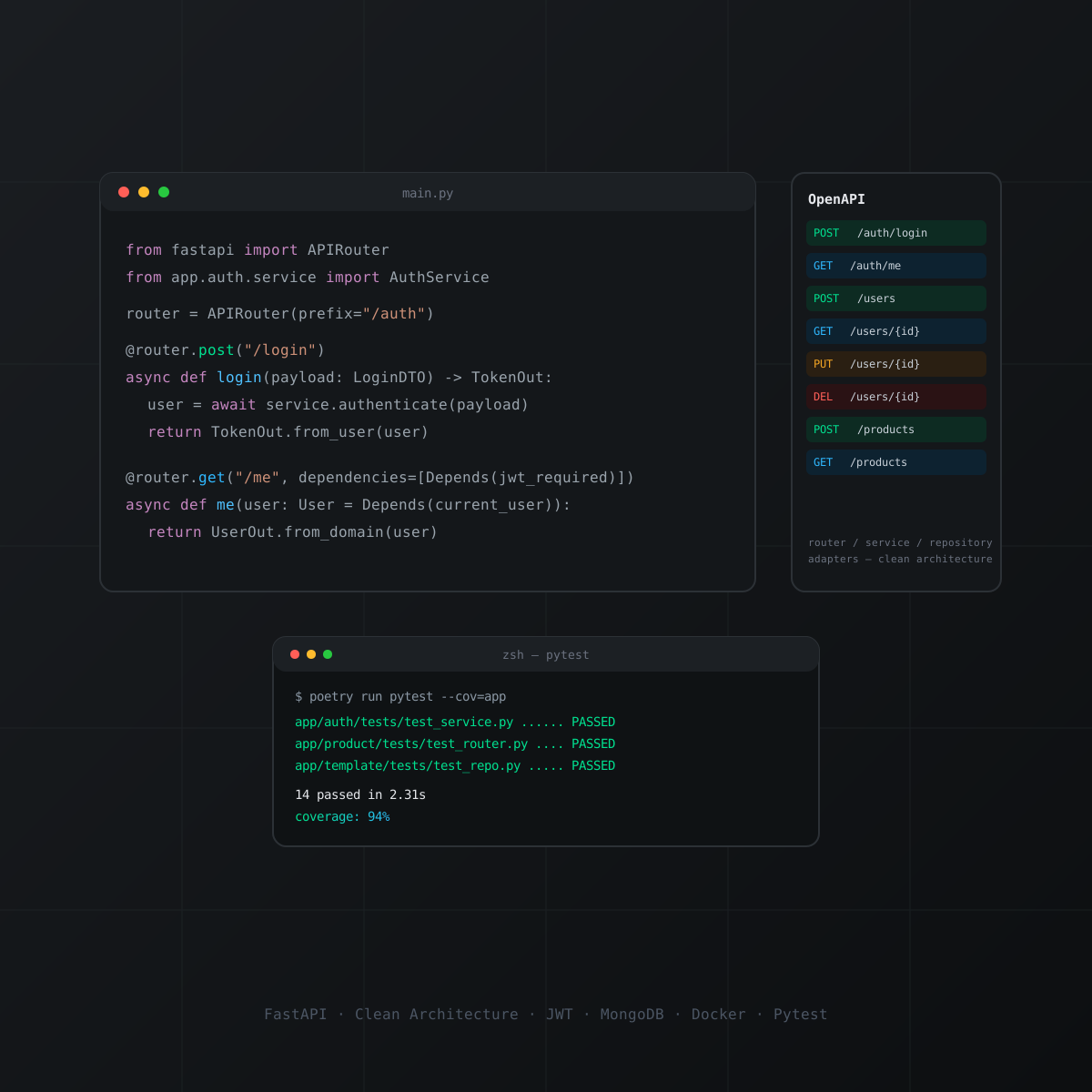
nextjs · boilerplate
Boilerplate de API em Python com FastAPI, organizado em Clean Architecture (router, service, repository e adapters por módulo). Inclui autenticação JWT com hashing bcrypt, MongoDB, testes com pytest e cobertura, Dockerfile e docker-compose para subir localmente, e documentação Swagger/OpenAPI automática. Repositório de origem privado; snapshot técnico verificado antes da publicação.
Ver produto
react · boilerplate
Base React Native para apps iOS e Android com Expo, Clean Architecture, MVVM, Firebase e módulos nativos. Referência técnica do VaiDeFut, com distribuição pública no Google Play e fluxo de publicação para iOS documentado.
Ver produto
nextjs · boilerplate
Kit gratuito e open source para começar com agentes de código em Claude Code, Codex, Gemini, Copilot e OpenCode. A licença MIT está confirmada no repositório público.
Ver produto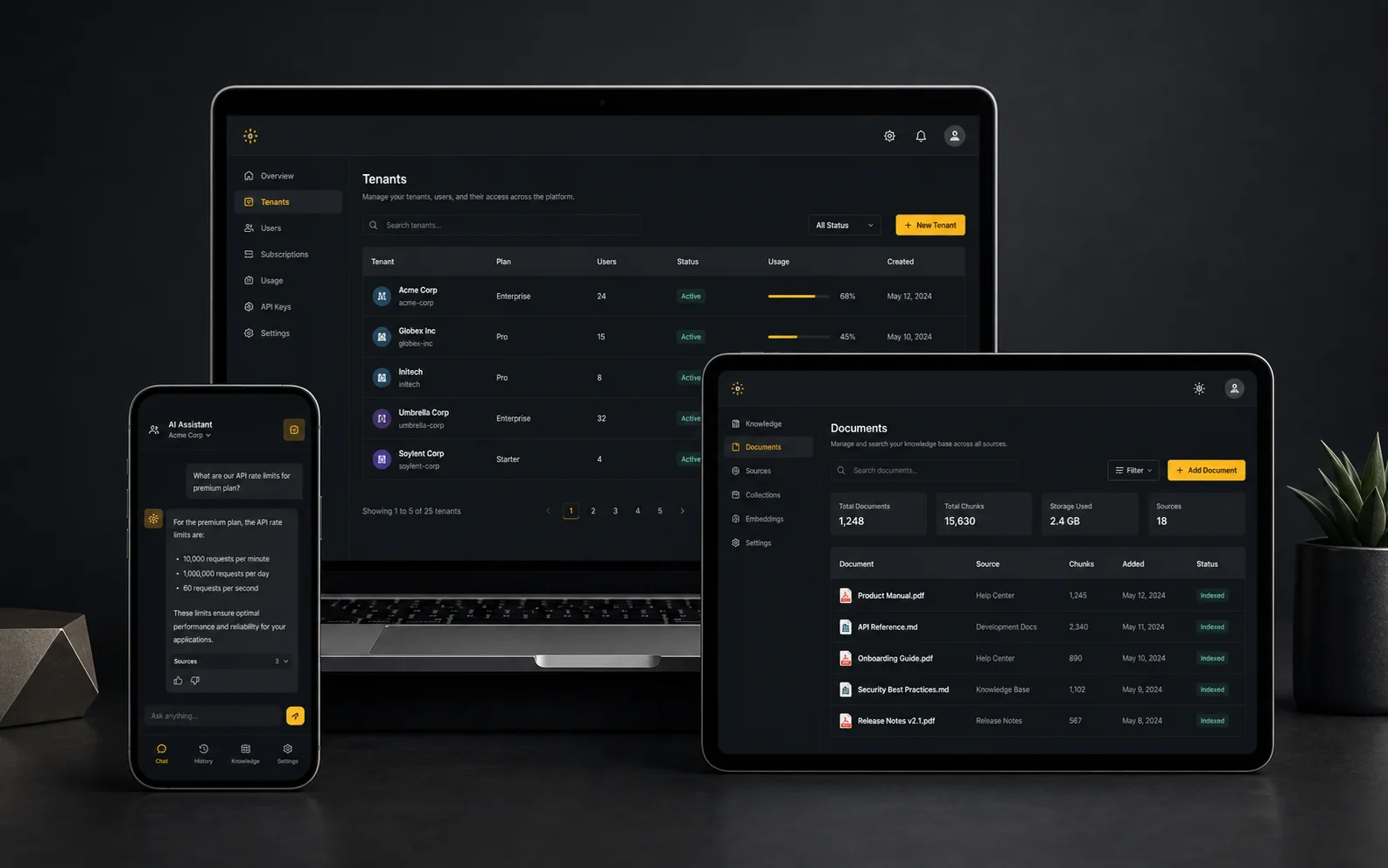
nextjs · boilerplate
Fundação AI-first white-label para lançar produtos SaaS com Next.js, chat, RAG, memória, tenants e documentação. O snapshot verificado documenta Supabase, não MongoDB; essa limitação está explícita. MongoDB, Redis e RabbitMQ exigem integração/configuração compatível.
Ver produtonextjs · boilerplate
Edição avançada da base white-label e multi-tenant AI-first para acelerar produtos com Next.js, chat, RAG, memória e documentação. O snapshot verificado ainda não comprova uma camada Ultra distinta; a oferta mantém essa limitação transparente e explicita as trocas de provider, cache e filas.
Ver produtonextjs · boilerplate
Base white-label e multi-tenant para transformar uma ideia em um SaaS AI-first com Next.js, chat, RAG, memória e segurança documentados. O snapshot verificado usa Supabase; o nome identifica o repositório de origem. Provider, cache e filas ficam explícitos; Redis e RabbitMQ são integrações configuráveis.
Ver produto
react · portfolio
Uma contribuição única para apoiar conteúdo técnico gratuito, pesquisa e a continuidade de projetos relevantes publicados por Anderson Lima. Você escolhe o valor; não é uma assinatura.
Ver produto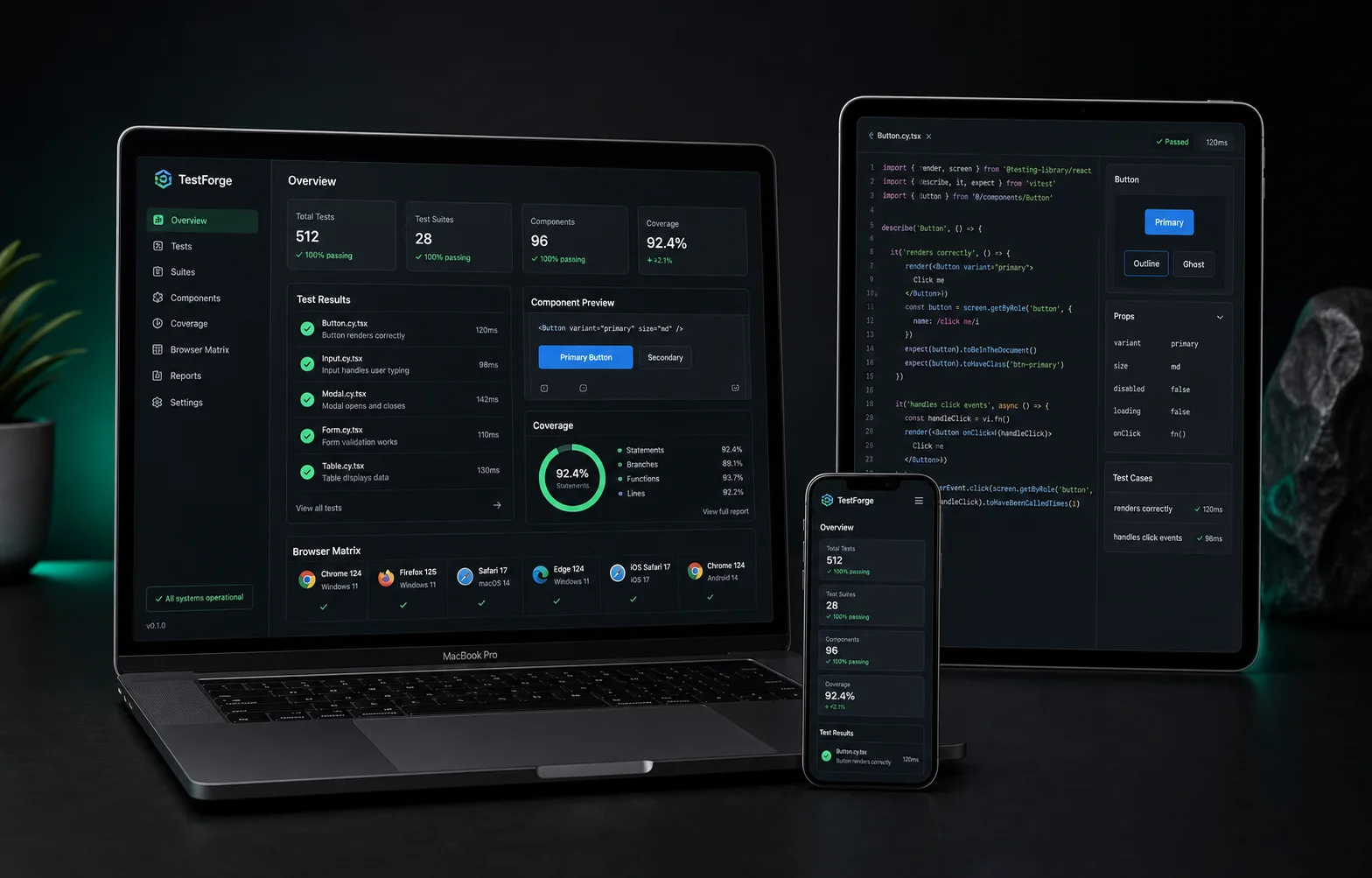
react · boilerplate
Starter React gratuito para criar uma suíte de testes confiável desde o primeiro commit, com Vitest, Testing Library, Playwright, Vite, TypeScript, Zustand, React Query, MirageJS e PWA. O repositório não declara uma licença SPDX; revise os termos antes de uso comercial.
Ver produto
react · portfolio
Monorepo público em React, TypeScript e Vite para explorar uma biblioteca de componentes com linguagem visual inspirada em interfaces nativas. O README atual é enxuto e não declara uma licença SPDX; trate como preview gratuito.
Ver produto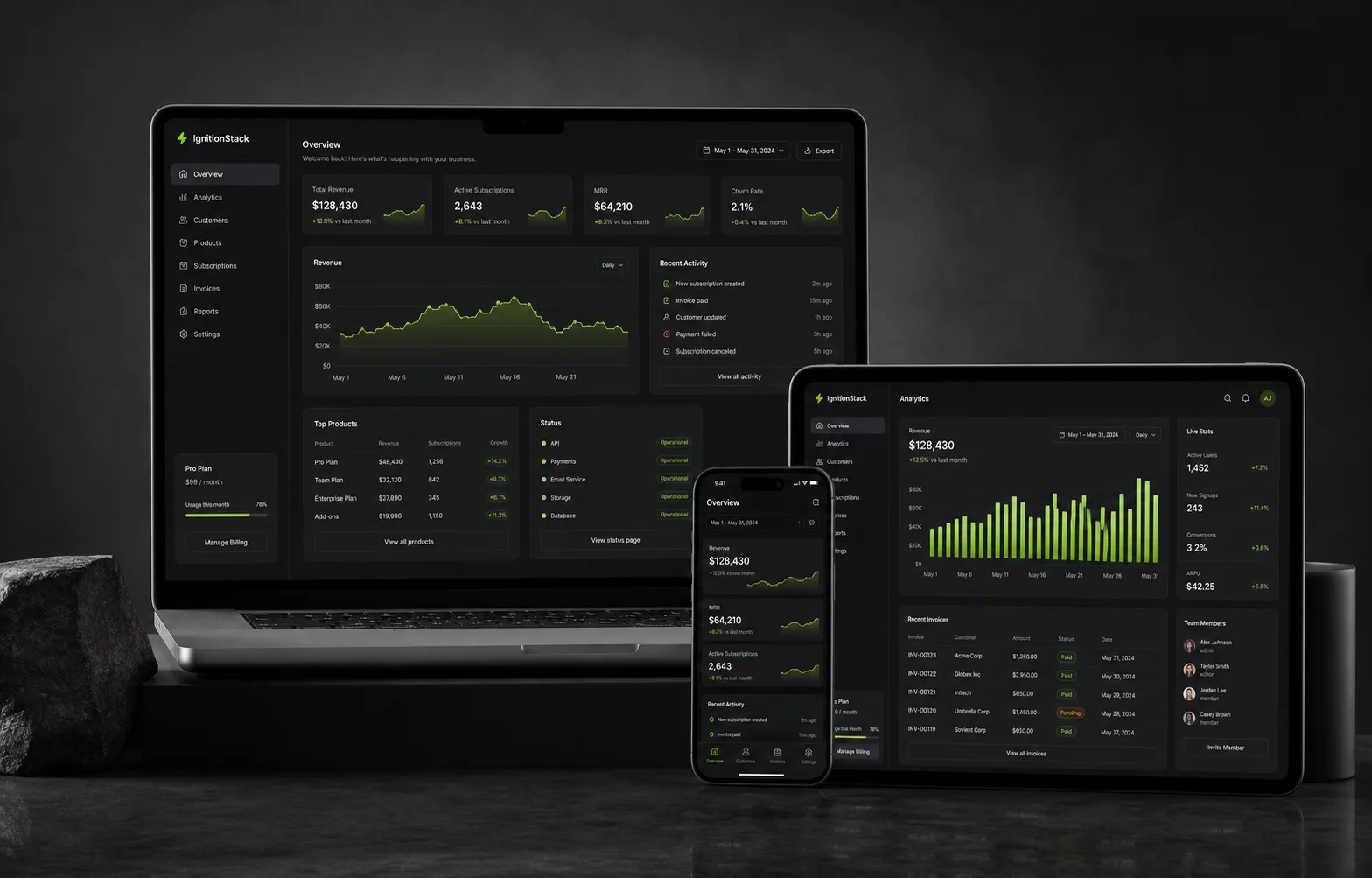
nextjs · saas
Boilerplate SaaS AI-first com Next.js, Supabase, Stripe e provider routing para começar do primeiro prompt e acelerar o caminho até um deploy real. As adaptações de IA, banco, e-mail, cache e filas ficam explícitas; Redis e RabbitMQ são integrações configuráveis.
Ver produto
react · saas
Starter kit React + TypeScript para SaaS multi-tenant com Firebase, Atomic Design, temas, PWA, telas de produto, MirageJS e chat com Gemini extensível a outros providers. Valide requisitos de produção, custos e integrações antes de publicar.
Ver produto
react · boilerplate
Starter React público com TypeScript, Zustand, React Query, Tailwind CSS, PWA e integrações de IA documentadas. O repositório não declara uma licença SPDX; revise os termos antes de uso comercial.
Ver produto
nextjs · saas
Landing page SaaS para Next.js, TypeScript e Tailwind CSS com SEO, temas, i18n, PWA e pontos de integração para auth, Stripe e IA. Uma base clara para sair da tela vazia e adaptar sua proposta.
Ver produtoContinue explorando tópicos similares

A production-grade system design for building distributed rate limiting across APIs and microservices, covering algorithms, token state storage, global consistency trade-offs, per-tenant quotas, adapt

A comprehensive system design guide for building a payment processing platform like Stripe, handling millions of transactions with exactly-once semantics, double-entry ledger, idempotency, fraud detec

Um guia prático e senior para desenhar um motor de busca em escala de internet, cobrindo crawler frontier, robots.txt, sitemaps, canonicalização, deduplicação, índice invertido, ranking, snippets.
Checklist de 47 pontos para encontrar bugs, riscos de segurança e problemas de performance antes do lançamento.
Templates testados em produção, usados por desenvolvedores. Economize semanas de setup no seu próximo projeto.

A user opens an app for 15 seconds while waiting for coffee. In those seconds, the system must decide which content to show first, which products to rank, which creators to highlight, and which exploration opportunities are worth spending impressions on.
One wrong recommendation costs almost nothing.
One million wrong recommendations per minute reshape retention, revenue, creator distribution, and trust.
Recommendation systems are not a single model problem. They are end-to-end systems problems:
In interviews, many candidates over-focus on model types and under-focus on architecture. Senior candidates treat recommendation as a distributed system with machine learning components, strict SLOs, and operational guardrails.
This guide follows that senior path.
A recommendation system can be built for feed ranking, ecommerce discovery, ad ranking, video suggestions, or social graph suggestions. This guide uses a generalized architecture that applies to all of them.
| Requirement | Target | Why it matters |
|---|---|---|
| Recommendation API latency | < 120ms p99 | Product responsiveness and engagement |
| Availability | 99.99% serving path | Feeds/search rely on recs continuously |
| Freshness | interaction impact within seconds to minutes | stale personalization hurts quality |
| Throughput | millions of requests/sec in peak systems | internet-scale requirement |
| Consistency | eventual for most features, strong for config and policy | model systems favor throughput with explicit controls |
| Reliability | graceful degradation on model/index outages | avoid blank pages and hard failures |
System should optimize a portfolio of metrics, not one scalar:
For this design we assume:
These estimates drive architecture decisions.
DAU: 400 million
Recommendation requests/day: 120 billion
Avg recommendations returned per request: 20
Candidate pool per request before ranking: 2,000
Item catalog size: 1.5 billion active items
User events/day: 2.8 trillion interactions
Peak multiplier: 5x
Req/sec avg = 120,000,000,000 / 86,400 ~= 1,388,889
Req/sec peak (5x) ~= 6,944,445
If ranking 2,000 candidates/request naively:
6.94M req/sec * 2,000 candidates ~= 13.9 billion item scores/sec
This is expensive. Hence multi-stage architecture:
2.8T events/day ~= 32.4M events/sec average
Peak (3x) ~= 97M events/sec
This demands partitioned streaming architecture and careful schema governance.
Assume 200 bytes/event compressed average for logged interactions.
2.8T * 200B ~= 560TB/day raw logical
with compression and tiering still massive
Hence strong sampling policies, retention tiers, and feature materialization are required.
Recommendation systems are dominated by:
Design API around ranking intent and context quality.
POST /v1/recommendations
Request:
{
  "request_id": "req_2381",
  "user_id": "u_991",
  "surface": "HOME_FEED",
  "context": {
    "device": "ios",
    "locale": "pt-BR",
    "timezone": "America/Sao_Paulo",
    "network_type": "wifi"
  },
  "session": {
    "session_id": "s_882",
    "entry_point": "app_open"
  },
  "constraints": {
    "max_items": 20,
    "allow_sensitive": false,
    "diversity_level": "medium"
  },
  "debug": false
}
Response:
{
  "request_id": "req_2381",
  "model_version": "ranker_v278",
  "items": [
    {
      "item_id": "i_101",
      "score": 0.9281,
      "reason_codes": ["similar_interest", "fresh_content"],
      "rank": 1
    }
  ],
  "served_at": "2026-02-22T23:40:10Z",
  "fallback_used": false,
  "trace_id": "tr_5502"
}
POST /v1/recommendations/events
{
  "event_id": "evt_901",
  "request_id": "req_2381",
  "user_id": "u_991",
  "item_id": "i_101",
  "event_type": "CLICK",
  "position": 1,
  "surface": "HOME_FEED",
  "event_ts": "2026-02-22T23:40:21Z"
}
Use dedupe key:
dedupe_key = (event_id) or (request_id, user_id, item_id, event_type, event_ts_bucket)
Recommendation architecture relies on multiple data shapes.
{
  "user_id": "u_991",
  "embedding": [0.12, -0.44, 0.89],
  "recent_topics": ["ml", "system-design", "cloud"],
  "activity_1d": {
    "views": 52,
    "clicks": 13,
    "likes": 2
  },
  "quality_signals": {
    "session_depth_avg_7d": 8.2,
    "negative_feedback_ratio": 0.07
  },
  "updated_at": "2026-02-22T23:31:01Z"
}
{
  "item_id": "i_101",
  "creator_id": "c_55",
  "embedding": [0.02, 0.88, -0.31],
  "tags": ["distributed-systems", "architecture"],
  "freshness_hours": 3,
  "quality_score": 0.82,
  "policy": {
    "eligible_surfaces": ["HOME_FEED", "DISCOVER"],
    "sensitivity_level": "LOW"
  },
  "updated_at": "2026-02-22T23:29:44Z"
}
CREATE TABLE experiment_assignments (
  experiment_id VARCHAR(64) NOT NULL,
  user_id BIGINT NOT NULL,
  variant VARCHAR(32) NOT NULL,
  assigned_at TIMESTAMP NOT NULL,
  PRIMARY KEY (experiment_id, user_id)
);
Ranking every item is impossible. Candidate generation narrows search space.
Combine multiple candidate sets and deduplicate.
final_candidates = unique(
  topK(collab, 500)
  U topK(embedding, 600)
  U topK(trending, 200)
  U topK(business, 100)
)
For new users:
For new items:
Embedding retrieval is usually the largest latency-sensitive component.
| Mode | Pros | Cons | Use |
|---|---|---|---|
| Full rebuild daily | simple consistency | stale during day | low freshness surfaces |
| Incremental updates hourly | better freshness | complexity | default |
| near-real-time updates | freshest | expensive and complex | hot surfaces |
Total budget: 120ms
- API + orchestration: 15ms
- retrieval calls: 30ms
- feature fetch: 25ms
- rank + rerank: 35ms
- serialization/network: 15ms
Ranking predicts user-item utility under constraints.
{
  "user_id": "u_991",
  "surface": "HOME_FEED",
  "candidate_ids": ["i_101", "i_102"],
  "feature_refs": {
    "online_snapshot_id": "ofs_788"
  },
  "model_version": "ranker_v278"
}
Common constraints:
Optimizing a single short-term metric can hurt long-term retention and ecosystem health. Always include guardrail metrics.
Feature consistency is one of the hardest practical problems.
During training, never join future features accidentally.
Bad:
Good:
feature_name: user_click_rate_7d
entity: user_id
logic: clicks_7d / impressions_7d
source: interaction_events
update_mode: streaming
online_ttl: 10m
offline_backfill: daily
Fresh events are essential for personalization quality.
High-impact signals should reach online features in seconds, not hours.
Pure exploitation creates filter bubbles and long-term stagnation.
maximize expected_utility(items)
subject to:
- policy_eligible(item) == true
- creator_repeat_cap <= threshold
- min_diversity_score >= threshold
- sponsored_slots <= configured_limit
Start with deterministic ranker + lightweight controlled exploration. Increase sophistication only after observability and safeguards mature.
| Approach | Pros | Cons |
|---|---|---|
| no exploration | stable short-term metrics | long-term stagnation |
| aggressive exploration | learning speed | immediate metric volatility |
| controlled exploration | balanced | requires experimentation discipline |
Recommendation systems influence the data they train on.
{
  "model_name": "ranker_v278",
  "training_data_window": "2026-01-20..2026-02-18",
  "feature_set_version": "fs_v91",
  "offline_metrics": {
    "auc": 0.812,
    "ndcg_20": 0.442,
    "coverage_1k": 0.71
  },
  "guardrails": {
    "creator_gini_max": 0.82,
    "latency_p99_ms_max": 40
  }
}
Model promotion should require both metric gains and guardrail compliance.
Recommendation failures should degrade quality, not availability.
Maintain short-lived per-user cached results and longer-lived context fallback caches.
Never return empty list unless policy requires it. Empty surfaces usually destroy UX.
Model quality depends on data and deployment discipline.
Every model artifact should link to:
Recommendation changes require controlled measurement.
Primary metric depends on surface:
Guardrails:
{
  "experiment_id": "exp_ranker_278",
  "user_id": "u_991",
  "variant": "B",
  "assigned_at": "2026-02-22T23:35:00Z"
}
Serving performance depends on smart partitioning and caching.
rec:user:{user_id}:surface:{surface}
rec:context:{locale}:{surface}:{hour_bucket}
features:user:{user_id}
features:item:{item_id}
model:config:{surface}
| Store | Suggested Shard Key |
|---|---|
| user profiles/features | hash(user_id) |
| item features | hash(item_id) |
| ANN index shards | partition by item vector space + hash |
| event stream topics | user_id or session_id depending consumption pattern |
Recommendation serving is global and latency-sensitive.
Recommendation systems process sensitive behavioral data.
Mitigation requires anomaly detection and trust-weighted signals.
SLOs must include both system and model health.
| Domain | SLI | SLO |
|---|---|---|
| Recommendation API | p99 latency | < 120ms |
| Serving availability | success rate | > 99.99% |
| Event ingestion | accepted event rate | > 99.95% |
| Feature freshness | lag p95 | < 60s (critical features) |
| Model inference | timeout/error rate | within error budget |
| Recommendation quality | online KPI delta vs baseline | non-negative in guardrail windows |
System signals:
Model signals:
x-request-id
x-user-id
x-surface
x-model-version
x-experiment-variant
| Decision | Option A | Option B | Recommended |
|---|---|---|---|
| ranking depth | heavy model on all candidates | multi-stage ranking | multi-stage ranking |
| feature updates | batch only | hybrid batch+streaming | hybrid |
| exploration | none | controlled exploration | controlled exploration |
| serving strategy | personalized only | personalized + robust fallback | dual path |
| regional strategy | single global cluster | regional serving clusters | regional clusters |
If asked "design a recommendation system":
Problem: impossible compute and latency profile.
Fix: use candidate generation + retrieval to shrink search space first.
Problem: offline gains do not reproduce online.
Fix: versioned feature definitions and point-in-time training joins.
Problem: model/index incident causes blank recommendation surfaces.
Fix: layered fallback hierarchy with tested degradation modes.
Problem: short-term click gains but long-term retention and ecosystem damage.
Fix: multi-objective optimization with guardrail metrics.
Problem: recommendation entropy collapses; discovery quality declines.
Fix: controlled exploration budget and diversity constraints.
Problem: silent model quality decay in production.
Fix: monitor feature, score, and outcome drift continuously.
Problem: false wins and unstable rollouts.
Fix: robust experimentation framework with causal safeguards.
Recommendation systems at scale are distributed systems with ML intelligence, not ML scripts wrapped in APIs.
The stable architecture pattern is:
If you can explain this architecture with clear trade-offs, you can deliver strong system design interviews and build recommendation platforms that are fast, resilient, and responsible.
| Layer | Responsibility |
|---|---|
| Candidate Generation | broad personalized candidate sets |
| Retrieval (ANN) | nearest-neighbor candidate narrowing |
| Ranking | utility prediction and ordering |
| Re-ranking | diversity, policy, and business constraints |
| Feature Stores | online/offline feature consistency |
| Event Pipeline | real-time feedback ingestion |
| Experimentation | causal measurement and rollout control |
| Fallback | graceful degradation and availability protection |
request -> retrieval -> ranking -> reranking -> response
       \-> fallback when degraded
1) Scope and objective: define surface + success metrics.
2) Scale: estimate QPS and score compute constraints.
3) Architecture: candidate gen -> retrieval -> ranking -> reranking.
4) Data plane: online/offline feature stores + realtime events.
5) Reliability: fallback hierarchy, circuit breakers, multi-region serving.
6) Governance: experimentation, drift monitoring, fairness/privacy controls.
You now have a production-grade blueprint for recommendation system design with practical architecture decisions and interview-ready trade-off framing.