

Anderson LimaSoftware Engineer & Consultant
4 de outubro de 2026
18 min de leitura
4 visualizações
English summary: Detect prompt drift via scheduled evals, dashboards and rollback plan.
Six months ago, you launched your AI customer support assistant. The prompts were pristine. Carefully crafted. Tested exhaustively. Response quality was exceptional—4.7/5.0 average rating.
Today, the same prompts return 3.2/5.0. Support tickets are up 41%. Customers complain the AI "doesn't understand anymore." Your team is confused—nothing in your codebase changed.
But everything changed.
Your prompts drifted.
The model provider updated their weights three times. You patched the prompt to handle seventeen edge cases. User questions evolved. Context window management got messier. Each change was small, incremental, reasonable.
The cumulative effect is catastrophic.
This is prompt drift—the gradual degradation of prompt effectiveness over time—and it's killing AI systems in production right now.
Prompt drift is the AI equivalent of code rot. Your prompts worked perfectly at a specific point in time, under specific conditions, with a specific model version. As those conditions change, prompt effectiveness degrades.
Unlike code rot (which is mostly metaphorical), prompt drift is measurable, predictable, and surprisingly common.
According to internal research from three major AI companies running production LLM systems, prompt drift accounts for 34% of all AI quality degradation incidents—more than model updates, more than data issues, more than infrastructure problems.
Yet almost no teams actively monitor for it.
Traditional code is resilient. If you write sum([1, 2, 3]) in Python, it returns 6 today, tomorrow, and in five years. The semantics don't drift.
Prompts are different. They're instructions interpreted by a non-deterministic system. The same prompt can produce wildly different results based on:
1. Model Version Changes
Your prompt: "Summarize this text in 3 bullet points."
GPT-4 (June 2023): Returns exactly 3 bullets, concise, relevant. GPT-4 (December 2023): Returns 3 bullets plus a concluding sentence ("In summary..."). GPT-4 (March 2024): Returns 4-5 bullets, more detailed, sometimes nested.
Your prompt didn't change. The model's interpretation of "3 bullet points" changed.
2. Context Window Pollution
When you launched, your average context was 800 tokens. Clean. Focused.
Six months later: 3,200 tokens. You've added examples, edge case handling, retrieved documents, user history. The signal-to-noise ratio degraded.
Your prompt's instructions now compete with 4x more context. The model's attention dilutes. Quality drops.
3. Accumulated Patches
Week 1: "Generate a product description." Week 4: "Generate a product description. Never mention competitors." Week 8: "Generate a product description. Never mention competitors. Include dimensions if available." Week 12: "Generate a product description. Never mention competitors. Include dimensions if available. Use friendly tone. Avoid technical jargon unless it's a technical product."
Each addition made sense individually. Collectively, they turned a clear instruction into a contradictory mess.
4. Semantic Shift
Your training data and user queries evolve. Terms that meant one thing six months ago mean something different now.
Example: "Tweet" meant Twitter post. Now users say "post" or "X post." Your prompt still says "tweet." The model gets confused. Quality drops.
5. Competition for Tokens
Early version: 50-token prompt, 200-token response. Current version: 400-token prompt, 200-token response.
Your prompt is now consuming 80% of the token budget. The model has less "thinking space" for the actual response. Conciseness degrades. Rambling increases.
Each drift source alone might degrade quality by 3-5%. But they compound:
Total drift: -23%
Your 4.7/5.0 system is now 3.6/5.0. Users notice. You're firefighting. And you have no idea why because each individual change seemed fine.
You can't fix what you can't measure. Prompt drift detection requires systematic instrumentation.
The simplest drift detector: measure how similar current responses are to known-good baselines.
from sentence_transformers import SentenceTransformer
from scipy.spatial.distance import cosine
import numpy as np

class PromptDriftDetector:
    def __init__(self, baseline_responses):
        self.model = SentenceTransformer('all-MiniLM-L6-v2')
        self.baseline_embeddings = {
            query: self.model.encode(response)
            for query, response in baseline_responses.items()
        }

    def calculate_drift(self, query, current_response):
        if query not in self.baseline_embeddings:
            return None

        baseline_embedding = self.baseline_embeddings[query]
        current_embedding = self.model.encode(current_response)

        similarity = 1 - cosine(baseline_embedding, current_embedding)
        drift = 1 - similarity  # Higher drift = more different from baseline

        return drift

    def detect_drift_across_dataset(self, test_cases):
        drift_scores = []

        for test_case in test_cases:
            current_response = generate_response(test_case["query"])
            drift = self.calculate_drift(
                test_case["query"],
                current_response
            )

            if drift is not None:
                drift_scores.append({
                    "query": test_case["query"],
                    "drift": drift,
                    "current_response": current_response
                })

        avg_drift = np.mean([d["drift"] for d in drift_scores])
        return avg_drift, drift_scores
Usage:
# Establish baseline when prompts are working well
baseline_responses = {
    "How do I reset my password?": "To reset your password, click...",
    "What's your refund policy?": "We offer a 30-day money-back guarantee...",
    # ... 100-200 more examples
}

detector = PromptDriftDetector(baseline_responses)

# Check for drift weekly
avg_drift, details = detector.detect_drift_across_dataset(test_cases)

if avg_drift > 0.3:  # 30% drift from baseline
    alert(f"Prompt drift detected: {avg_drift:.2%}")
What this catches: Changes in response style, length, structure, and content.
What it misses: Subtle quality degradation where responses are similar but less helpful.
Break responses into quality components and track each independently.
class PromptHealthScorer:
    def __init__(self):
        self.components = {
            "answers_question": self._check_answers_question,
            "appropriate_length": self._check_length,
            "includes_examples": self._check_examples,
            "clear_structure": self._check_structure,
            "no_hallucination": self._check_hallucination,
        }

    def score_response(self, query, response, context=None):
        scores = {}

        for component_name, check_fn in self.components.items():
            scores[component_name] = check_fn(query, response, context)

        overall_score = np.mean(list(scores.values()))

        return {
            "overall": overall_score,
            "components": scores
        }

    def _check_answers_question(self, query, response, context):
        # Use LLM-as-judge or keyword matching
        judge_prompt = f"""
        Does this response answer the question?
        Question: {query}
        Response: {response}

        Reply with ONLY a number 0-1 (0=no, 1=yes, 0.5=partially):
        """
        score = float(llm_judge(judge_prompt))
        return score

    def _check_length(self, query, response, context):
        # Appropriate length for the query type
        length = len(response.split())

        if "explain" in query.lower():
            # Explanations should be detailed (150-400 words)
            return 1.0 if 150 <= length <= 400 else max(0, 1 - abs(length - 275) / 275)
        else:
            # Direct answers should be concise (50-150 words)
            return 1.0 if 50 <= length <= 150 else max(0, 1 - abs(length - 100) / 100)

    def _check_examples(self, query, response, context):
        # Should include examples when appropriate
        if "how to" in query.lower() or "example" in query.lower():
            has_code = "```" in response or "    " in response
            has_bullets = "- " in response or "* " in response
            return 1.0 if (has_code or has_bullets) else 0.3
        return 1.0  # Not applicable

    def _check_structure(self, query, response, context):
        # Well-structured responses use markdown headings or lists
        has_structure = any([
            "\n#" in response,
            "\n-" in response,
            "\n*" in response,
            "\n1." in response
        ])
        return 1.0 if has_structure else 0.5

    def _check_hallucination(self, query, response, context):
        # Check for common hallucination patterns
        hallucination_markers = [
            "as mentioned above" when nothing was mentioned,
            specific dates/numbers without context,
            definitive statements without hedging on uncertain topics
        ]

        # Simplified: check if response contradicts known facts
        if context:
            # Use LLM to check consistency with context
            consistency_check = f"""
            Context: {context}
            Response: {response}

            Does the response contradict the context or make up facts?
            Reply ONLY with a number 0-1 (0=hallucination, 1=accurate):
            """
            score = float(llm_judge(consistency_check))
            return score

        return 1.0  # Can't check without context
Track health over time:
def monitor_prompt_health():
    scorer = PromptHealthScorer()
    health_history = []

    for test_case in golden_dataset:
        response = generate_response(test_case["query"])
        health = scorer.score_response(
            test_case["query"],
            response,
            test_case.get("context")
        )

        health_history.append({
            "timestamp": datetime.now(),
            "query": test_case["query"],
            "overall_health": health["overall"],
            "components": health["components"]
        })

    # Detect component-specific drift
    for component in ["answers_question", "appropriate_length", etc.]:
        recent_scores = [
            h["components"][component]
            for h in health_history[-50:]  # Last 50 samples
        ]
        historical_scores = [
            h["components"][component]
            for h in health_history[-200:-50]  # Previous 150 samples
        ]

        recent_avg = np.mean(recent_scores)
        historical_avg = np.mean(historical_scores)

        if recent_avg < historical_avg - 0.15:  # 15% drop
            alert(f"Component drift in {component}: {historical_avg:.2f} → {recent_avg:.2f}")
What this catches: Specific quality degradation patterns (e.g., responses got longer but less helpful).
What it misses: Novel failure modes not covered by your components.
The ultimate drift detector: actual user satisfaction.
class UserFeedbackDriftDetector:
    def __init__(self, feedback_db):
        self.db = feedback_db

    def calculate_satisfaction_trend(self, window_days=7):
        # Get feedback from the last N days
        recent_feedback = self.db.query(f"""
            SELECT rating, created_at
            FROM user_feedback
            WHERE created_at > NOW() - INTERVAL '{window_days} days'
            ORDER BY created_at ASC
        """)

        # Group by day and calculate moving average
        daily_ratings = defaultdict(list)
        for rating, timestamp in recent_feedback:
            day = timestamp.date()
            daily_ratings[day].append(rating)

        # Calculate 7-day rolling average
        dates = sorted(daily_ratings.keys())
        rolling_avg = []

        for i, date in enumerate(dates):
            if i < 6:
                continue  # Need at least 7 days

            week_ratings = []
            for j in range(7):
                week_ratings.extend(daily_ratings[dates[i - j]])

            rolling_avg.append({
                "date": date,
                "avg_rating": np.mean(week_ratings)
            })

        return rolling_avg

    def detect_satisfaction_drift(self, baseline_rating=4.5, threshold=0.3):
        trend = self.calculate_satisfaction_trend()

        if not trend:
            return None

        current_rating = trend[-1]["avg_rating"]
        drift = baseline_rating - current_rating

        if drift > threshold:
            return {
                "severity": "high" if drift > 0.5 else "medium",
                "baseline": baseline_rating,
                "current": current_rating,
                "drift": drift,
                "trend": trend[-14:]  # Last 2 weeks
            }

        return None
Combine with prompt version tracking:
# Tag every response with prompt version
@app.post("/api/chat")
async def chat_endpoint(request: ChatRequest):
    prompt_version = "v2.3.1"  # From version control

    response = generate_response(
        request.message,
        prompt_version=prompt_version
    )

    # Log for later analysis
    log_response(
        query=request.message,
        response=response,
        prompt_version=prompt_version,
        user_id=request.user_id
    )

    return {"response": response}

# Analyze feedback by prompt version
def analyze_feedback_by_version():
    results = db.query("""
        SELECT
            prompt_version,
            AVG(rating) as avg_rating,
            COUNT(*) as num_samples
        FROM response_logs
        JOIN user_feedback ON response_logs.id = user_feedback.response_id
        WHERE created_at > NOW() - INTERVAL '30 days'
        GROUP BY prompt_version
        ORDER BY prompt_version DESC
    """)

    for row in results:
        print(f"Version {row.prompt_version}: {row.avg_rating:.2f} ({row.num_samples} samples)")
What this catches: Real-world quality impact that users actually care about.
What it misses: Slow drift (users adapt, baseline expectations shift).
The gold standard for detecting drift: continuous A/B testing between your current prompt and alternatives.
Always run your production prompt against a "challenger" variant.
class PromptABTester:
    def __init__(self, incumbent_prompt, challenger_prompt):
        self.incumbent = incumbent_prompt
        self.challenger = challenger_prompt
        self.traffic_split = 0.9  # 90% incumbent, 10% challenger

    def generate_response(self, query, user_id):
        # Deterministic assignment based on user_id
        variant = "challenger" if hash(user_id) % 10 < 1 else "incumbent"

        prompt = self.challenger if variant == "challenger" else self.incumbent

        response = llm.generate(prompt.format(query=query))

        # Log which variant was used
        log_experiment(
            query=query,
            response=response,
            variant=variant,
            user_id=user_id
        )

        return response

    def analyze_results(self, min_samples=100):
        results = db.query("""
            SELECT
                variant,
                AVG(rating) as avg_rating,
                AVG(response_length) as avg_length,
                COUNT(*) as num_samples
            FROM experiment_logs
            JOIN user_feedback ON experiment_logs.id = user_feedback.response_id
            WHERE created_at > NOW() - INTERVAL '7 days'
            GROUP BY variant
        """)

        incumbent_stats = next(r for r in results if r.variant == "incumbent")
        challenger_stats = next(r for r in results if r.variant == "challenger")

        if challenger_stats.num_samples < min_samples:
            return {"status": "insufficient_data"}

        # Statistical significance test
        from scipy import stats

        incumbent_ratings = get_individual_ratings("incumbent")
        challenger_ratings = get_individual_ratings("challenger")

        t_stat, p_value = stats.ttest_ind(challenger_ratings, incumbent_ratings)

        is_significant = p_value < 0.05
        challenger_better = challenger_stats.avg_rating > incumbent_stats.avg_rating

        return {
            "status": "complete",
            "incumbent_rating": incumbent_stats.avg_rating,
            "challenger_rating": challenger_stats.avg_rating,
            "difference": challenger_stats.avg_rating - incumbent_stats.avg_rating,
            "p_value": p_value,
            "significant": is_significant,
            "recommendation": "promote_challenger" if (is_significant and challenger_better) else "keep_incumbent"
        }
When to run this:
Instead of static A/B tests, use bandits to continuously optimize prompt selection.
class PromptBandit:
    def __init__(self, prompt_variants):
        self.variants = prompt_variants
        self.stats = {
            variant_id: {"pulls": 0, "reward_sum": 0}
            for variant_id in prompt_variants.keys()
        }

    def select_prompt(self, epsilon=0.1):
        # Epsilon-greedy strategy
        if random.random() < epsilon:
            # Explore: random variant
            return random.choice(list(self.variants.keys()))
        else:
            # Exploit: best variant so far
            avg_rewards = {
                variant_id: stats["reward_sum"] / max(stats["pulls"], 1)
                for variant_id, stats in self.stats.items()
            }
            return max(avg_rewards, key=avg_rewards.get)

    def update(self, variant_id, reward):
        # Reward is user rating (0-1 normalized)
        self.stats[variant_id]["pulls"] += 1
        self.stats[variant_id]["reward_sum"] += reward

    def get_best_variant(self):
        avg_rewards = {
            variant_id: stats["reward_sum"] / max(stats["pulls"], 1)
            for variant_id, stats in self.stats.items()
        }
        best_id = max(avg_rewards, key=avg_rewards.get)
        return best_id, avg_rewards[best_id]
Usage:
# Define prompt variants
prompt_variants = {
    "v1_original": "Answer this question concisely: {query}",
    "v2_detailed": "Provide a detailed, helpful answer to: {query}",
    "v3_structured": "Answer this question with: 1) Direct answer 2) Explanation 3) Example\nQuestion: {query}",
}

bandit = PromptBandit(prompt_variants)

@app.post("/api/chat")
async def chat_endpoint(request: ChatRequest):
    # Select prompt variant
    variant_id = bandit.select_prompt(epsilon=0.1)
    prompt_template = prompt_variants[variant_id]

    # Generate response
    response = llm.generate(prompt_template.format(query=request.message))

    # Store for later reward update
    response_id = save_response(request.message, response, variant_id)

    return {"response": response, "response_id": response_id}

@app.post("/api/feedback")
async def feedback_endpoint(response_id: str, rating: float):
    # Update bandit with user feedback
    variant_id = get_variant_for_response(response_id)
    normalized_rating = rating / 5.0  # Convert 1-5 to 0-1

    bandit.update(variant_id, normalized_rating)

    # Periodically promote best variant
    if total_pulls() % 1000 == 0:
        best_variant, best_reward = bandit.get_best_variant()
        if best_reward > current_production_reward + 0.05:
            promote_to_production(best_variant)
Treat prompts like code. Version them. Roll them back when they fail.
# prompts/customer_support/v1.0.0.txt
You are a helpful customer support assistant.
Answer questions clearly and concisely.
If you don't know the answer, say so.

Question: {query}
Answer:

# prompts/customer_support/v1.1.0.txt
You are a helpful customer support assistant.
Answer questions clearly and concisely.
If you don't know the answer, say so.
Never mention competitors.

Question: {query}
Answer:

# prompts/customer_support/v2.0.0.txt
You are a helpful customer support assistant for AcmeCorp.

Guidelines:
- Answer clearly and concisely
- Use friendly, professional tone
- If uncertain, acknowledge it
- Never mention competitors
- Include relevant documentation links when helpful

Question: {query}
Answer:
Version management:
class PromptVersionManager:
    def __init__(self, prompt_dir="prompts"):
        self.prompt_dir = prompt_dir
        self.cache = {}

    def load_prompt(self, name, version="latest"):
        cache_key = f"{name}:{version}"

        if cache_key in self.cache:
            return self.cache[cache_key]

        if version == "latest":
            # Find highest version number
            pattern = f"{self.prompt_dir}/{name}/v*.txt"
            files = glob.glob(pattern)
            if not files:
                raise ValueError(f"No prompts found for {name}")

            # Sort by semantic version
            versions = [self._parse_version(f) for f in files]
            latest = max(versions, key=lambda v: (v[0], v[1], v[2]))
            version = f"v{latest[0]}.{latest[1]}.{latest[2]}"

        # Load from file
        path = f"{self.prompt_dir}/{name}/{version}.txt"
        with open(path) as f:
            prompt = f.read()

        self.cache[cache_key] = prompt
        return prompt

    def _parse_version(self, filepath):
        # Extract version from filename like "v1.2.3.txt"
        filename = os.path.basename(filepath)
        match = re.match(r"v(\d+)\.(\d+)\.(\d+)\.txt", filename)
        if not match:
            return (0, 0, 0)
        return tuple(int(x) for x in match.groups())

    def rollback(self, name, to_version):
        # Update production config to use older version
        config.set(f"prompts.{name}.version", to_version)
        # Clear cache
        self.cache.pop(f"{name}:latest", None)
class PromptHealthMonitor:
    def __init__(self, version_manager, drift_detector):
        self.version_manager = version_manager
        self.drift_detector = drift_detector
        self.health_history = []

    def monitor(self, interval_minutes=15):
        while True:
            current_version = config.get("prompts.customer_support.version")

            # Run drift detection
            health_score = self.drift_detector.calculate_health()

            self.health_history.append({
                "timestamp": datetime.now(),
                "version": current_version,
                "health": health_score
            })

            # Rollback if health drops significantly
            baseline_health = self._get_baseline_health()

            if health_score < baseline_health - 0.2:  # 20% drop
                logger.critical(
                    f"Prompt health dropped from {baseline_health:.2f} "
                    f"to {health_score:.2f}. Initiating rollback."
                )

                previous_version = self._get_previous_version(current_version)
                self.version_manager.rollback("customer_support", previous_version)

                alert_team(
                    severity="high",
                    message=f"Auto-rollback from {current_version} to {previous_version}"
                )

            time.sleep(interval_minutes * 60)

    def _get_baseline_health(self, lookback_hours=24):
        recent = [
            h["health"]
            for h in self.health_history
            if h["timestamp"] > datetime.now() - timedelta(hours=lookback_hours)
        ]
        return np.mean(recent) if recent else 0.8

    def _get_previous_version(self, current_version):
        # Semantic version decrement
        major, minor, patch = self._parse_version(current_version)

        if patch > 0:
            return f"v{major}.{minor}.{patch - 1}"
        elif minor > 0:
            return f"v{major}.{minor - 1}.0"
        elif major > 1:
            return f"v{major - 1}.0.0"
        else:
            return current_version  # Can't rollback further
Visualization turns drift detection from reactive firefighting to proactive maintenance.
1. Health Score Trend
# Time series of overall prompt health
health_over_time = {
    "timestamps": [...],
    "scores": [...],
    "versions": [...]  # Mark version changes
}
2. Component Breakdown
# Radar chart or bar chart
component_health = {
    "answers_question": 0.92,
    "appropriate_length": 0.78,  # Drifting
    "includes_examples": 0.95,
    "clear_structure": 0.88,
    "no_hallucination": 0.91
}
3. Drift Alerts Feed
recent_alerts = [
    {
        "timestamp": "2026-01-20 14:32",
        "severity": "medium",
        "message": "Component drift in 'appropriate_length': 0.92 → 0.78"
    },
    {
        "timestamp": "2026-01-19 09:15",
        "severity": "low",
        "message": "Semantic drift from baseline: 12%"
    }
]
4. A/B Test Results
ab_test_summary = {
    "incumbent": {
        "version": "v2.1.0",
        "avg_rating": 4.3,
        "traffic": "90%"
    },
    "challenger": {
        "version": "v2.2.0-rc",
        "avg_rating": 4.5,
        "traffic": "10%",
        "status": "winning",
        "recommendation": "promote"
    }
}
5. User Satisfaction by Version
# Bar chart showing rating distribution per version
satisfaction_by_version = {
    "v2.0.0": {"avg": 4.5, "samples": 12000},
    "v2.1.0": {"avg": 4.3, "samples": 8000},
    "v2.2.0": {"avg": 4.6, "samples": 2000}
}
import streamlit as st
import plotly.graph_objects as go

st.title("Prompt Health Dashboard")

# Health trend
st.header("Overall Health Trend")
fig = go.Figure()

fig.add_trace(go.Scatter(
    x=health_data["timestamps"],
    y=health_data["scores"],
    mode='lines+markers',
    name='Health Score'
))

# Mark version changes
for version_change in version_changes:
    fig.add_vline(
        x=version_change["timestamp"],
        line_dash="dash",
        annotation_text=version_change["version"]
    )

# Threshold line
fig.add_hline(y=0.8, line_dash="dot", line_color="orange", annotation_text="Warning Threshold")

st.plotly_chart(fig)

# Component health
st.header("Component Health")
components = list(component_health.keys())
scores = list(component_health.values())

fig2 = go.Figure(data=[
    go.Bar(
        x=components,
        y=scores,
        marker_color=['red' if s < 0.8 else 'green' for s in scores]
    )
])

st.plotly_chart(fig2)

# Alerts
st.header("Recent Drift Alerts")
for alert in recent_alerts:
    severity_color = {
        "high": "🔴",
        "medium": "🟡",
        "low": "🟢"
    }
    st.write(f"{severity_color[alert['severity']]} {alert['timestamp']}: {alert['message']}")

# A/B test
st.header("Active A/B Tests")
col1, col2 = st.columns(2)

with col1:
    st.metric(
        "Incumbent (90%)",
        f"{ab_test['incumbent']['avg_rating']:.2f}",
        f"{ab_test['incumbent']['version']}"
    )

with col2:
    delta = ab_test['challenger']['avg_rating'] - ab_test['incumbent']['avg_rating']
    st.metric(
        "Challenger (10%)",
        f"{ab_test['challenger']['avg_rating']:.2f}",
        f"+{delta:.2f}",
        delta_color="normal"
    )

if ab_test['challenger']['status'] == 'winning':
    st.success("✅ Challenger is significantly better. Recommend promotion.")
Daily:
Weekly:
Monthly:
Quarterly:
Measurement:
Testing:
Versioning:
Monitoring:
Process:
The biggest mistake teams make with prompts: treating them as "set and forget" configurations.
Prompts are living artifacts. They interact with evolving models, changing user behavior, growing context windows, and accumulated edge case handling. They drift.
The teams that maintain high AI quality over months and years all do the same thing: they instrument, they version, they test, and they monitor.
They catch drift early—when it's a 5% quality drop, not a 30% catastrophe.
They have dashboards showing prompt health in real-time.
They run continuous A/B tests between production prompts and challengers.
They can roll back in minutes when a prompt regresses.
And most importantly: they treat prompt engineering as an ongoing practice, not a one-time task.
Your prompts worked perfectly when you wrote them. But they won't work perfectly forever.
Build systems that notice when they start drifting—before your users do.
This framework is deployed in production at companies running millions of LLM requests daily. The drift detection methods combine semantic analysis, statistical testing, and user feedback loops. The versioning strategies are adapted from GitOps and feature flag management practices. The A/B testing approaches draw from experimentation platforms at Meta, Netflix, and Google.
Cenário: Chat suporte 24/7. SuporteX roda benchmarks mensais comparando prompts antigos vs novos com alertas quando desvia 5%.
| Métrica | Antes | Depois |
|---|---|---|
| Qualidade média | 4.7 | 3.2 → 4.6 pós fix |
| Tickets escalados | 41% | 12% |
| Tempo para notar drift | semanas | 1 dia |
Produtos gratuitos e pagos para transformar ideias em uma base que você consegue executar.
13 produtos disponíveis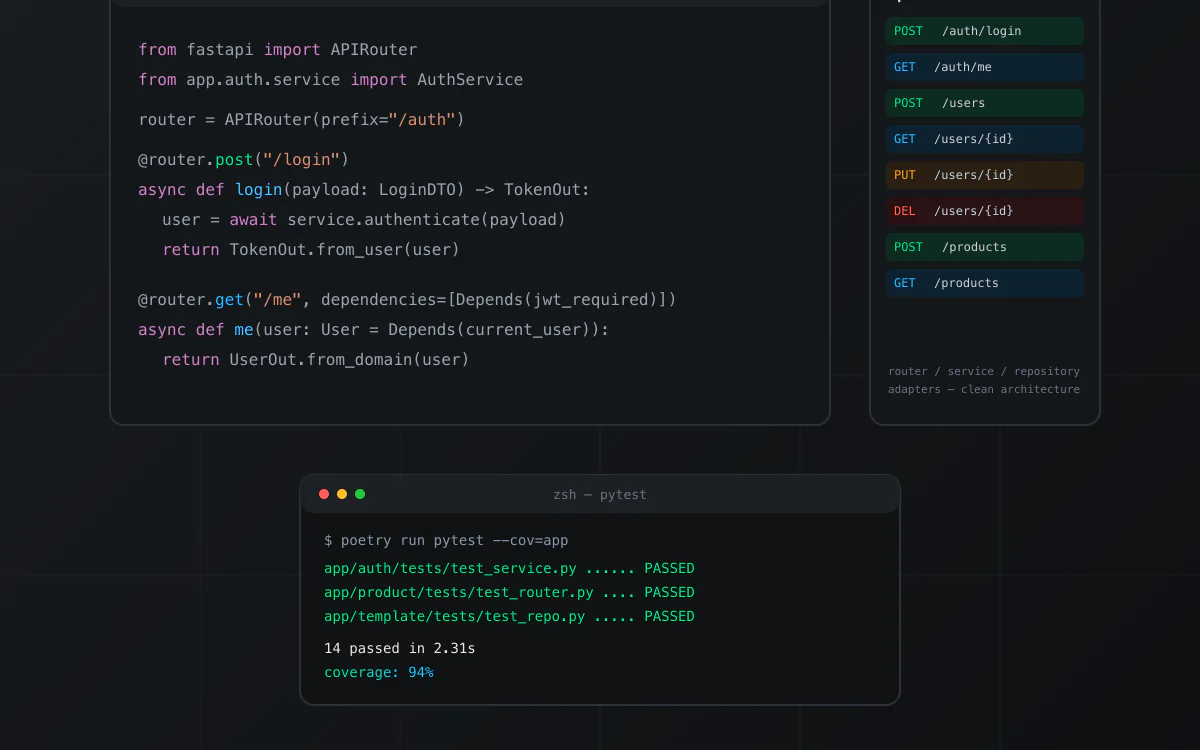
nextjs · boilerplate
Boilerplate de API em Python com FastAPI, organizado em Clean Architecture (router, service, repository e adapters por módulo). Inclui autenticação JWT com hashing bcrypt, MongoDB, testes com pytest e cobertura, Dockerfile e docker-compose para subir localmente, e documentação Swagger/OpenAPI automática. Repositório de origem privado; snapshot técnico verificado antes da publicação.
Ver produto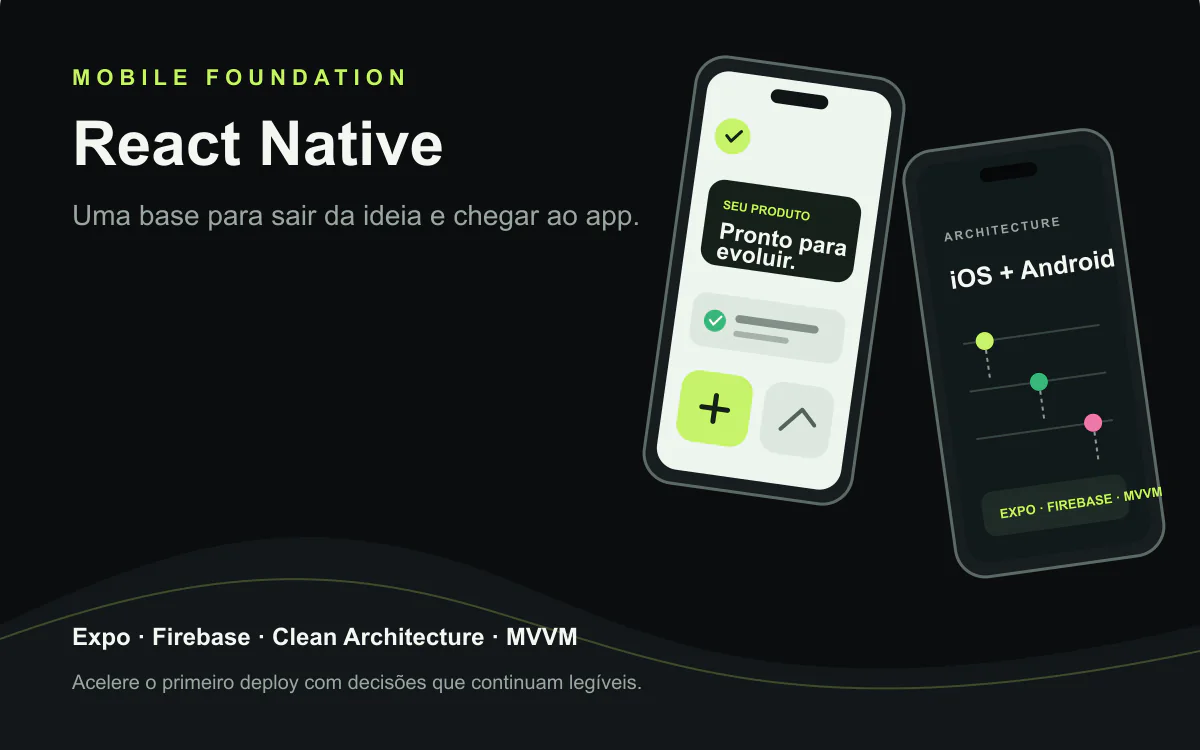
react · boilerplate
Base React Native para apps iOS e Android com Expo, Clean Architecture, MVVM, Firebase e módulos nativos. Referência técnica do VaiDeFut, com distribuição pública no Google Play e fluxo de publicação para iOS documentado.
Ver produto
nextjs · boilerplate
Kit gratuito e open source para começar com agentes de código em Claude Code, Codex, Gemini, Copilot e OpenCode. A licença MIT está confirmada no repositório público.
Ver produto
nextjs · boilerplate
Fundação AI-first white-label para lançar produtos SaaS com Next.js, chat, RAG, memória, tenants e documentação. O snapshot verificado documenta Supabase, não MongoDB; essa limitação está explícita. MongoDB, Redis e RabbitMQ exigem integração/configuração compatível.
Ver produto
nextjs · boilerplate
Edição avançada da base white-label e multi-tenant AI-first para acelerar produtos com Next.js, chat, RAG, memória e documentação. O snapshot verificado ainda não comprova uma camada Ultra distinta; a oferta mantém essa limitação transparente e explicita as trocas de provider, cache e filas.
Ver produto
nextjs · boilerplate
Base white-label e multi-tenant para transformar uma ideia em um SaaS AI-first com Next.js, chat, RAG, memória e segurança documentados. O snapshot verificado usa Supabase; o nome identifica o repositório de origem. Provider, cache e filas ficam explícitos; Redis e RabbitMQ são integrações configuráveis.
Ver produto
react · portfolio
Uma contribuição única para apoiar conteúdo técnico gratuito, pesquisa e a continuidade de projetos relevantes publicados por Anderson Lima. Você escolhe o valor; não é uma assinatura.
Ver produto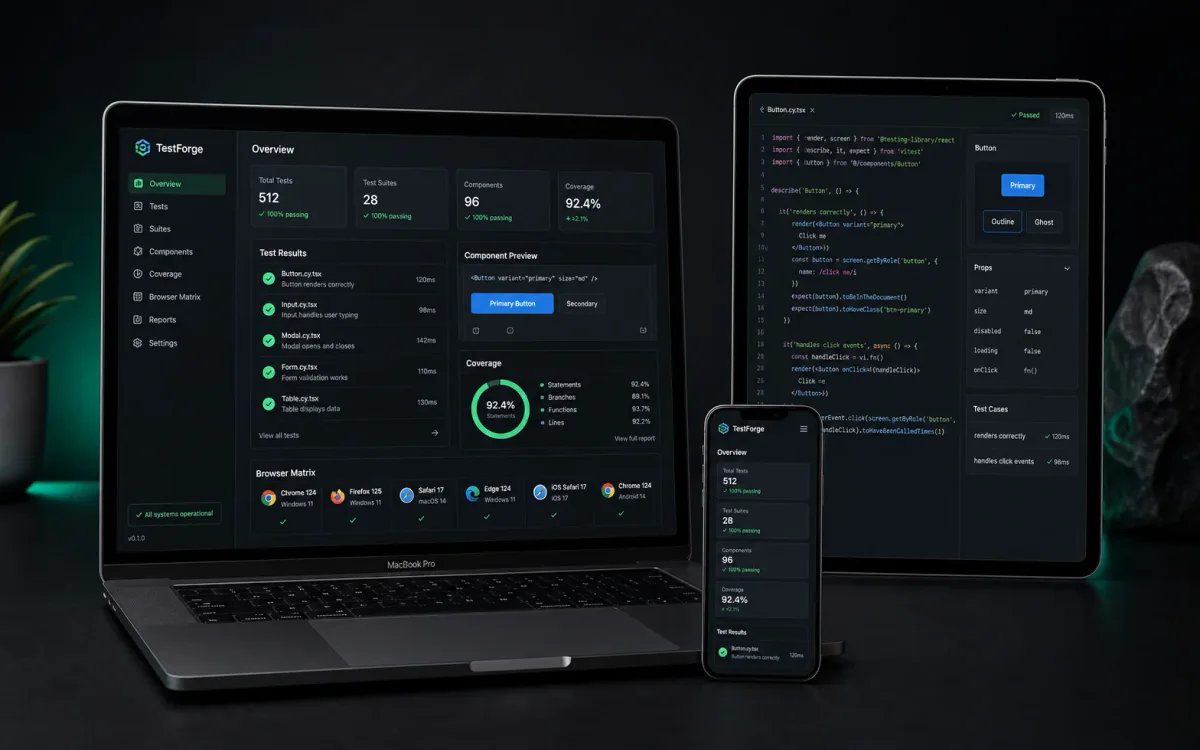
react · boilerplate
Starter React gratuito para criar uma suíte de testes confiável desde o primeiro commit, com Vitest, Testing Library, Playwright, Vite, TypeScript, Zustand, React Query, MirageJS e PWA. O repositório não declara uma licença SPDX; revise os termos antes de uso comercial.
Ver produto
react · portfolio
Monorepo público em React, TypeScript e Vite para explorar uma biblioteca de componentes com linguagem visual inspirada em interfaces nativas. O README atual é enxuto e não declara uma licença SPDX; trate como preview gratuito.
Ver produto
nextjs · saas
Boilerplate SaaS AI-first com Next.js, Supabase, Stripe e provider routing para começar do primeiro prompt e acelerar o caminho até um deploy real. As adaptações de IA, banco, e-mail, cache e filas ficam explícitas; Redis e RabbitMQ são integrações configuráveis.
Ver produto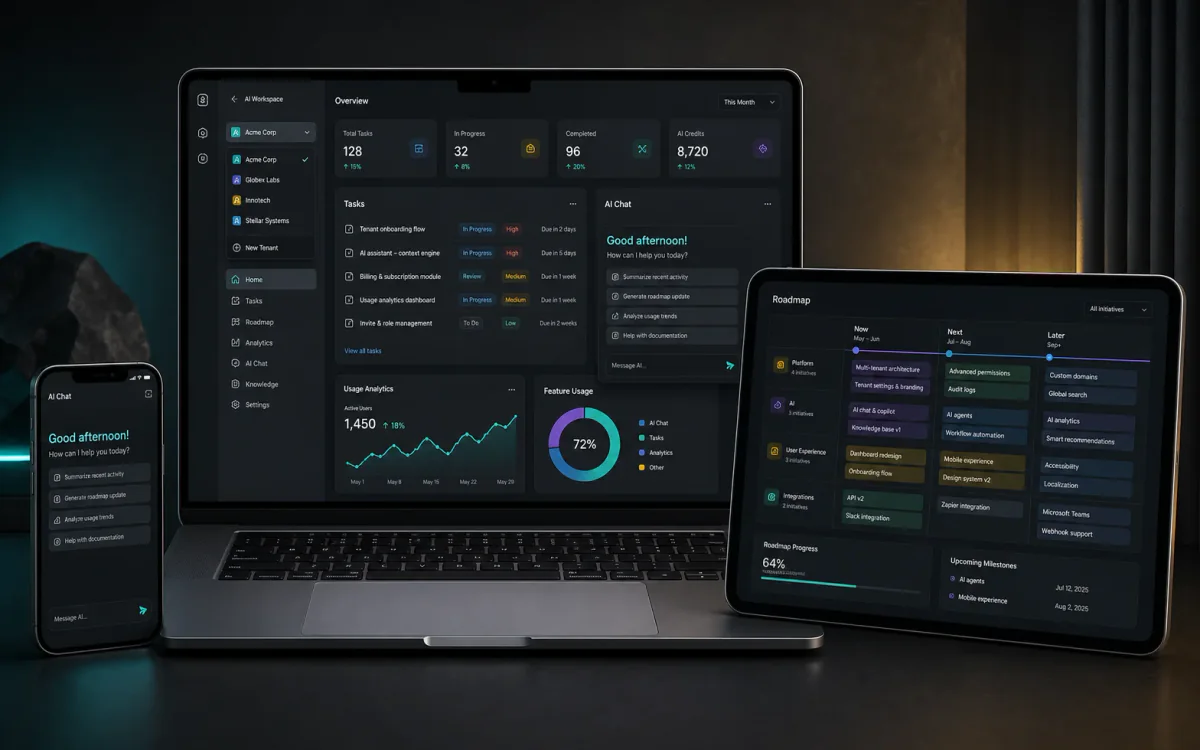
react · saas
Starter kit React + TypeScript para SaaS multi-tenant com Firebase, Atomic Design, temas, PWA, telas de produto, MirageJS e chat com Gemini extensível a outros providers. Valide requisitos de produção, custos e integrações antes de publicar.
Ver produto
react · boilerplate
Starter React público com TypeScript, Zustand, React Query, Tailwind CSS, PWA e integrações de IA documentadas. O repositório não declara uma licença SPDX; revise os termos antes de uso comercial.
Ver produto
nextjs · saas
Landing page SaaS para Next.js, TypeScript e Tailwind CSS com SEO, temas, i18n, PWA e pontos de integração para auth, Stripe e IA. Uma base clara para sair da tela vazia e adaptar sua proposta.
Ver produtoContinue explorando tópicos similares

Em 2025, eu trabalhei 14 horas por dia durante 3 meses seguidos. Por FOMO. O resultado? Insonia. Irritabilidade. Zero criatividade. É a ironia: minha produtividade CAIU. Esse artigo de 65 minutos tem 20+ pesquisas, 7 pilares e um plano de 12 semanas para sair do burnout de forma sustentável.

App Router e Pages Router parecem uma discussão de moda, mas a diferença real está em modelo mental, limites entre servidor e cliente, cache, streaming, SEO, DX e custo de migração. Este guia mostra quando migrar, quando ficar e como evitar uma escolha cara demais para o seu produto.
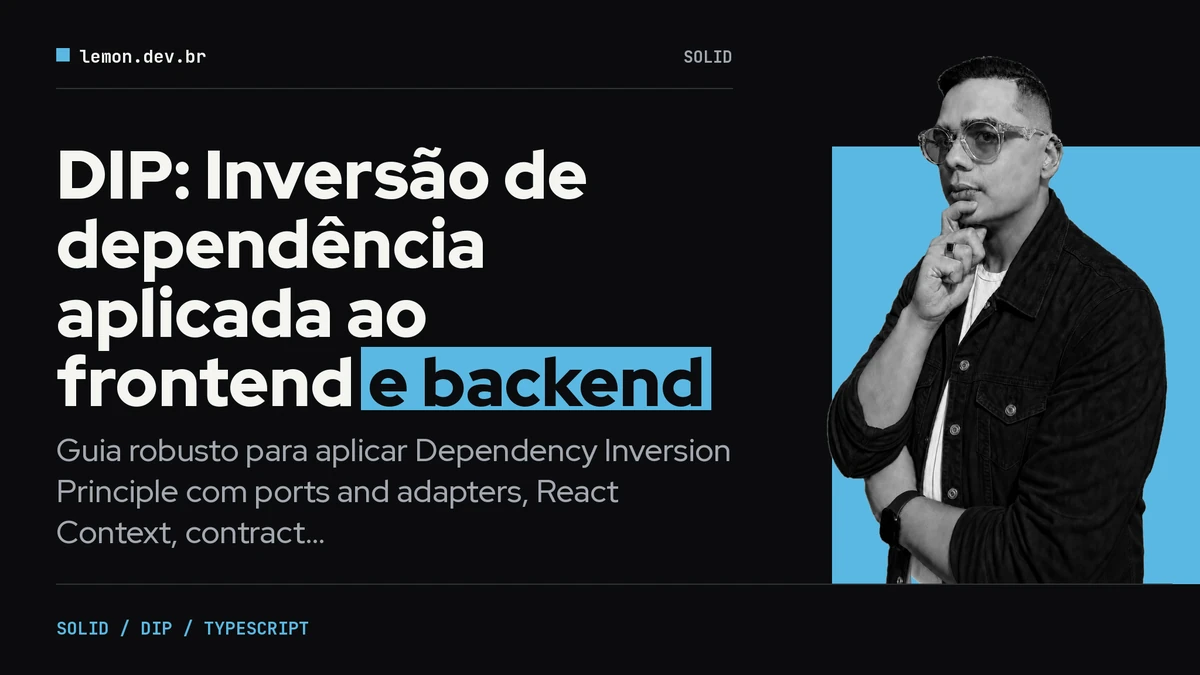
Guia robusto para aplicar Dependency Inversion Principle com ports and adapters, React Context, contract tests e observabilidade de adapters em produção.
Checklist de 47 pontos para encontrar bugs, riscos de segurança e problemas de performance antes do lançamento.
Templates testados em produção, usados por desenvolvedores. Economize semanas de setup no seu próximo projeto.