

Anderson LimaSoftware Engineer & Architect
4 de outubro de 2026
4 min de leitura
33 visualizações

Dependency Inversion Principle (DIP) é provavelmente o princípio SOLID mais transformador e mais mal aplicado. A versão clássica diz:
Traduzindo: seu código de negócio não deve importar Stripe SDK diretamente. Deve depender de uma interface PaymentGateway. Stripe SDK implementa essa interface.
// UserService.ts
import axios from 'axios';
import { Stripe } from 'stripe';

const stripe = new Stripe(process.env.STRIPE_SECRET_KEY);

export class UserService {
  async createUser(email: string, password: string) {
    const user = await db.users.create({ email, password });

    // ❌ Acoplamento direto
    await stripe.customers.create({
      email: user.email,
      name: user.name
    });

    await axios.post('https://api.sendgrid.com/v3/mail/send', {
      to: user.email,
      subject: 'Welcome'
    });

    return user;
  }
}
Problemas:
// application/ports/PaymentGateway.ts
export interface PaymentGateway {
  createCustomer(data: { email: string; name: string }): Promise<{ id: string }>;
}

// application/ports/EmailService.ts
export interface EmailService {
  send(data: { to: string; subject: string; body: string }): Promise<void>;
}
// infrastructure/adapters/StripePaymentGateway.ts
import { Stripe } from 'stripe';
import { PaymentGateway } from '../../application/ports/PaymentGateway';

export class StripePaymentGateway implements PaymentGateway {
  constructor(private stripe: Stripe) {}

  async createCustomer(data: { email: string; name: string }) {
    const customer = await this.stripe.customers.create(data);
    return { id: customer.id };
  }
}

// infrastructure/adapters/SendGridEmailService.ts
import sgMail from '@sendgrid/mail';
import { EmailService } from '../../application/ports/EmailService';

export class SendGridEmailService implements EmailService {
  constructor() {
    sgMail.setApiKey(process.env.SENDGRID_API_KEY!);
  }

  async send(data: { to: string; subject: string; body: string }) {
    await sgMail.send({ to: data.to, from: 'noreply@app.com', subject: data.subject, html: data.body });
  }
}
// application/services/UserService.ts
export class UserService {
  constructor(
    private userRepository: UserRepository,
    private paymentGateway: PaymentGateway,
    private emailService: EmailService
  ) {}

  async createUser(data: CreateUserData) {
    const user = await this.userRepository.create(data);

    await this.paymentGateway.createCustomer({
      email: user.email,
      name: user.name
    });

    await this.emailService.send({
      to: user.email,
      subject: 'Welcome',
      body: '<h1>Welcome</h1>'
    });

    return user;
  }
}
// infrastructure/composition.ts
import { UserService } from '../application/services/UserService';
import { PostgresUserRepository } from './adapters/PostgresUserRepository';
import { StripePaymentGateway } from './adapters/StripePaymentGateway';
import { SendGridEmailService } from './adapters/SendGridEmailService';
import Stripe from 'stripe';

const stripe = new Stripe(process.env.STRIPE_SECRET_KEY!);

export const userService = new UserService(
  new PostgresUserRepository(),
  new StripePaymentGateway(stripe),
  new SendGridEmailService()
);
O mesmo vale para componentes. Exemplo:
// application/hooks/useUserProfile.ts
export function useUserProfile(userId: string) {
  const [user, setUser] = useState<User | null>(null);

  useEffect(() => {
    userService.getProfile(userId).then(setUser);
  }, [userId]);

  return user;
}
O hook depende de userService (abstração), não de fetch direto. Em testes, userService é mockado.
const UserServiceContext = createContext<UserService | null>(null);

export function UserServiceProvider({ userService, children }: Props) {
  return (
    <UserServiceContext.Provider value={userService}>
      {children}
    </UserServiceContext.Provider>
  );
}

export function useUserService() {
  const service = useContext(UserServiceContext);
  if (!service) throw new Error('UserServiceProvider required');
  return service;
}
Componentes consomem via useUserService(), recebem implementação no topo da árvore.
DIP não é abstração por abstração. É desacoplamento intencional de boundaries que vão mudar. Pergunte: "o que pode mudar aqui?". Se a resposta for "vou trocar Stripe", crie interface. Se for "nunca vai mudar", não crie.
Produtos gratuitos e pagos para transformar ideias em uma base que você consegue executar.
13 produtos disponíveis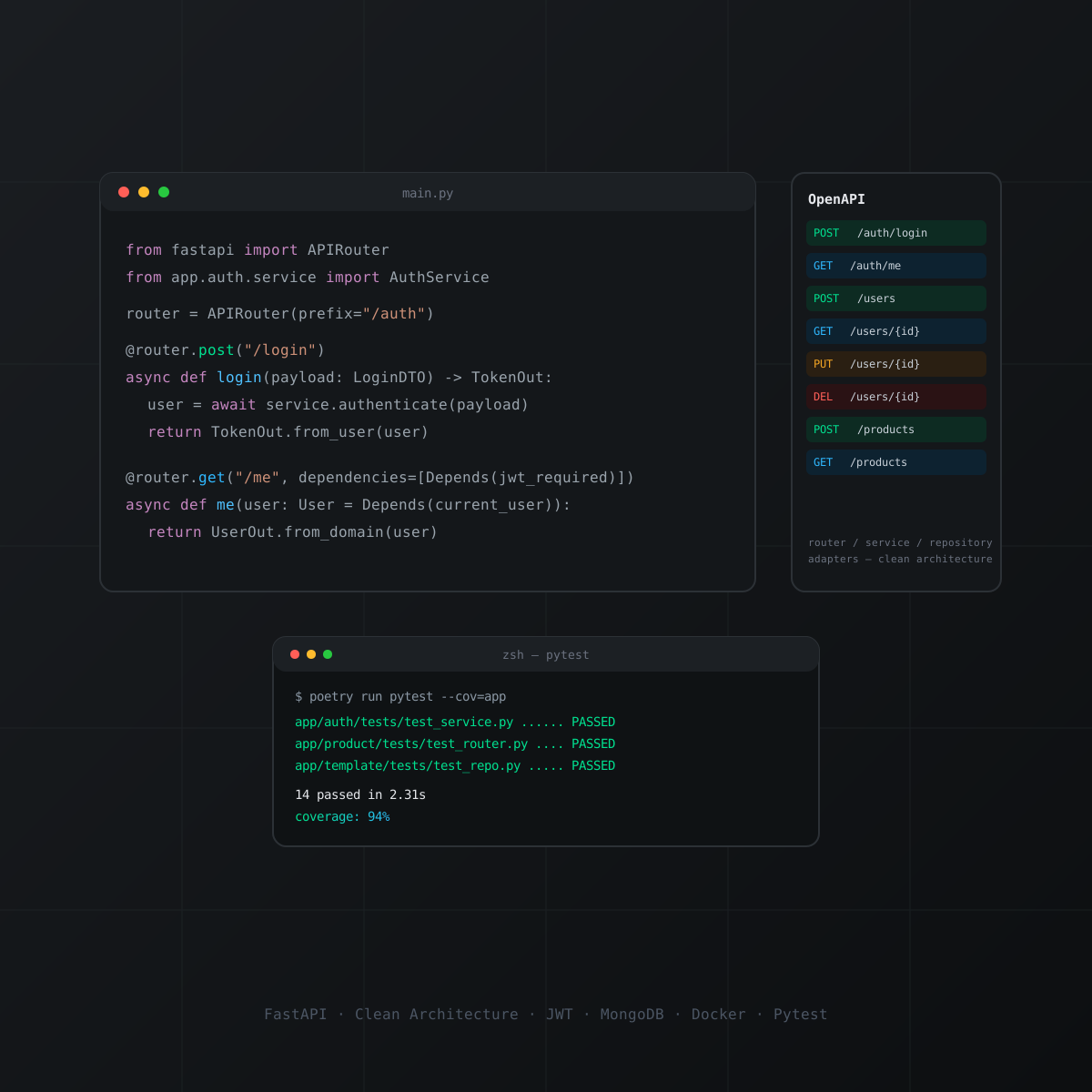
nextjs · boilerplate
Boilerplate de API em Python com FastAPI, organizado em Clean Architecture (router, service, repository e adapters por módulo). Inclui autenticação JWT com hashing bcrypt, MongoDB, testes com pytest e cobertura, Dockerfile e docker-compose para subir localmente, e documentação Swagger/OpenAPI automática. Repositório de origem privado; snapshot técnico verificado antes da publicação.
Ver produto
react · boilerplate
Base React Native para apps iOS e Android com Expo, Clean Architecture, MVVM, Firebase e módulos nativos. Referência técnica do VaiDeFut, com distribuição pública no Google Play e fluxo de publicação para iOS documentado.
Ver produto
nextjs · boilerplate
Kit gratuito e open source para começar com agentes de código em Claude Code, Codex, Gemini, Copilot e OpenCode. A licença MIT está confirmada no repositório público.
Ver produto
nextjs · boilerplate
Fundação AI-first white-label para lançar produtos SaaS com Next.js, chat, RAG, memória, tenants e documentação. O snapshot verificado documenta Supabase, não MongoDB; essa limitação está explícita. MongoDB, Redis e RabbitMQ exigem integração/configuração compatível.
Ver produtonextjs · boilerplate
Edição avançada da base white-label e multi-tenant AI-first para acelerar produtos com Next.js, chat, RAG, memória e documentação. O snapshot verificado ainda não comprova uma camada Ultra distinta; a oferta mantém essa limitação transparente e explicita as trocas de provider, cache e filas.
Ver produtonextjs · boilerplate
Base white-label e multi-tenant para transformar uma ideia em um SaaS AI-first com Next.js, chat, RAG, memória e segurança documentados. O snapshot verificado usa Supabase; o nome identifica o repositório de origem. Provider, cache e filas ficam explícitos; Redis e RabbitMQ são integrações configuráveis.
Ver produto
react · portfolio
Uma contribuição única para apoiar conteúdo técnico gratuito, pesquisa e a continuidade de projetos relevantes publicados por Anderson Lima. Você escolhe o valor; não é uma assinatura.
Ver produto
react · boilerplate
Starter React gratuito para criar uma suíte de testes confiável desde o primeiro commit, com Vitest, Testing Library, Playwright, Vite, TypeScript, Zustand, React Query, MirageJS e PWA. O repositório não declara uma licença SPDX; revise os termos antes de uso comercial.
Ver produto
react · portfolio
Monorepo público em React, TypeScript e Vite para explorar uma biblioteca de componentes com linguagem visual inspirada em interfaces nativas. O README atual é enxuto e não declara uma licença SPDX; trate como preview gratuito.
Ver produto
nextjs · saas
Boilerplate SaaS AI-first com Next.js, Supabase, Stripe e provider routing para começar do primeiro prompt e acelerar o caminho até um deploy real. As adaptações de IA, banco, e-mail, cache e filas ficam explícitas; Redis e RabbitMQ são integrações configuráveis.
Ver produto
react · saas
Starter kit React + TypeScript para SaaS multi-tenant com Firebase, Atomic Design, temas, PWA, telas de produto, MirageJS e chat com Gemini extensível a outros providers. Valide requisitos de produção, custos e integrações antes de publicar.
Ver produto
react · boilerplate
Starter React público com TypeScript, Zustand, React Query, Tailwind CSS, PWA e integrações de IA documentadas. O repositório não declara uma licença SPDX; revise os termos antes de uso comercial.
Ver produto
nextjs · saas
Landing page SaaS para Next.js, TypeScript e Tailwind CSS com SEO, temas, i18n, PWA e pontos de integração para auth, Stripe e IA. Uma base clara para sair da tela vazia e adaptar sua proposta.
Ver produtoContinue explorando tópicos similares

Guia definitivo para aplicar Interface Segregation Principle em React, TypeScript e backend, reduzindo DTOs obesos, props desnecessárias, overfetching e contratos genéricos demais com slices, selectors, fragments e portas específicas.
Descubra o que realmente define um Agente de IA. Explore componentes essenciais como planejamento (ReAct), memória e ferramentas, e aprenda a arquitetar fluxos de trabalho agênticos escaláveis.

A rule, an AI suggestion, and a human agent's decision, for the same synthetic ticket: only one of them can ever change the ticket's state. From that constraint, DeskPilot gains a typed…
Checklist de 47 pontos para encontrar bugs, riscos de segurança e problemas de performance antes do lançamento.
Templates testados em produção, usados por desenvolvedores. Economize semanas de setup no seu próximo projeto.