

Anderson LimaAI Developer
15 de junio de 2026
4 min de lectura
498 visualizaciones

The explosion of AI tools brought an unexpected problem: fragmentation. We have a skill for each task, a plugin for each platform, and our personal artificial intelligence ends up scattered across dozens of repositories and different contexts.
That's why I created Lemon AI Hub.
In this article, I'll tell you the "why" behind the project, how it was structured, and why you should consider having your own modular intelligence hub.
The primary motivator was frustration with rework. Every time I started a new project, I found myself rewriting system prompts, reconfiguring API connections, or recreating skills I had already developed for other contexts.
I needed a place where:
Lemon AI Hub isn't just a collection of scripts. It was designed as a modular core.
The heart of the project is lemon-ai-hub. It works through a system of "Skills" and "Agents" that communicate via standardized protocols (like MCP - Model Context Protocol).
A skill in the hub isn't just code; it's a manifesto of intent. Here's how we structured portability:
# Skill: Karpathy Pedagogy Reviewer
**Intent**: Reviews code with a focus on didactics.
**Trigger**: "review this code as Karpathy would"
**Workflow**:
1. Find minimal examples.
2. Identify undefined jargon.
3. Suggest analogies (intuition pumps).
By centralizing everything on GitHub, I can "install" new capabilities into my local workflow with a simple git pull or activate_skill.
One of the crown jewels of Lemon AI Hub is the token-saver plugin. It was designed for those who use LLMs at scale and want to prevent API costs from spiraling out of control.
token-saver configures compression and efficiency tools globally or per project:
It's not just theory. The rtk gain command allows you to audit the exact savings. In one of my real-world use cases with structured search:
rtk grep: Savings of 358.7M tokens.
Yes, hundreds of millions of tokens saved through intelligent filtering and optimized routing. This transforms financially unviable projects into extremely affordable automations.
Having a personal marketplace means you own your own AI "app store." You don't just rely on OpenAI or Anthropic to define the available tools. You create the tools that solve your pain.
If you want to see how this works in practice or start your own hub, check out the official repository:
🔗 Main Repository: github.com/Andersonlimahw/lemon-ai-hub
The future of productivity isn't about having one AI that does everything, but an ecosystem of specialized agents that you orchestrate yourself.
This post was generated and reviewed using Lemon AI Hub's own tools.

AI Developer
Engenheiro apaixonado por Inteligência Artificial aplicada a produtos reais. Conecto avanços em LLMs e modelos de linguagem com resultados práticos de negócio. Também mentoro desenvolvedores e criadores em programas ao vivo, podcasts e iniciativas de comunidade focadas em tecnologia inclusiva.
Productos gratuitos y de pago para convertir ideas en una base que puedas lanzar.
13 productos disponibles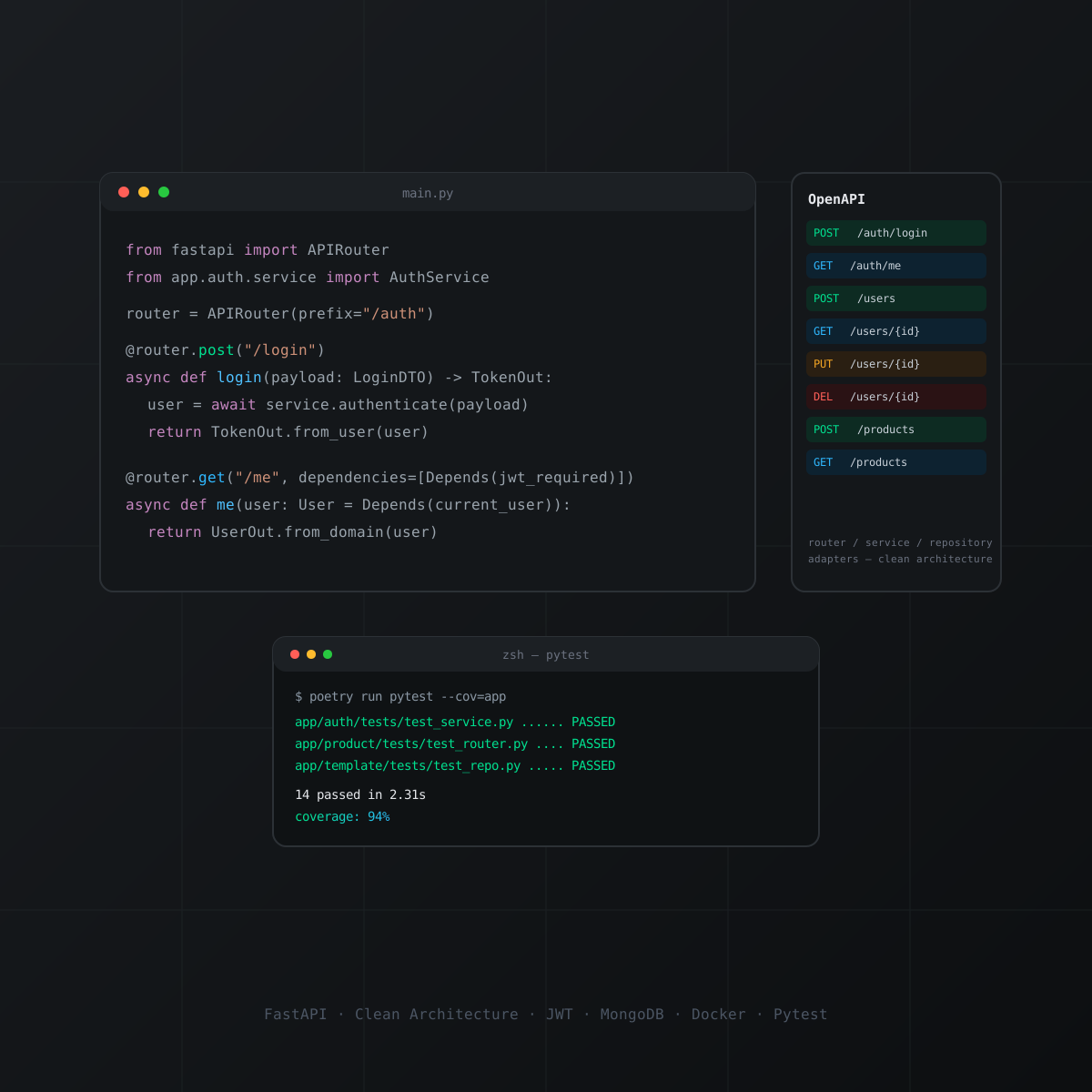
nextjs · boilerplate
Boilerplate de API em Python com FastAPI, organizado em Clean Architecture (router, service, repository e adapters por módulo). Inclui autenticação JWT com hashing bcrypt, MongoDB, testes com pytest e cobertura, Dockerfile e docker-compose para subir localmente, e documentação Swagger/OpenAPI automática. Repositório de origem privado; snapshot técnico verificado antes da publicação.
Ver producto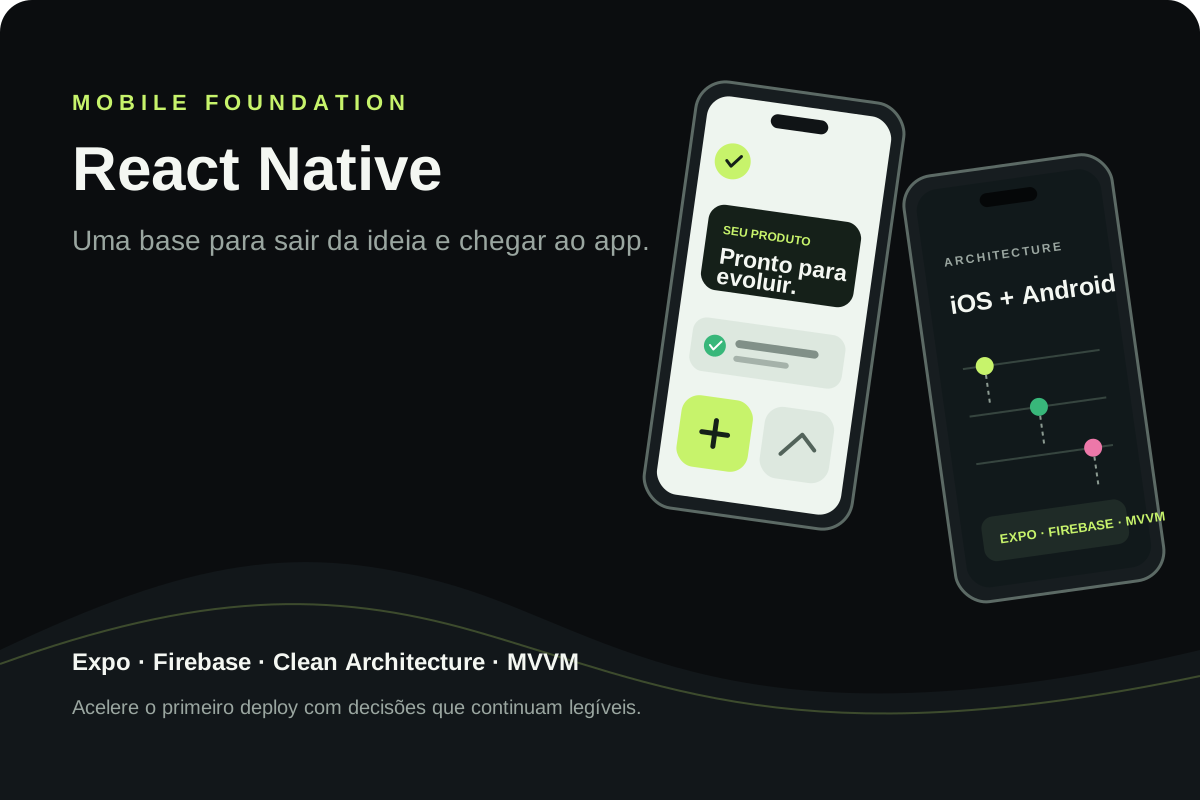
react · boilerplate
Base React Native para apps iOS y Android con Expo, Clean Architecture, MVVM, Firebase y módulos nativos. Referencia técnica de VaiDeFut, con distribución pública en Google Play y un flujo de publicación para iOS documentado.
Ver producto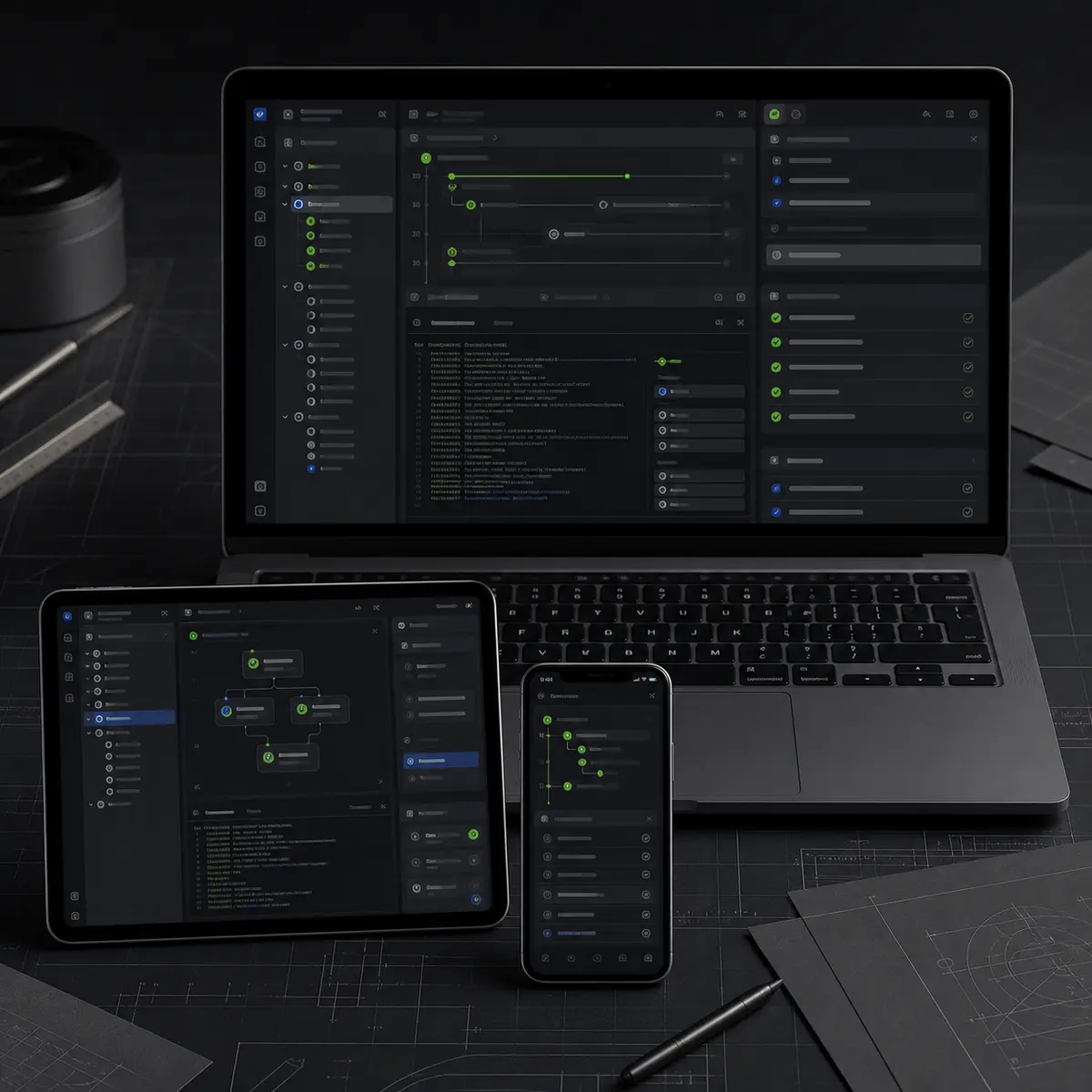
nextjs · boilerplate
Kit gratuito y open source para comenzar con agentes de código en Claude Code, Codex, Gemini, Copilot y OpenCode. El repositorio público confirma una licencia MIT.
Ver producto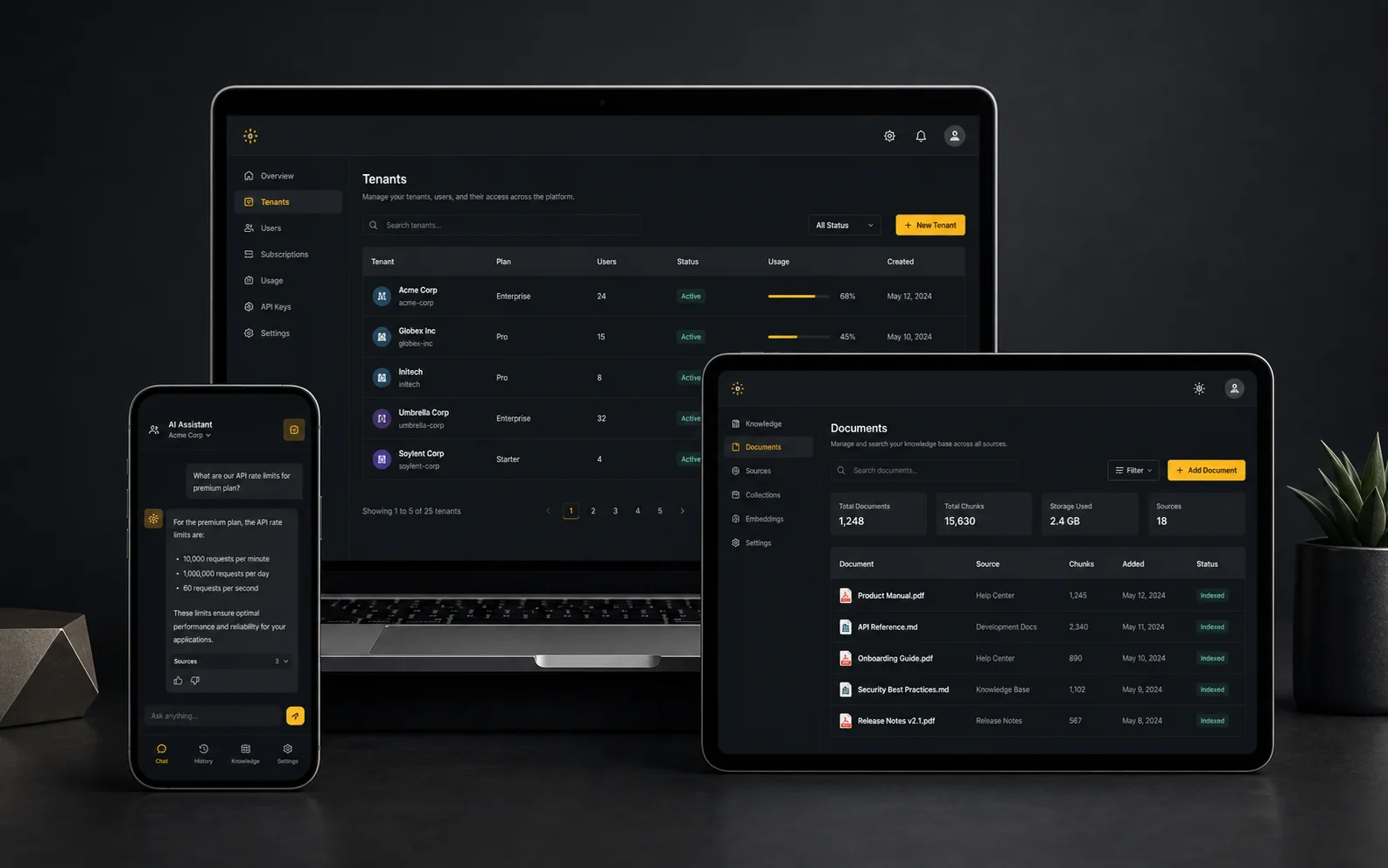
nextjs · boilerplate
Base AI-first white-label para lanzar productos SaaS con Next.js, chat, RAG, memoria, tenants y documentación. El snapshot verificado documenta Supabase, no MongoDB; la limitación está explícita. MongoDB, Redis y RabbitMQ requieren una integración/configuración compatible.
Ver productonextjs · boilerplate
Edición avanzada de una base white-label y multi-tenant AI-first para acelerar productos con Next.js, chat, RAG, memoria y documentación. El snapshot verificado no demuestra una capa Ultra distinta; la limitación y los cambios de provider, cache y colas quedan transparentes.
Ver productonextjs · boilerplate
Base white-label y multi-tenant para convertir una idea en un SaaS AI-first con Next.js, chat, RAG, memoria y seguridad documentada. El snapshot verificado usa Supabase; el nombre identifica el repositorio de origen. Los límites de provider, cache y colas son explícitos; Redis y RabbitMQ son integraciones configurables.
Ver producto
react · portfolio
Una contribución única para apoyar contenido técnico gratuito, investigación y la continuidad de proyectos relevantes publicados por Anderson Lima. Tú eliges el valor; no es una suscripción.
Ver producto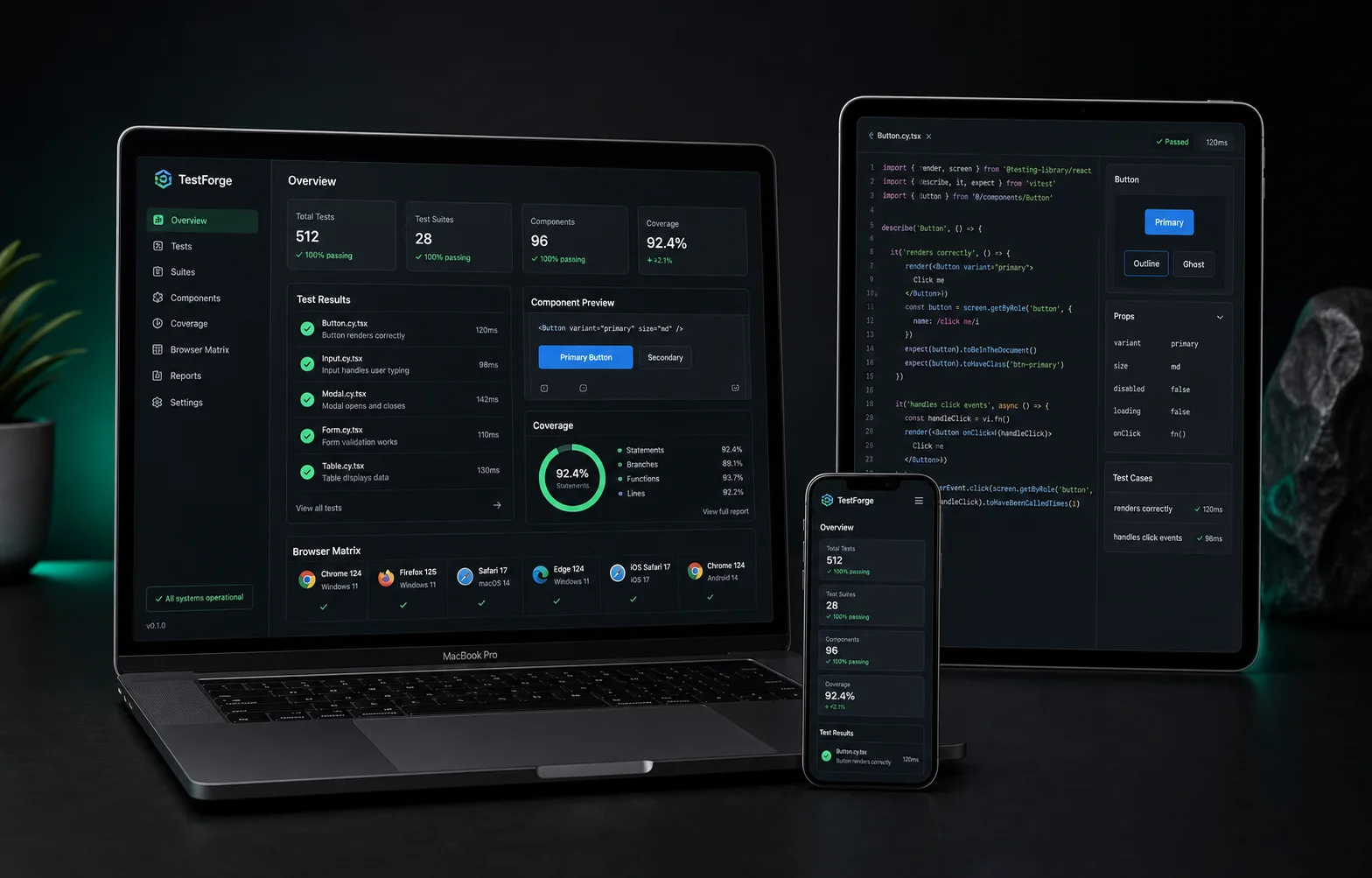
react · boilerplate
Starter React gratuito para crear una suite de pruebas confiable desde el primer commit con Vitest, Testing Library, Playwright, Vite, TypeScript, Zustand, React Query, MirageJS y PWA. El repositorio no declara una licencia SPDX; revisa sus términos antes del uso comercial.
Ver producto
react · portfolio
Monorepo público en React, TypeScript y Vite para explorar una biblioteca de componentes con lenguaje visual inspirado en interfaces nativas. El README actual es breve y no declara una licencia SPDX; trátalo como preview gratuito.
Ver producto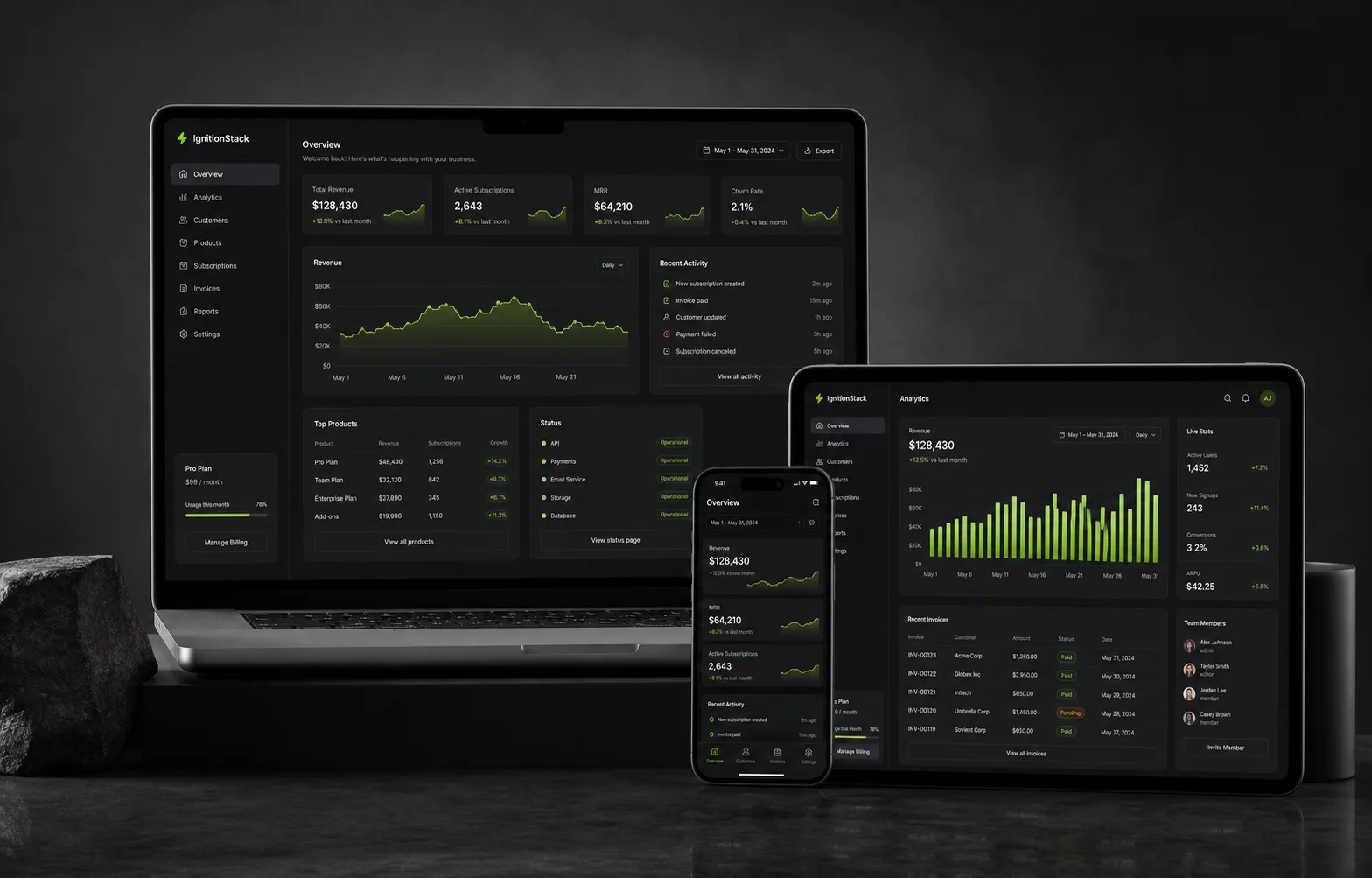
nextjs · saas
Boilerplate SaaS AI-first con Next.js, Supabase, Stripe y provider routing para avanzar desde el primer prompt hasta un despliegue real más rápido. Los cambios de IA, datos, email, cache y colas son explícitos; Redis y RabbitMQ son integraciones configurables.
Ver producto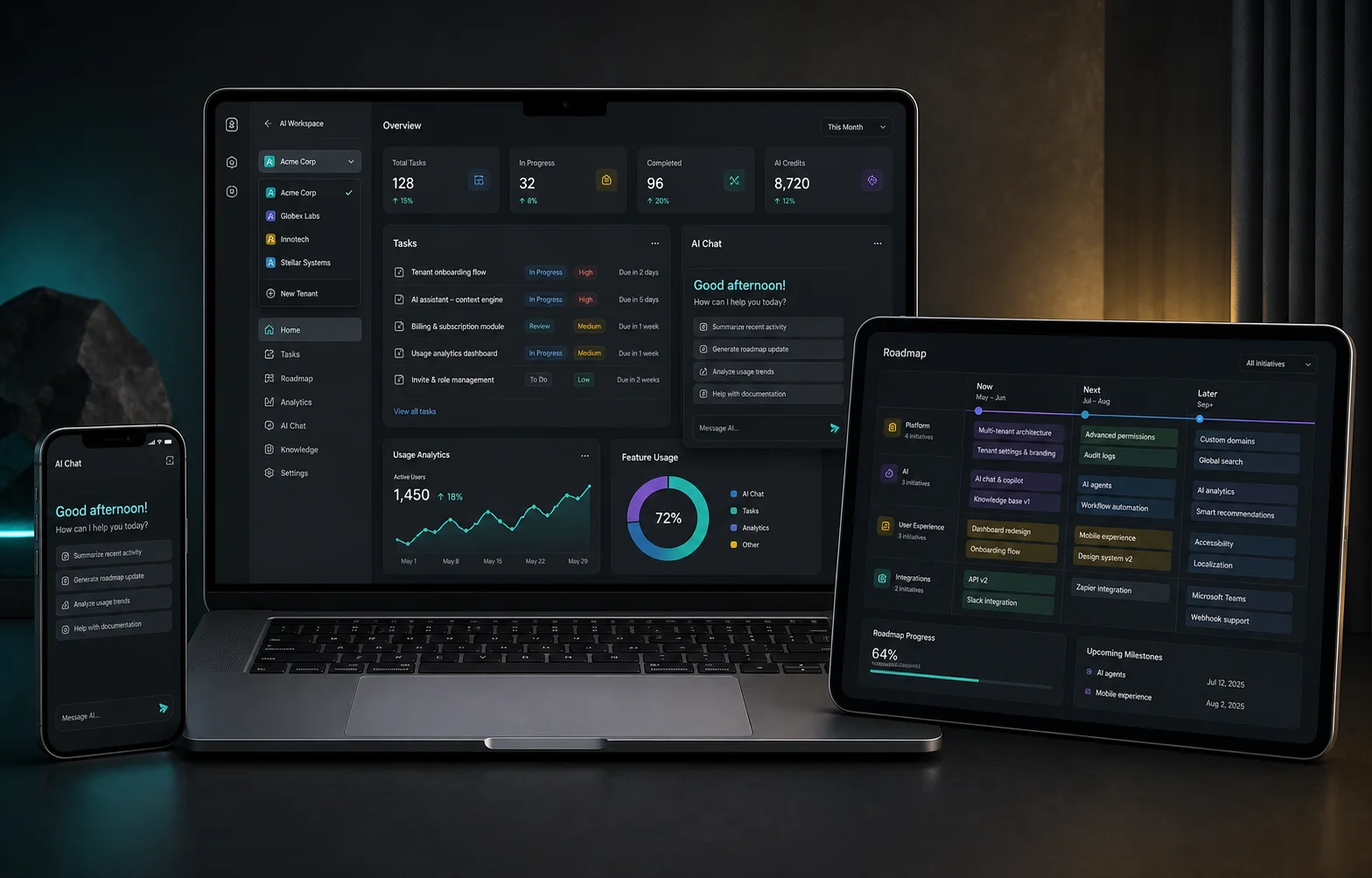
react · saas
Starter React + TypeScript para SaaS multi-tenant con Firebase, Atomic Design, temas, PWA, pantallas de producto, MirageJS y chat Gemini extensible a otros providers. Valida requisitos de producción, costes e integraciones antes de publicar.
Ver producto
react · boilerplate
Starter React público con TypeScript, Zustand, React Query, Tailwind CSS, PWA e integraciones de IA documentadas. El repositorio no declara una licencia SPDX; revisa sus términos antes del uso comercial.
Ver producto
nextjs · saas
Landing SaaS para Next.js, TypeScript y Tailwind CSS con SEO, temas, i18n, PWA y puntos de integración para auth, Stripe e IA. Una base clara para dejar atrás la pantalla en blanco y dar forma a tu propuesta.
Ver productoContinúa explorando temas similares

Explore a jornada técnica e estratégica da criação do Lemon AI Hub, um ecossistema modular de agentes e skills que resolve o problema da fragmentação de inteligência artificial pessoal.
Um e-book para desenvolvedores que querem se tornar AI-native — não só usar o chat, mas entender e construir os sistemas agênticos por baixo dele.

Explains why AI deployments need progressive rollouts, semantic telemetry and automatic rollback to manage non-deterministic models.
Una lista de 47 puntos para encontrar errores, riesgos de seguridad y problemas de rendimiento antes del lanzamiento.
Templates probados en producción, usados por desarrolladores. Ahorra semanas de setup en tu próximo proyecto.