Anderson LimaSoftware Engineer & AI Architect
8 de maio de 2026
17 min de leitura
4,434 visualizações
A strategic and technical analysis of the two labs reshaping AI infrastructure, enterprise adoption, software development, and public-market expectations
The lazy version of the OpenAI versus Anthropic story is simple: OpenAI is the ChatGPT company, and Anthropic is the Claude company. That framing is now too small.
In 2026, the real contest is not only about who produces the best answer to a prompt. OpenAI and Anthropic are competing to define the operating layer where companies write software, analyze documents, create financial models, review contracts, operate browsers, produce presentations, run research, and make decisions.
That layer has five connected parts: frontier models, daily-use products, agents that execute work, compute infrastructure, and institutional trust. When those parts converge, AI stops being a side tool and becomes work infrastructure. That is the central argument of this article.
OpenAI and Anthropic are running three races at once.
| Race | Core question | Why it matters |
|---|---|---|
| Model race | Who ships the most capable, efficient, and trustworthy frontier model? | Model quality still sets the ceiling for reasoning, coding, vision, research, and tool use. |
| Agent race | Who turns models into reliable work execution through tools, memory, permissions, auditing, and integrations? | Enterprises do not pay only for answers. They pay for completed tasks inside controlled workflows. |
| Compute race | Who secures enough chips, energy, data centers, cloud capacity, and capital to serve demand without destroying margins? | A model that cannot be served cheaply and reliably becomes a research demo, not infrastructure. |
The winner will not be the company that wins one benchmark in isolation. The winner will be the company that runs the full flywheel: better models create better products, better products create more usage, more usage creates more revenue and operational learning, more revenue funds more compute, and more compute supports better training and inference. As agents become more useful, they move from optional assistants to default enterprise workflows, creating switching costs.
The important AI question is no longer only which model is smartest. The sharper question is who can operate intelligence at scale.
Operating intelligence at scale means managing chips, energy, cloud contracts, inference capacity, enterprise approvals, security controls, governance, and cost per completed task. The recent announcements make the shift visible:
| Date | Company | Announcement | Strategic signal |
|---|---|---|---|
| April 6, 2026 | Anthropic | Google and Broadcom partnership for multiple gigawatts of next-generation TPU capacity starting in 2027 | Anthropic is building a more diversified compute base. |
| April 16, 2026 | Anthropic | Claude Opus 4.7, focused on long-running work, advanced software engineering, agents, vision, and finer effort control | Claude is being positioned for sustained task execution, not only chat. |
| April 17, 2026 | Anthropic | Claude Design, an Anthropic Labs product for designs, prototypes, slides, and one-pagers | Anthropic is extending Claude into visual work surfaces. |
| April 20, 2026 | Anthropic | Expanded Amazon partnership for up to 5 gigawatts of new compute and more than $100 billion committed to AWS technologies over ten years | Compute access is becoming a core strategic asset. |
| April 23, 2026 | OpenAI | GPT-5.5, positioned for agentic coding, computer use, knowledge work, and scientific research | OpenAI is framing the frontier model as a work engine. |
| May 4, 2026 | OpenAI | PwC collaboration to build finance agents across planning, forecasting, reporting, procurement, payments, treasury, tax, and close workflows | Enterprise agents are moving into CFO systems. |
| May 5, 2026 | OpenAI | GPT-5.5 Instant as the new default ChatGPT model, replacing GPT-5.3 Instant | Default consumer and professional usage is moving to a newer inference profile. |
| May 6, 2026 | Anthropic | SpaceX compute deal to use all compute capacity at Colossus 1, easing Claude Code limits and adding more than 300 megawatts and more than 220,000 NVIDIA GPUs within the month | Capacity constraints are directly shaping developer product limits. |
These are not separate stories. They point to the same structural shift: OpenAI and Anthropic are moving from conversational AI to executed work.
OpenAI began in 2015 as a nonprofit. In 2019, it created a for-profit subsidiary to scale research and deployment. That same year, Microsoft announced a $1 billion investment and became OpenAI's preferred commercialization partner.
That decision became the bridge between frontier research and commercial infrastructure. Then came GPT-3, ChatGPT, GPT-4, the API platform, the consumer boom, the governance shock of 2023, the public benefit corporation structure, Codex, and the attempt to make ChatGPT a full work platform.
In 2026, OpenAI presents itself as global infrastructure for agentic AI. GPT-5.5 is described as a model that understands complex goals, uses tools, checks its work, and carries tasks to completion. That wording matters because OpenAI is no longer selling only answers. It is selling completed work.
Technically, that pushes OpenAI toward a stack where ChatGPT is the user interface, Codex is an execution layer for software work, the API is the developer platform, and models are optimized around tool use, computer use, coding, research, and inference efficiency. The commercial question is whether OpenAI can serve that demand at a price that works for both users and public-market investors.
Anthropic was founded in 2021 by Dario Amodei, Daniela Amodei, and other former OpenAI employees. Its original posture centered on reliability, interpretability, robustness, and safety. For years, that sounded like a safety brand. In 2026, it became a commercial strategy.
Enterprises do not buy only the smartest model. They buy the model that legal, security, procurement, architecture, and compliance teams can approve. Claude fits that demand. Claude Code gave Anthropic a powerful wedge into developer workflows. Claude for Work moved it into knowledge work. AWS Bedrock, Google Vertex AI, and Microsoft Foundry gave it institutional reach.
On February 12, 2026, Anthropic announced a $30 billion Series G at a $380 billion post-money valuation. The same announcement said Claude Code had passed $2.5 billion in run-rate revenue and had more than doubled since the start of 2026.
That is the key signal. Claude Code is no longer just a developer favorite. It is an enterprise revenue line.
Technically, Anthropic's advantage is not only the model. It is the workflow posture around long tasks, controllable effort, codebase reasoning, safety-sensitive deployments, and developer trust. Claude Code sits close to the terminal and repository, which makes it valuable in the place where software changes are planned, reviewed, tested, and committed.
Private AI valuations require discipline. Primary rounds, secondary trades, implied foundation stakes, and IPO narratives are not the same thing.
| Company | 2026 reference | Indicated value | Data type | Correct reading |
|---|---|---|---|---|
| OpenAI | March 2026 raise | $122B raised | Primary source | Capital for the next phase |
| OpenAI | External reports | about $840B to $852B | Market estimate | IPO expectation anchor |
| OpenAI Foundation | February 2026 round | stake above $180B | Primary source | Implied structural value |
| Anthropic | February 2026 Series G | $380B post-money | Primary source | Confirmed round valuation |
| Anthropic | April 2026 secondary market reports | up to $1T in secondary trading | Less comparable secondary signal | Investor demand signal, not clean corporate valuation |
The conclusion is not that one number is true and all others are false. The conclusion is that each number answers a different question.
Serious analysis keeps those questions separate:
| Question | Signal to use |
|---|---|
| How much capital entered the company? | Primary round size |
| What did investors pay for company equity? | Confirmed post-money valuation |
| What are private secondary buyers willing to pay for limited liquidity? | Secondary market reports |
| What does a foundation stake imply? | Structural ownership value |
| What does the market want to believe before an IPO? | IPO expectation narrative |
OpenAI positions GPT-5.5 as a model for real work. Its official release highlights agentic coding, computer use, knowledge work, scientific research, inference efficiency, and cyber safety.
Anthropic positions Claude Opus 4.7 as a model for long-running tasks, advanced engineering, vision, agents, finance, and more controllable effort.
| Dimension | OpenAI | Anthropic |
|---|---|---|
| Platform posture | Horizontal work interface through ChatGPT, Codex, and API infrastructure | Trust-heavy enterprise work layer through Claude, Claude Code, Claude for Work, and cloud channels |
| Agent emphasis | Agentic coding, computer use, research, knowledge work, and finance agents | Long-running tasks, engineering agents, finance agents, effort control, and enterprise safety posture |
| Developer wedge | Codex as an engineering execution surface | Claude Code as a terminal and repository-centered workflow |
| Technical pressure | Inference efficiency, default ChatGPT experience, model breadth, and public-market margin scrutiny | Capacity, distribution, long-task reliability, and trust at scale |
| Enterprise buyer question | Can this become the default interface for work? | Can this become the trusted execution layer for regulated and technical work? |
OpenAI's ambition is horizontal. ChatGPT should be where work starts, Codex should be where engineering execution happens, and the API should remain infrastructure for developers and companies.
Anthropic's ambition is trust-heavy and enterprise-centered. Claude should be the model companies can put inside serious workflows, Claude Code should be the agent developers rely on, and Claude Design plus finance agents should expand the surface area beyond coding.
This is the part many software people underestimate. Frontier AI labs are not normal software companies. They are research organizations, enterprise software companies, cloud-scale infrastructure buyers, energy consumers, and capital-market stories at the same time.
The best model loses if it cannot answer. The best product stalls if rate limits frustrate power users. The best enterprise sales motion fails if regional capacity, compliance, or inference reliability break. Compute is strategy.
Inference economics are the practical constraint behind the strategy. A frontier model can be impressive and still be commercially fragile if every completed task requires too much context, too many tool calls, too much retrying, or too much high-end capacity. The relevant unit is not only cost per token. For agents, the more important unit is cost per correct completed workflow.
That changes how products are built. Systems need routing between model tiers, context compression, caching, tool-call discipline, evals, permission boundaries, and observability. The labs that make agents feel reliable while lowering inference waste will have a structural advantage.
Consumer adoption builds the brand. Enterprise adoption pays the bill. That is why finance matters so much in 2026.
Finance workflows are expensive, repetitive, document-heavy, regulated, and full of legacy systems. If agents can work there, they can work in many other industries. If they fail there, the enterprise agent narrative weakens.
OpenAI is working with PwC on CFO workflows. Anthropic is pushing finance-specific agents for banks, insurers, asset managers, and fintechs. This is not a side quest. It is the monetization test.
Governance is part of that test. Finance agents need scoped access, audit trails, deterministic handoffs, human review points, data boundaries, and failure modes that are explicit enough for risk teams. Evals also need to move beyond answer quality into workflow quality: did the agent use the right source, call the right tool, preserve permissions, avoid unauthorized actions, and leave a reviewable record?
My local environment shows how fast this shift has already changed software work.
| Local signal | Observed value |
|---|---|
rtk gain audited commands | 4,014 |
rtk gain input tokens | 60.4M |
rtk gain output tokens | 4.1M |
rtk gain tokens saved | 56.3M |
Estimated rtk gain savings rate | 93.2% |
| Codex CLI version | 0.128.0 |
| Claude Code version | 2.1.132 |
| Repository commits since January 20, 2026 | 79 |
| Local Codex history entries | 1,157 |
| Indexed Codex sessions | 159 |
| Local Codex SQLite log records | 126,156 |
| Local Codex SQLite log period | April 27 to May 7, 2026 |
| Local Codex SQLite estimated bytes | 178,784,873 |
| Local Claude project and subagent JSONL files | 2,314 |
| Writing-workflow JSONL files | 259 |
These are not scientific benchmarks. They are operational evidence. They show that AI agents are already part of daily technical production.
The practical lesson is simple: do not only pick a model. Engineer the workflow around the model.
For developers, that means using skills, filtering context, measuring token usage, verifying outputs, auditing changes, and treating agents as production tools rather than magic. Codex and Claude Code are not interchangeable chat windows. They are developer workflow surfaces with different strengths, failure modes, context models, and operational costs.
RTK matters in that environment because token flow becomes an engineering concern. If a local proxy or command filter can reduce wasted input and output while preserving useful signal, it changes the economics of daily agent use. At scale, that same discipline appears as context engineering, model routing, caching, eval-driven prompting, and stricter tool interfaces.
Everything in this section is a projection, not a confirmed fact.
| Dimension | OpenAI | Anthropic |
|---|---|---|
| Likely next models | Broader GPT-5.5 API rollout, GPT-5.5 Pro expansion, possible GPT-5.6 or GPT-6 later | Opus 4.8 or Claude 5 family, possible gradual release of Mythos-class capabilities |
| Technical direction | Autonomy, computer use, multimodality, science, Codex, inference efficiency | Long tasks, finance, software engineering, safety, memory, task budgets, enterprise agents |
| Likely next agents | Finance, research, documents, spreadsheets, procurement, more autonomous Codex | Finance templates, Claude Code routines, ultrareview, Claude Design, compliance and audit workflows |
| Estimated IPO valuation | Base: $800B to $950B; bull: above $1T; bear: $550B to $700B | Base: $450B to $650B; bull: $800B to $1T; bear: $300B to $420B |
| Possible IPO window | Late 2026 or 2027, depending on unit economics and governance | October 2026 to 2027, depending on revenue stability, compute, and market conditions |
| Biggest risk | Compute cost and public-market margin scrutiny | Capacity, distribution, and maintaining trust while scaling |
| Biggest advantage | Global distribution and brand | Enterprise trust and developer traction |
My base case is that OpenAI will try to sustain a total-platform narrative, while Anthropic will try to sustain a trusted-work-platform narrative. Both narratives can support enormous valuations. Neither survives if the compute math fails.
| Signal | Why it matters |
|---|---|
| Usage limits | They reveal both demand and bottlenecks. |
| Token pricing | It reveals margin pressure and routing strategy. |
| Integrations with Excel, PowerPoint, Word, Outlook, browsers, IDEs, and terminals | This is where agents become work. |
| Finance partnerships | They show where the budget is. |
| Data center announcements | No compute, no product. |
| Advanced-user complaints | They often reveal churn risk early. |
| IPO filings | The prospectus will reveal what blog posts cannot. |
The OpenAI versus Anthropic race will not be decided by a viral answer. It will be decided by who turns intelligence into repeatable operations.
That requires models, products, agents, compute, capital, trust, governance, and one thing technology companies often understate: real work has to finish.
In 2026, OpenAI looks better positioned to dominate the horizontal AI interface. Anthropic looks better positioned to dominate a critical layer of trusted enterprise and developer work. Both can win, but they will not win in the same way.
OpenAI can become the universal interaction layer. Anthropic can become the trusted execution layer. If either company combines both, the race changes scale. If neither company solves compute economics, the market will eventually meet physical reality.
For developers, the practical conclusion is immediate. Do not wait for the IPO. Learn to operate agents now. Measure tokens now. Use skills now. Build verifiable workflows now. Understand models as infrastructure now.
The question in 2026 is not whether AI changes software. It already has. The question is who captures the value of that change.
Produtos gratuitos e pagos para transformar ideias em uma base que você consegue executar.
13 produtos disponíveis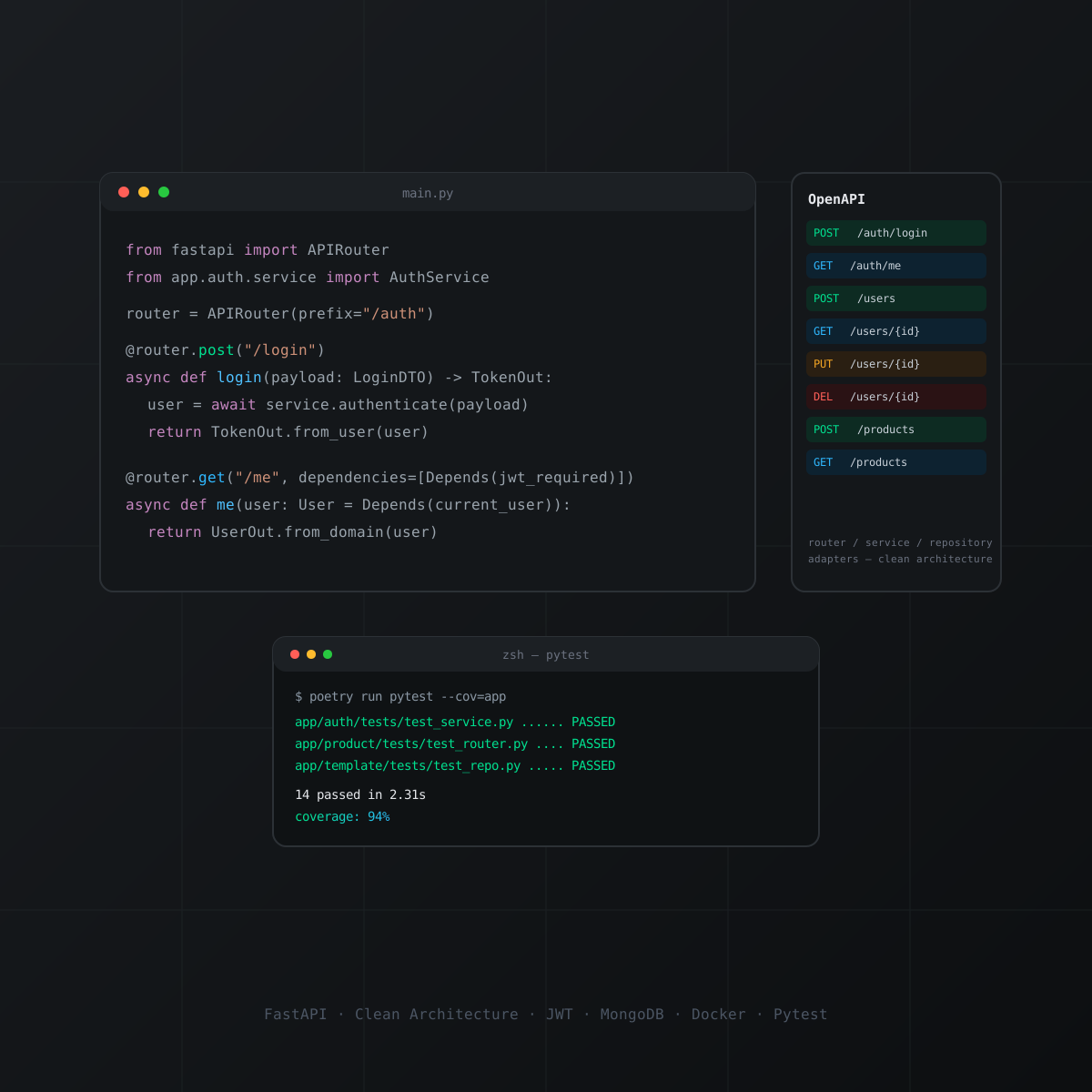
nextjs · boilerplate
Boilerplate de API em Python com FastAPI, organizado em Clean Architecture (router, service, repository e adapters por módulo). Inclui autenticação JWT com hashing bcrypt, MongoDB, testes com pytest e cobertura, Dockerfile e docker-compose para subir localmente, e documentação Swagger/OpenAPI automática. Repositório de origem privado; snapshot técnico verificado antes da publicação.
Ver produto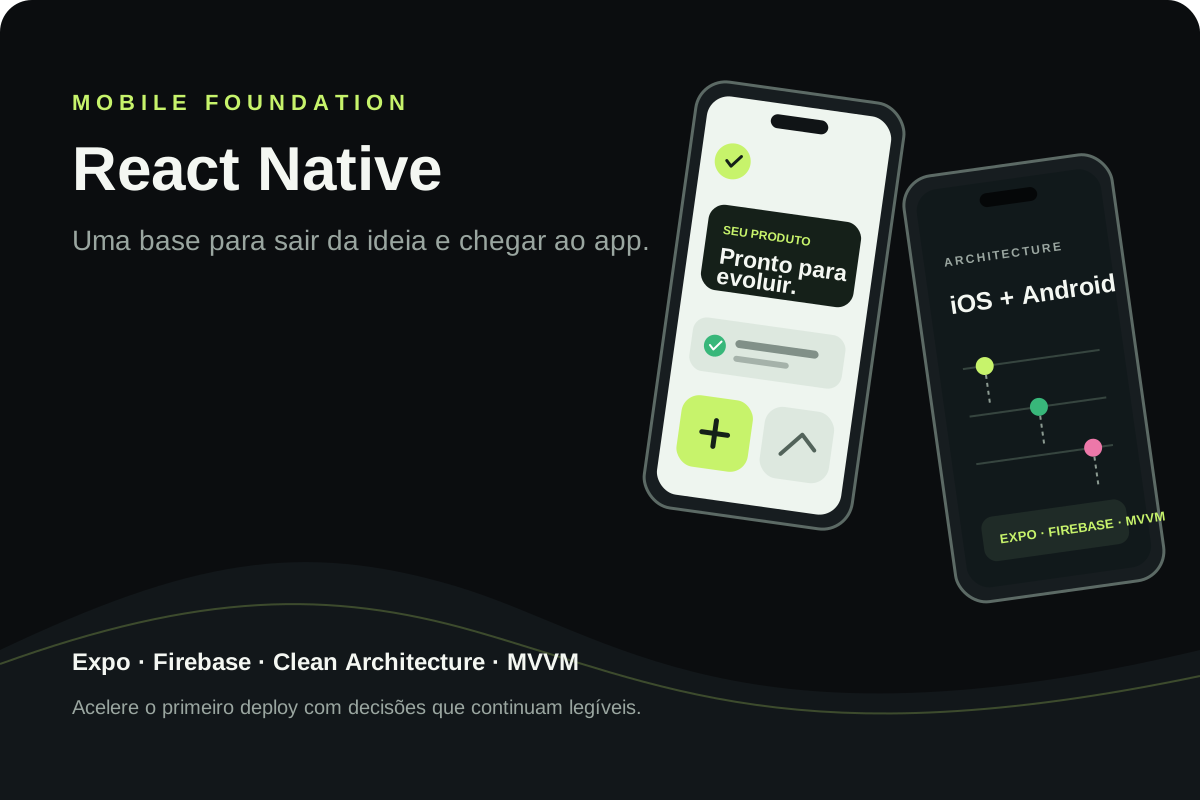
react · boilerplate
Base React Native para apps iOS e Android com Expo, Clean Architecture, MVVM, Firebase e módulos nativos. Referência técnica do VaiDeFut, com distribuição pública no Google Play e fluxo de publicação para iOS documentado.
Ver produto
nextjs · boilerplate
Kit gratuito e open source para começar com agentes de código em Claude Code, Codex, Gemini, Copilot e OpenCode. A licença MIT está confirmada no repositório público.
Ver produto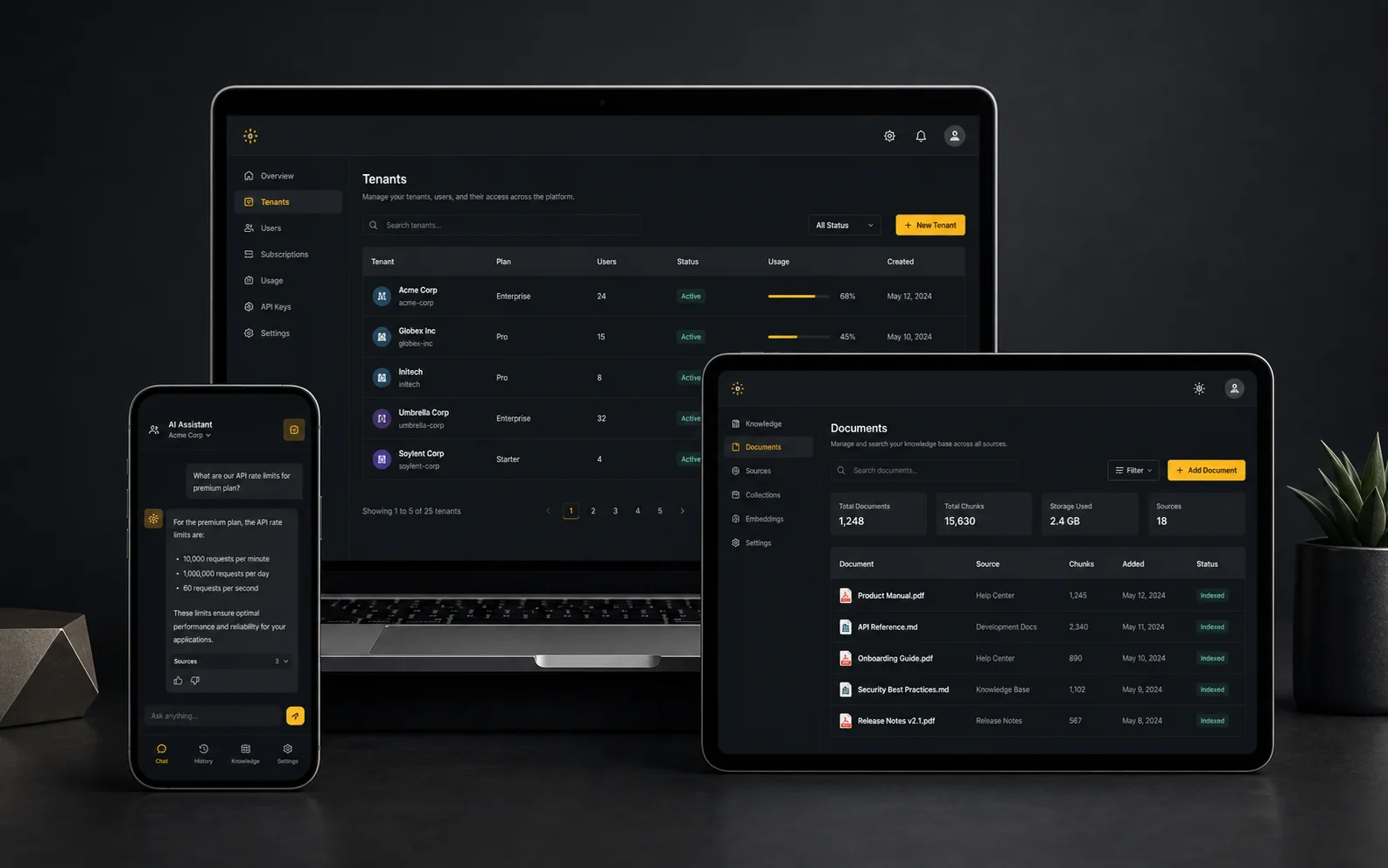
nextjs · boilerplate
Fundação AI-first white-label para lançar produtos SaaS com Next.js, chat, RAG, memória, tenants e documentação. O snapshot verificado documenta Supabase, não MongoDB; essa limitação está explícita. MongoDB, Redis e RabbitMQ exigem integração/configuração compatível.
Ver produtonextjs · boilerplate
Edição avançada da base white-label e multi-tenant AI-first para acelerar produtos com Next.js, chat, RAG, memória e documentação. O snapshot verificado ainda não comprova uma camada Ultra distinta; a oferta mantém essa limitação transparente e explicita as trocas de provider, cache e filas.
Ver produtonextjs · boilerplate
Base white-label e multi-tenant para transformar uma ideia em um SaaS AI-first com Next.js, chat, RAG, memória e segurança documentados. O snapshot verificado usa Supabase; o nome identifica o repositório de origem. Provider, cache e filas ficam explícitos; Redis e RabbitMQ são integrações configuráveis.
Ver produto
react · portfolio
Uma contribuição única para apoiar conteúdo técnico gratuito, pesquisa e a continuidade de projetos relevantes publicados por Anderson Lima. Você escolhe o valor; não é uma assinatura.
Ver produto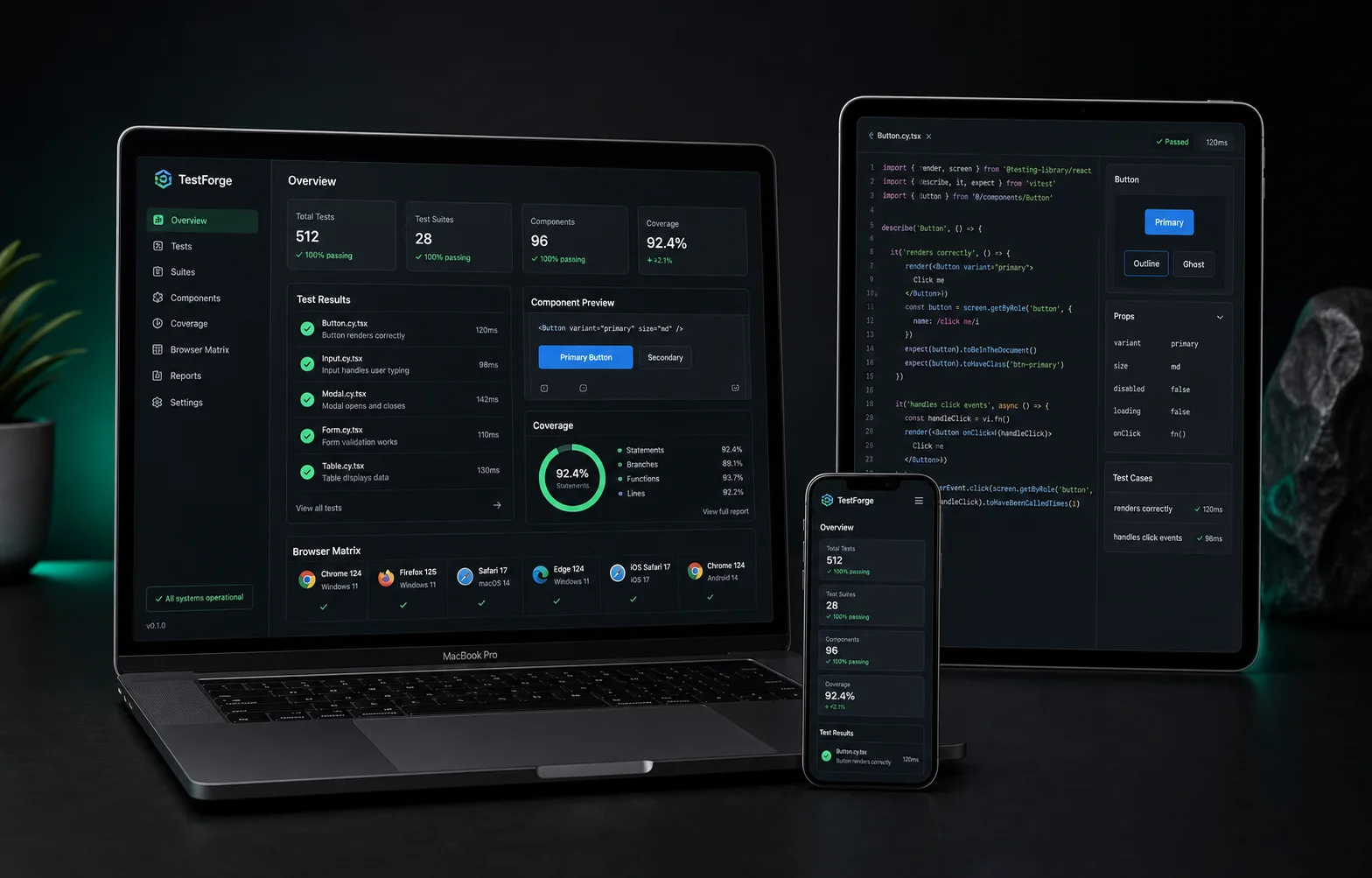
react · boilerplate
Starter React gratuito para criar uma suíte de testes confiável desde o primeiro commit, com Vitest, Testing Library, Playwright, Vite, TypeScript, Zustand, React Query, MirageJS e PWA. O repositório não declara uma licença SPDX; revise os termos antes de uso comercial.
Ver produto
react · portfolio
Monorepo público em React, TypeScript e Vite para explorar uma biblioteca de componentes com linguagem visual inspirada em interfaces nativas. O README atual é enxuto e não declara uma licença SPDX; trate como preview gratuito.
Ver produto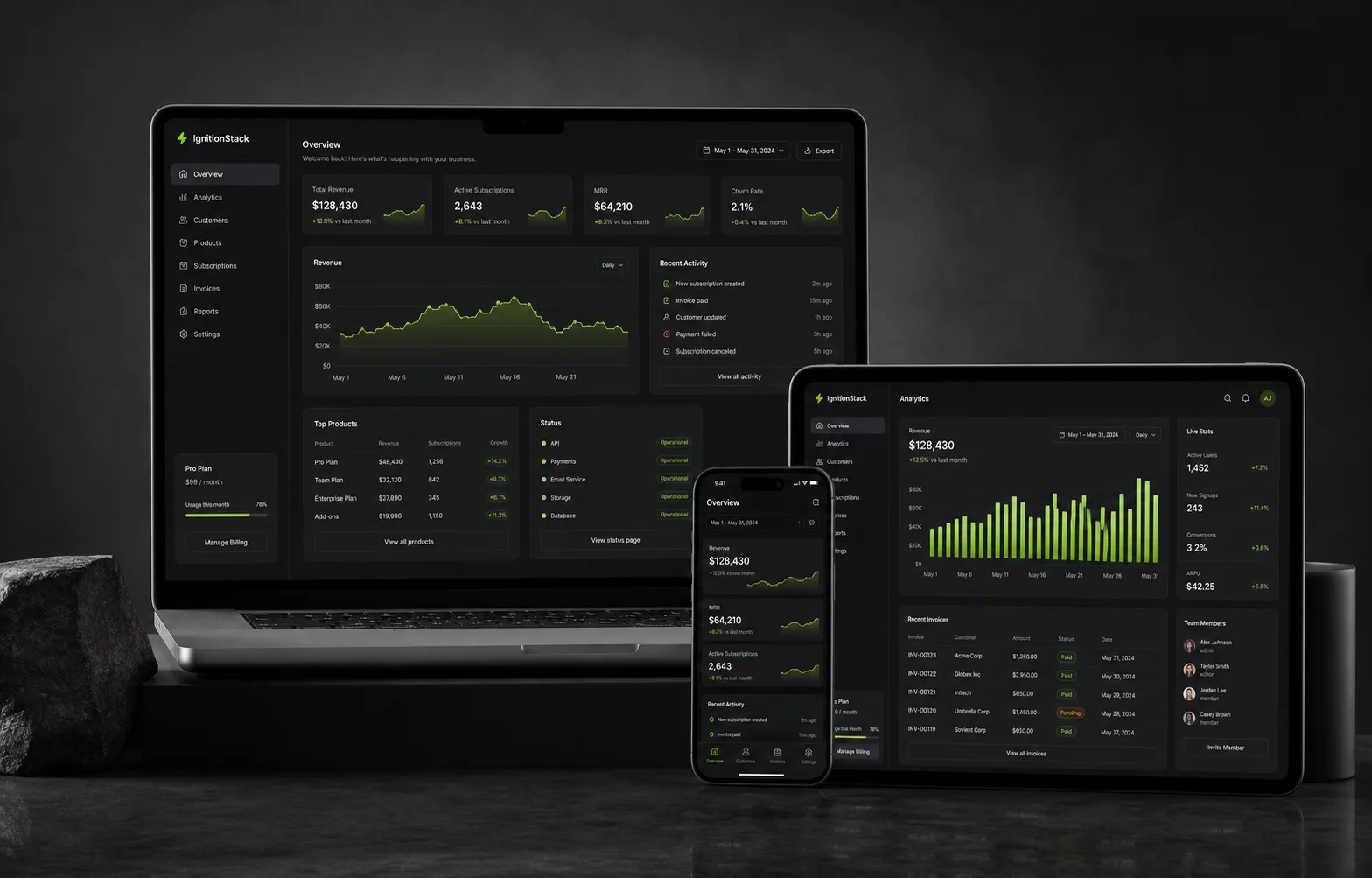
nextjs · saas
Boilerplate SaaS AI-first com Next.js, Supabase, Stripe e provider routing para começar do primeiro prompt e acelerar o caminho até um deploy real. As adaptações de IA, banco, e-mail, cache e filas ficam explícitas; Redis e RabbitMQ são integrações configuráveis.
Ver produto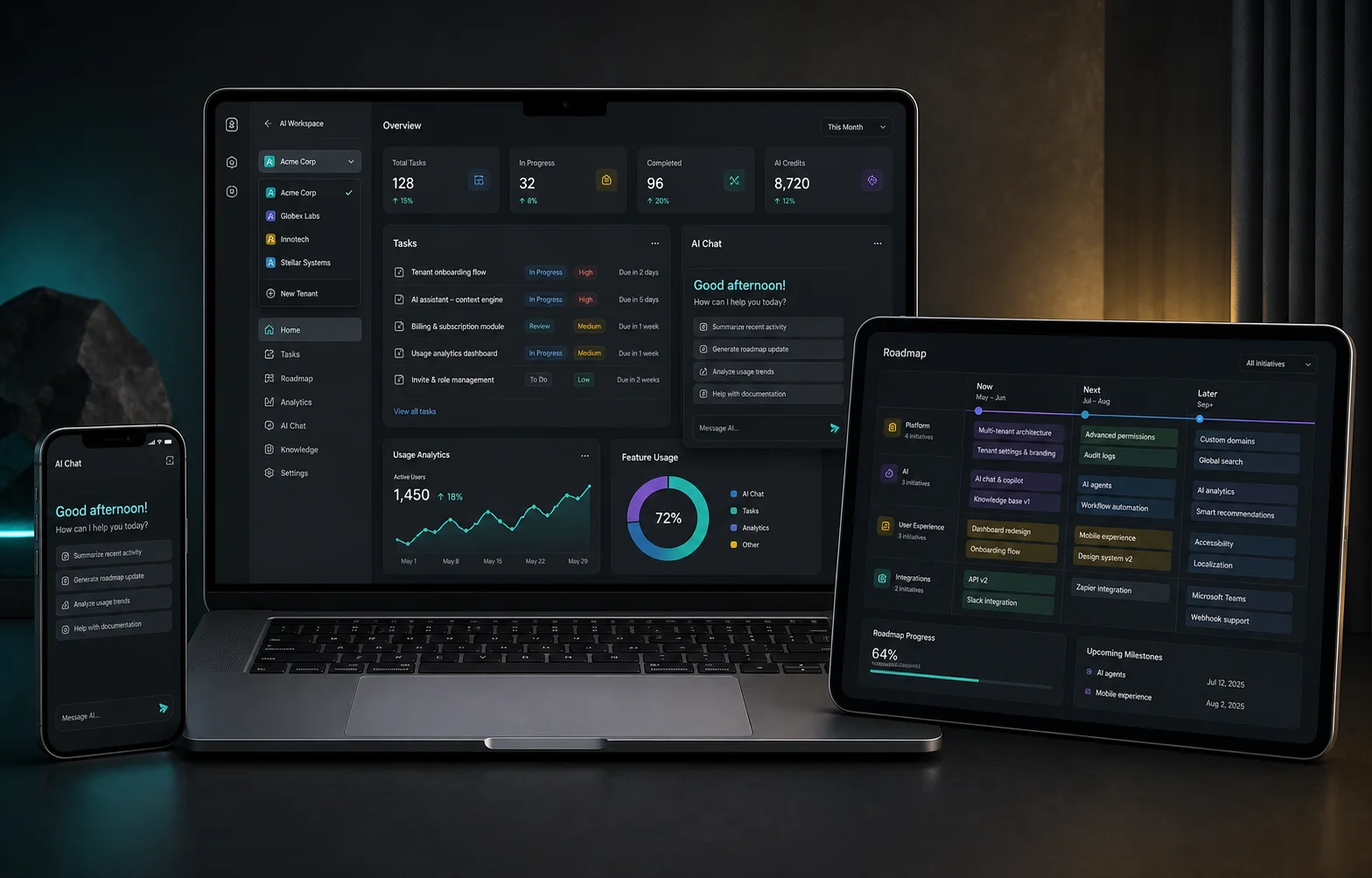
react · saas
Starter kit React + TypeScript para SaaS multi-tenant com Firebase, Atomic Design, temas, PWA, telas de produto, MirageJS e chat com Gemini extensível a outros providers. Valide requisitos de produção, custos e integrações antes de publicar.
Ver produto
react · boilerplate
Starter React público com TypeScript, Zustand, React Query, Tailwind CSS, PWA e integrações de IA documentadas. O repositório não declara uma licença SPDX; revise os termos antes de uso comercial.
Ver produto
nextjs · saas
Landing page SaaS para Next.js, TypeScript e Tailwind CSS com SEO, temas, i18n, PWA e pontos de integração para auth, Stripe e IA. Uma base clara para sair da tela vazia e adaptar sua proposta.
Ver produtoContinue explorando tópicos similares
OpenAI e Anthropic chegaram a 2026 como as duas empresas mais importantes da corrida de IA aplicada. Este artigo reconstrói suas trajetórias, compara modelos, infraestrutura, investimentos, agentes, riscos e possíveis IPOs.
Um único binário `codex`, vários mundos. Este tutorial mostra como isolar contas com CODEX_HOME, alternar profiles, abrir o Codex App com perfil próprio e fazer duas instâncias conversarem usando recursos nativos como codex exec, queue, agents e app-server.

Muita gente tenta resolver tudo com um prompt melhor, quando o problema real é a escolha errada da skill. Este guia mostra o que são skills no Claude Code, por que elas importam tanto e como escolher a skill correta para obter resultados mais consistentes, seguros e úteis.
Checklist de 47 pontos para encontrar bugs, riscos de segurança e problemas de performance antes do lançamento.
Templates testados em produção, usados por desenvolvedores. Economize semanas de setup no seu próximo projeto.