


Anderson LimaSoftware Engineer & Consultant
4 de outubro de 2026
42 min de leitura
43 visualizações

Produtos gratuitos e pagos para transformar ideias em uma base que você consegue executar.
13 produtos disponíveis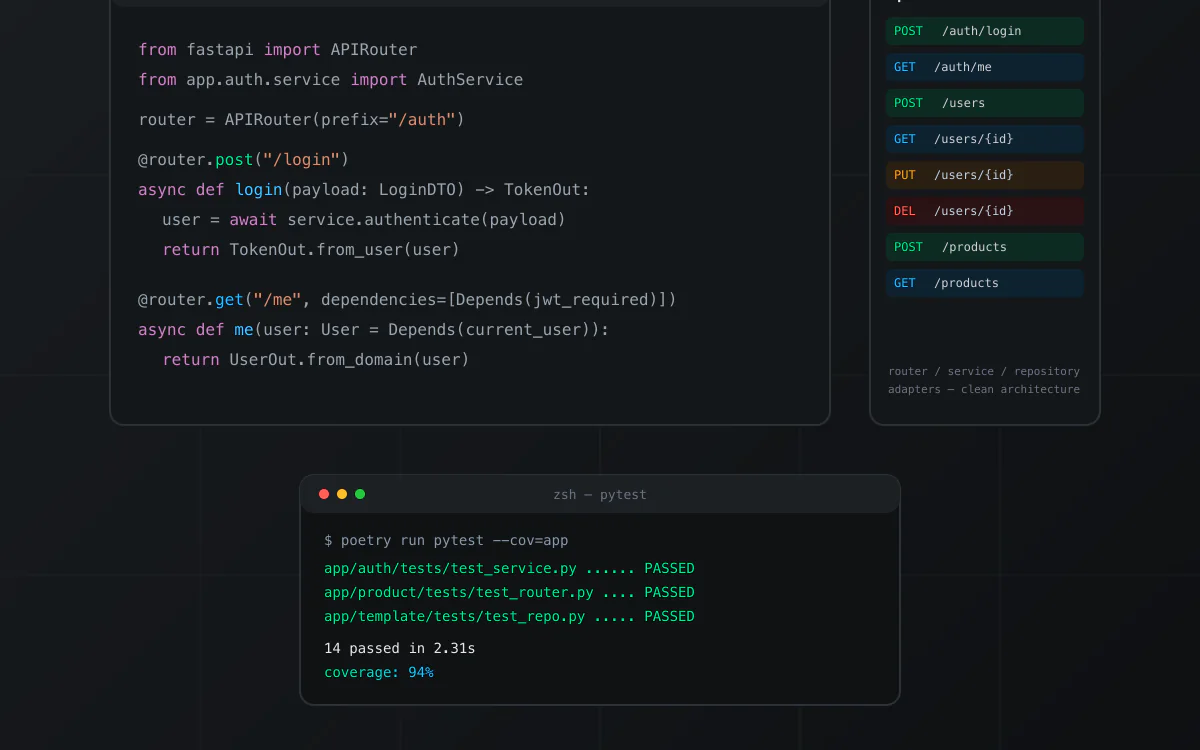
nextjs · boilerplate
Boilerplate de API em Python com FastAPI, organizado em Clean Architecture (router, service, repository e adapters por módulo). Inclui autenticação JWT com hashing bcrypt, MongoDB, testes com pytest e cobertura, Dockerfile e docker-compose para subir localmente, e documentação Swagger/OpenAPI automática. Repositório de origem privado; snapshot técnico verificado antes da publicação.
Ver produto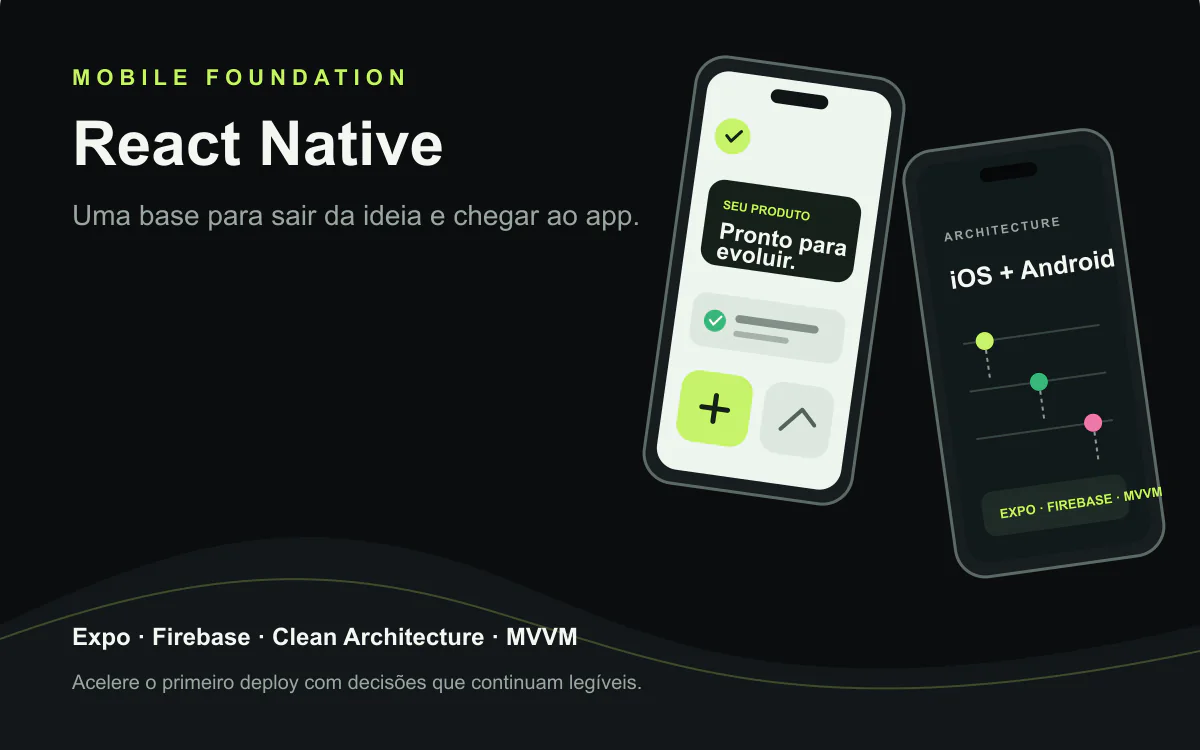
react · boilerplate
Base React Native para apps iOS e Android com Expo, Clean Architecture, MVVM, Firebase e módulos nativos. Referência técnica do VaiDeFut, com distribuição pública no Google Play e fluxo de publicação para iOS documentado.
Ver produto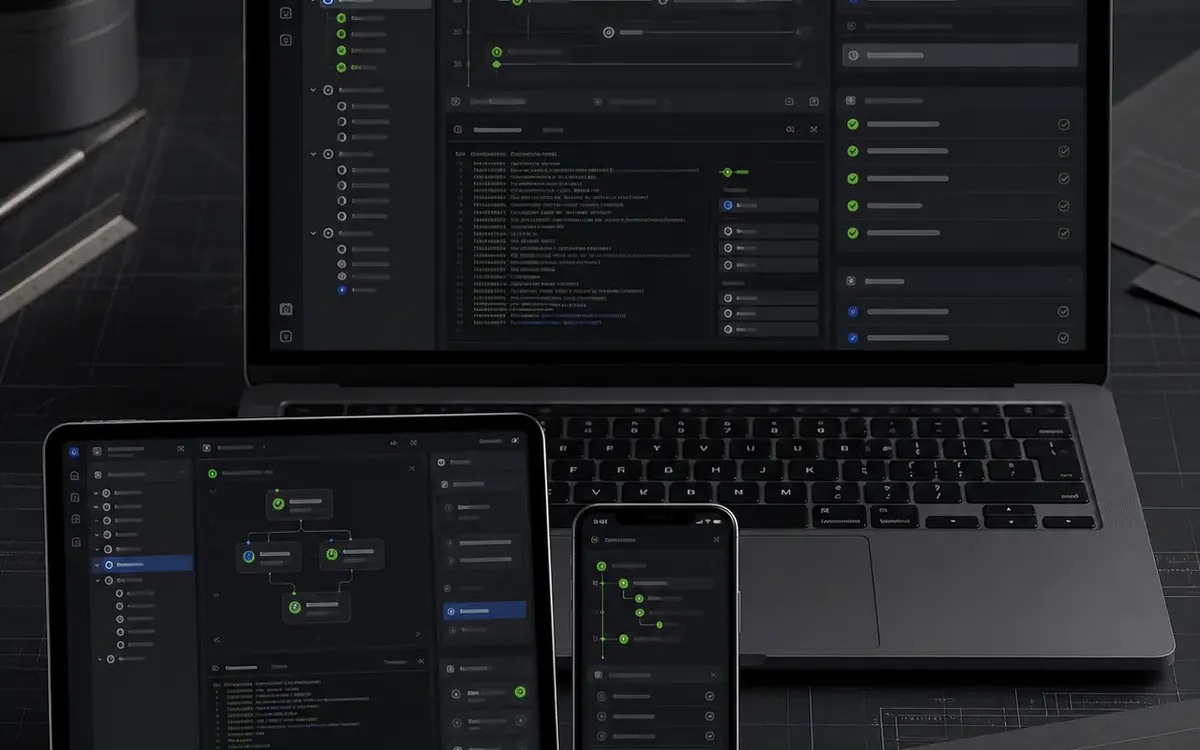
nextjs · boilerplate
Kit gratuito e open source para começar com agentes de código em Claude Code, Codex, Gemini, Copilot e OpenCode. A licença MIT está confirmada no repositório público.
Ver produto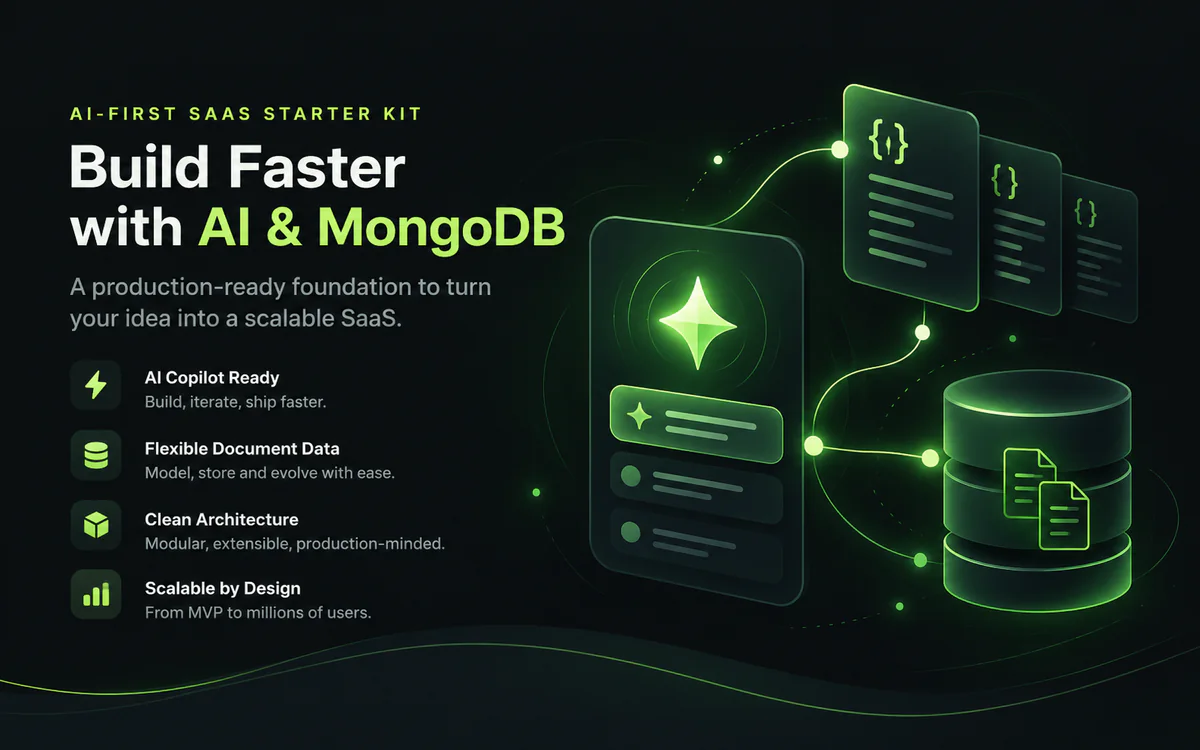
nextjs · boilerplate
Fundação AI-first white-label para lançar produtos SaaS com Next.js, chat, RAG, memória, tenants e documentação. O snapshot verificado documenta Supabase, não MongoDB; essa limitação está explícita. MongoDB, Redis e RabbitMQ exigem integração/configuração compatível.
Ver produto
nextjs · boilerplate
Edição avançada da base white-label e multi-tenant AI-first para acelerar produtos com Next.js, chat, RAG, memória e documentação. O snapshot verificado ainda não comprova uma camada Ultra distinta; a oferta mantém essa limitação transparente e explicita as trocas de provider, cache e filas.
Ver produto
nextjs · boilerplate
Base white-label e multi-tenant para transformar uma ideia em um SaaS AI-first com Next.js, chat, RAG, memória e segurança documentados. O snapshot verificado usa Supabase; o nome identifica o repositório de origem. Provider, cache e filas ficam explícitos; Redis e RabbitMQ são integrações configuráveis.
Ver produto
react · portfolio
Uma contribuição única para apoiar conteúdo técnico gratuito, pesquisa e a continuidade de projetos relevantes publicados por Anderson Lima. Você escolhe o valor; não é uma assinatura.
Ver produto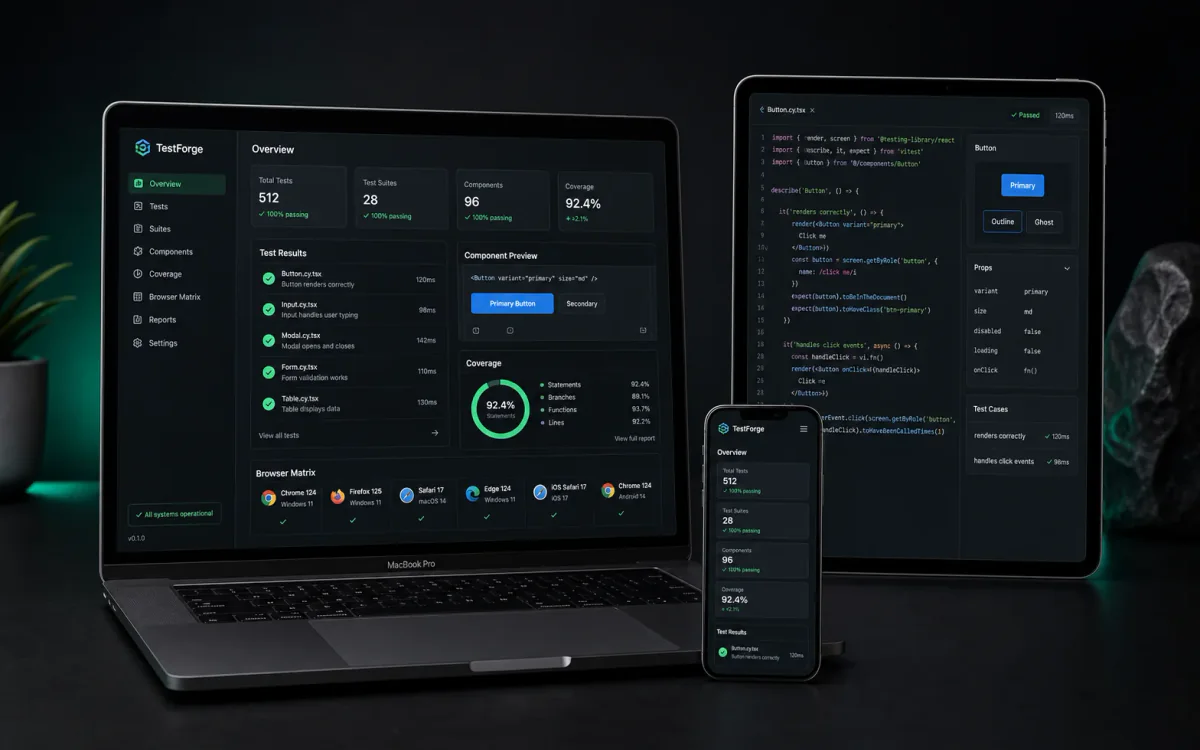
react · boilerplate
Starter React gratuito para criar uma suíte de testes confiável desde o primeiro commit, com Vitest, Testing Library, Playwright, Vite, TypeScript, Zustand, React Query, MirageJS e PWA. O repositório não declara uma licença SPDX; revise os termos antes de uso comercial.
Ver produto
react · portfolio
Monorepo público em React, TypeScript e Vite para explorar uma biblioteca de componentes com linguagem visual inspirada em interfaces nativas. O README atual é enxuto e não declara uma licença SPDX; trate como preview gratuito.
Ver produto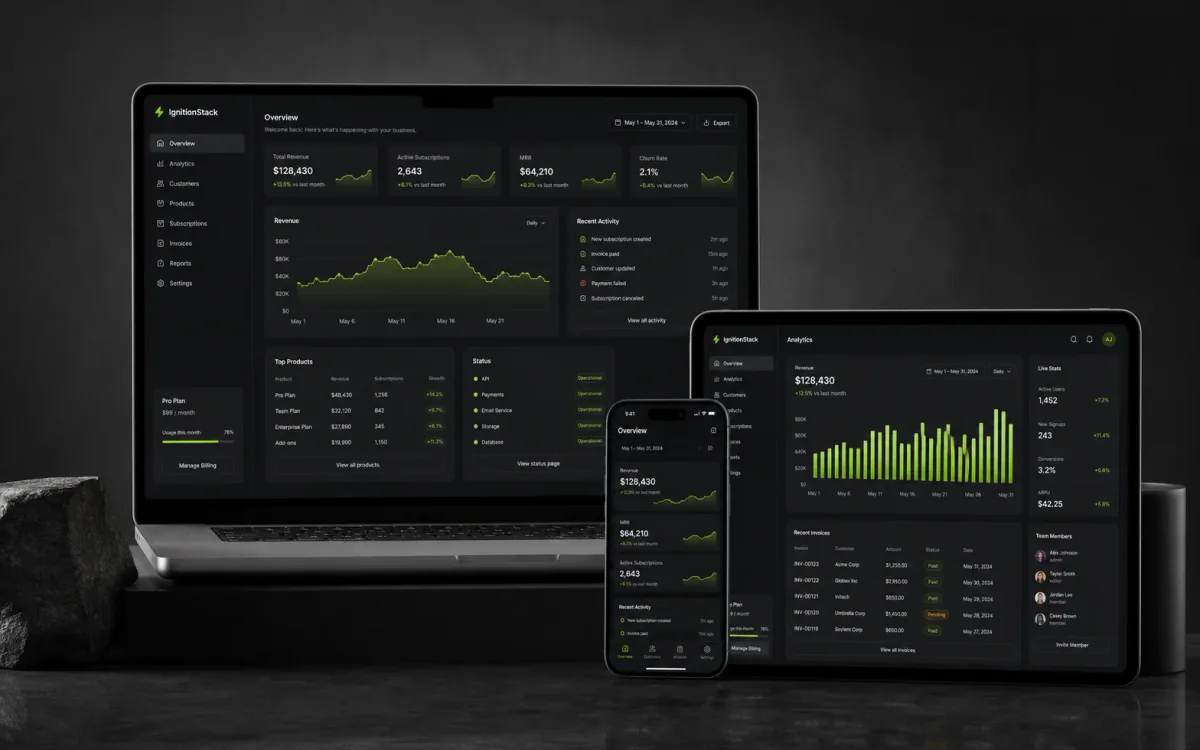
nextjs · saas
Boilerplate SaaS AI-first com Next.js, Supabase, Stripe e provider routing para começar do primeiro prompt e acelerar o caminho até um deploy real. As adaptações de IA, banco, e-mail, cache e filas ficam explícitas; Redis e RabbitMQ são integrações configuráveis.
Ver produto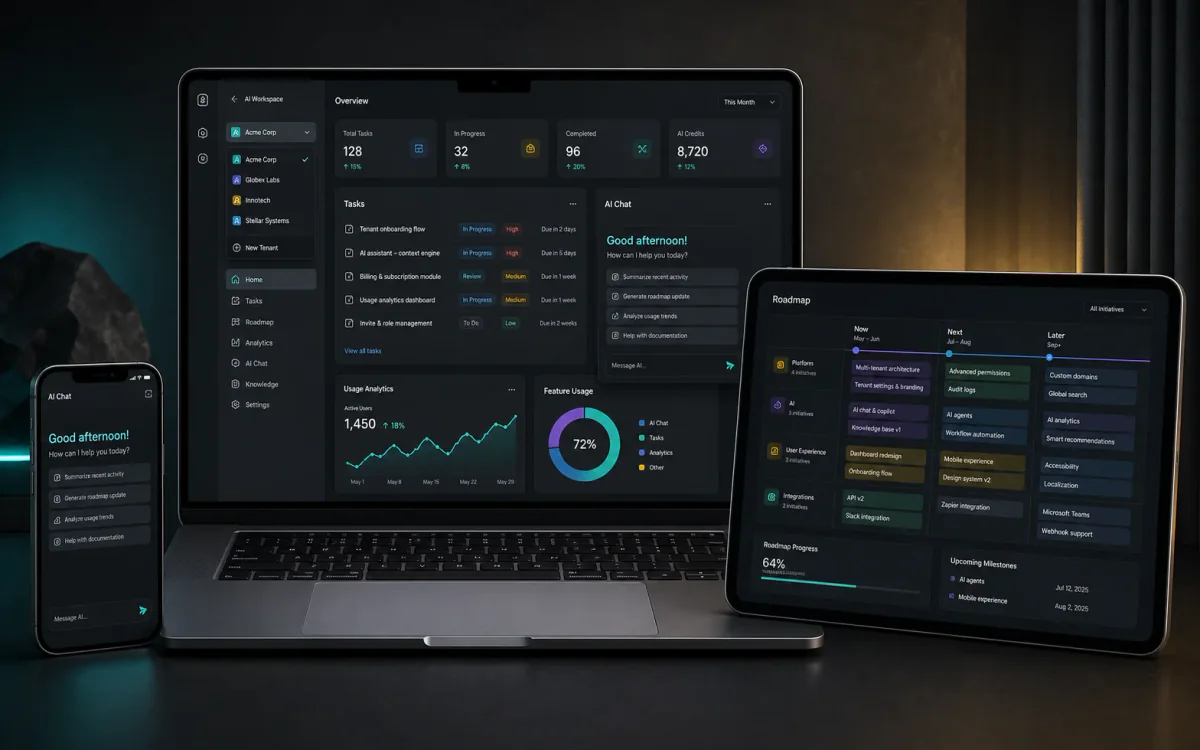
react · saas
Starter kit React + TypeScript para SaaS multi-tenant com Firebase, Atomic Design, temas, PWA, telas de produto, MirageJS e chat com Gemini extensível a outros providers. Valide requisitos de produção, custos e integrações antes de publicar.
Ver produto
react · boilerplate
Starter React público com TypeScript, Zustand, React Query, Tailwind CSS, PWA e integrações de IA documentadas. O repositório não declara uma licença SPDX; revise os termos antes de uso comercial.
Ver produto
nextjs · saas
Landing page SaaS para Next.js, TypeScript e Tailwind CSS com SEO, temas, i18n, PWA e pontos de integração para auth, Stripe e IA. Uma base clara para sair da tela vazia e adaptar sua proposta.
Ver produtoContinue explorando tópicos similares

Resenha crítica de Clean Code: ideias centrais, um exemplo de frete, limitações e um roteiro para aplicar o livro sem dogmatismo.

448 commits no CLI, 152 no app, 268 no laboratório de modelo, 67 arquivos de ADR para 60 números e nenhum modelo promovido. O fechamento da série, só com dados reais.

Uma resposta com 'if n == 20: return 6765' passa em todos os testes de Fibonacci. No lemon-model ela recebe nota zero. Este post mostra o resto do sistema que impede hype de virar release.
Checklist de 47 pontos para encontrar bugs, riscos de segurança e problemas de performance antes do lançamento.
Templates testados em produção, usados por desenvolvedores. Economize semanas de setup no seu próximo projeto.
English summary: Explains shared-schema, schema-per-tenant, and database-per-tenant patterns with isolation controls, RLS, migrations, and tenant lifecycle operations. Resumo em português: Este guia mostra como isolar tenants sem explodir custo operacional, como evitar bleed-through e como escolher a estratégia certa para o nível de risco do seu SaaS.
Todo SaaS chega na mesma pergunta em algum momento.
Como compartilhar infraestrutura sem compartilhar dados?
A resposta não é apenas técnica.
Ela mistura produto, segurança, compliance, custo e risco reputacional.
Quando o isolamento falha, a consequência não é uma query lenta.
É um vazamento de dados entre clientes.
Por isso multitenancy merece mais rigor do que um simples filtro por tenant_id.
Multitenancy permite que vários clientes usem a mesma aplicação sem misturar dados, regras ou limites. O objetivo é compartilhar o que pode ser compartilhado e isolar o que precisa ser protegido. Na prática, você controla quatro dimensões ao mesmo tempo. Identidade, storage, acesso e operação. Se uma delas estiver fraca, o modelo inteiro fica vulnerável.
No shared schema, todas as linhas vivem nas mesmas tabelas.
A separação acontece por tenant_id.
Esse modelo é o mais econômico e o mais fácil de começar.
Também é o que mais pune descuido humano.
Se uma query esquecer o tenant, o desastre é imediato.
CREATE TABLE users (
  id UUID PRIMARY KEY,
  tenant_id UUID NOT NULL,
  email TEXT NOT NULL,
  name TEXT NOT NULL,
  created_at TIMESTAMPTZ NOT NULL DEFAULT now()
);

CREATE INDEX idx_users_tenant_id ON users (tenant_id);

SELECT * FROM users WHERE tenant_id = $1 AND email = $2;
O problema do shared schema não é só segurança. É também ruído operacional. Backups, migrações e análises globais ficam simples. Mas o risco de erro por omissão cresce em cada nova query. O modelo pede disciplina de acesso em toda camada do sistema.
No schema-per-tenant, cada tenant tem seu próprio schema dentro do mesmo banco.
Isso melhora separação lógica sem multiplicar bancos inteiros.
A aplicação precisa apontar o search_path ou qualificar os objetos corretamente.
É um meio-termo atraente para times que precisam mais isolamento do que o shared schema oferece.
O preço é o crescimento da complexidade de migração e operação.
CREATE SCHEMA tenant_acme;
CREATE SCHEMA tenant_globex;

SET search_path TO tenant_acme;
SELECT * FROM users;

SET search_path TO tenant_globex;
SELECT * FROM users;
Database-per-tenant é o extremo mais isolado do espectro. Cada cliente recebe seu próprio banco. A vantagem é óbvia: falhas e acessos ficam mais contidos. A desvantagem também é óbvia: cada novo tenant vira uma unidade de operação. Backup, restore, migração e monitoramento precisam escalar por N bancos.
class TenantConnectionManager {
  private pools = new Map<string, Pool>();

  getConnection(tenantId: string): Pool {
    if (!this.pools.has(tenantId)) {
      this.pools.set(tenantId, new Pool({
        host: "localhost",
        database: `tenant_${tenantId}`,
        user: "app",
        password: process.env.DB_PASSWORD,
      }));
    }
    return this.pools.get(tenantId)!;
  }
}
A aplicação precisa descobrir o tenant antes de qualquer consulta. Se essa resolução acontecer tarde demais, o risco sobe. Subdomain, header, token ou claim podem carregar a identidade. O ponto central é o mesmo: a origem da request precisa ser confiável e consistente.
RLS remove uma parte do risco porque o próprio banco impõe a política. Em vez de depender apenas do código, você pede para o banco bloquear leituras e writes fora da linha permitida. Isso não elimina bugs, mas reduz a chance de vazamento silencioso. Também facilita auditoria porque a política fica explícita.
ALTER TABLE users ENABLE ROW LEVEL SECURITY;

CREATE POLICY tenant_isolation ON users
  USING (tenant_id = current_setting('app.tenant_id')::uuid);

SET app.tenant_id = '550e8400-e29b-41d4-a716-446655440000';
SELECT * FROM users;
Migrations são o momento em que multitenancy mostra sua face operacional. No shared schema, uma migration bem escrita resolve tudo de uma vez. No schema-per-tenant e no database-per-tenant, a migration precisa ser iterada com cuidado. Você quer rollback, idempotência e visibilidade por tenant.
Um SaaS saudável trata onboarding como automação, não como ritual manual. Criar tenant, provisionar storage, registrar limites e ligar observabilidade precisa ser uma sequência previsível. Offboarding também precisa ser explícito. Apagar, arquivar ou anonimizar dados não pode depender da memória do operador.
O risco clássico é a consulta sem tenant. O risco menos visível é a tarefa de background que ignora a política do request. Outro risco é o suporte humano entrando com acesso global demais. Segurança em multitenancy precisa cobrir aplicação, banco, fila e observabilidade.
Multitenancy não é só segregação de dados. Ele também precisa segregar expectativa de custo. Um tenant barulhento pode consumir recursos demais e degradar a experiência dos outros. Por isso quotas, rate limits e prioridades por tenant fazem parte do mesmo problema.
Teste de multitenancy não é só happy path. Você precisa provar que um tenant nunca enxerga o outro. Bleed-through costuma acontecer em código que parece inocente. Helpers de consulta, jobs assíncronos e dashboards são pontos clássicos de falha.
describe("Tenant Isolation", () => {
  it("should not return data from other tenants", async () => {
    await pool.query("SET app.tenant_id = $1", [TENANT_A]);
    await pool.query("INSERT INTO users (email) VALUES ($1)", ["alice@tenantA.com"]);

    await pool.query("SET app.tenant_id = $1", [TENANT_B]);
    await pool.query("INSERT INTO users (email) VALUES ($1)", ["bob@tenantB.com"]);

    await pool.query("SET app.tenant_id = $1", [TENANT_A]);
    const result = await pool.query("SELECT * FROM users");

    expect(result.rows).toHaveLength(1);
  });
});
Sem rastreio por tenant, incidentes ficam opacos. Quando algo quebra, você quer responder três perguntas. Qual tenant foi afetado, qual caminho de código foi usado e qual política estava ativa. Se essa resposta demora, a operação fica cega.
| Situation | Recommended Model |
| --- | --- |
| Startup with fast iteration | Shared schema + RLS |
| Mid-market with isolation pressure | Schema-per-tenant |
| Enterprise or regulated client | Database-per-tenant |
| Very uneven tenant sizes | Mixed model with VIP isolation |
| Heavy compliance constraints | Stronger isolation and audit |
Why it matters: row-level isolation becomes expensive when diagnose is handled late. First principle: tenant boundaries must be explicit in code and in the database. Do: make row-level isolation measurable, testable, and reversible. Don't: rely on a person remembering the tenant context during diagnose. Metric: track bleed-through tests, query fan-out, and tenant-specific latency. Trade-off: stronger isolation increases operational overhead. Rule: if the tenant boundary is hidden, the risk is already too high.
Why it matters: schema-per-tenant becomes expensive when diagnose is handled late. First principle: tenant boundaries must be explicit in code and in the database. Do: make schema-per-tenant measurable, testable, and reversible. Don't: rely on a person remembering the tenant context during diagnose. Metric: track bleed-through tests, query fan-out, and tenant-specific latency. Trade-off: stronger isolation increases operational overhead. Rule: if the tenant boundary is hidden, the risk is already too high.
Why it matters: database-per-tenant becomes expensive when diagnose is handled late. First principle: tenant boundaries must be explicit in code and in the database. Do: make database-per-tenant measurable, testable, and reversible. Don't: rely on a person remembering the tenant context during diagnose. Metric: track bleed-through tests, query fan-out, and tenant-specific latency. Trade-off: stronger isolation increases operational overhead. Rule: if the tenant boundary is hidden, the risk is already too high.
Why it matters: tenant onboarding becomes expensive when diagnose is handled late. First principle: tenant boundaries must be explicit in code and in the database. Do: make tenant onboarding measurable, testable, and reversible. Don't: rely on a person remembering the tenant context during diagnose. Metric: track bleed-through tests, query fan-out, and tenant-specific latency. Trade-off: stronger isolation increases operational overhead. Rule: if the tenant boundary is hidden, the risk is already too high.
Why it matters: tenant offboarding becomes expensive when diagnose is handled late. First principle: tenant boundaries must be explicit in code and in the database. Do: make tenant offboarding measurable, testable, and reversible. Don't: rely on a person remembering the tenant context during diagnose. Metric: track bleed-through tests, query fan-out, and tenant-specific latency. Trade-off: stronger isolation increases operational overhead. Rule: if the tenant boundary is hidden, the risk is already too high.
Why it matters: RLS enforcement becomes expensive when diagnose is handled late. First principle: tenant boundaries must be explicit in code and in the database. Do: make RLS enforcement measurable, testable, and reversible. Don't: rely on a person remembering the tenant context during diagnose. Metric: track bleed-through tests, query fan-out, and tenant-specific latency. Trade-off: stronger isolation increases operational overhead. Rule: if the tenant boundary is hidden, the risk is already too high.
Why it matters: support access becomes expensive when diagnose is handled late. First principle: tenant boundaries must be explicit in code and in the database. Do: make support access measurable, testable, and reversible. Don't: rely on a person remembering the tenant context during diagnose. Metric: track bleed-through tests, query fan-out, and tenant-specific latency. Trade-off: stronger isolation increases operational overhead. Rule: if the tenant boundary is hidden, the risk is already too high.
Why it matters: billing and quotas becomes expensive when diagnose is handled late. First principle: tenant boundaries must be explicit in code and in the database. Do: make billing and quotas measurable, testable, and reversible. Don't: rely on a person remembering the tenant context during diagnose. Metric: track bleed-through tests, query fan-out, and tenant-specific latency. Trade-off: stronger isolation increases operational overhead. Rule: if the tenant boundary is hidden, the risk is already too high.
Why it matters: noisy neighbors becomes expensive when diagnose is handled late. First principle: tenant boundaries must be explicit in code and in the database. Do: make noisy neighbors measurable, testable, and reversible. Don't: rely on a person remembering the tenant context during diagnose. Metric: track bleed-through tests, query fan-out, and tenant-specific latency. Trade-off: stronger isolation increases operational overhead. Rule: if the tenant boundary is hidden, the risk is already too high.
Why it matters: migrations at scale becomes expensive when diagnose is handled late. First principle: tenant boundaries must be explicit in code and in the database. Do: make migrations at scale measurable, testable, and reversible. Don't: rely on a person remembering the tenant context during diagnose. Metric: track bleed-through tests, query fan-out, and tenant-specific latency. Trade-off: stronger isolation increases operational overhead. Rule: if the tenant boundary is hidden, the risk is already too high.
Why it matters: backup and restore becomes expensive when diagnose is handled late. First principle: tenant boundaries must be explicit in code and in the database. Do: make backup and restore measurable, testable, and reversible. Don't: rely on a person remembering the tenant context during diagnose. Metric: track bleed-through tests, query fan-out, and tenant-specific latency. Trade-off: stronger isolation increases operational overhead. Rule: if the tenant boundary is hidden, the risk is already too high.
Why it matters: audit trails becomes expensive when diagnose is handled late. First principle: tenant boundaries must be explicit in code and in the database. Do: make audit trails measurable, testable, and reversible. Don't: rely on a person remembering the tenant context during diagnose. Metric: track bleed-through tests, query fan-out, and tenant-specific latency. Trade-off: stronger isolation increases operational overhead. Rule: if the tenant boundary is hidden, the risk is already too high.
Why it matters: row-level isolation becomes expensive when design is handled late. First principle: tenant boundaries must be explicit in code and in the database. Do: make row-level isolation measurable, testable, and reversible. Don't: rely on a person remembering the tenant context during design. Metric: track bleed-through tests, query fan-out, and tenant-specific latency. Trade-off: stronger isolation increases operational overhead. Rule: if the tenant boundary is hidden, the risk is already too high.
Why it matters: schema-per-tenant becomes expensive when design is handled late. First principle: tenant boundaries must be explicit in code and in the database. Do: make schema-per-tenant measurable, testable, and reversible. Don't: rely on a person remembering the tenant context during design. Metric: track bleed-through tests, query fan-out, and tenant-specific latency. Trade-off: stronger isolation increases operational overhead. Rule: if the tenant boundary is hidden, the risk is already too high.
Why it matters: database-per-tenant becomes expensive when design is handled late. First principle: tenant boundaries must be explicit in code and in the database. Do: make database-per-tenant measurable, testable, and reversible. Don't: rely on a person remembering the tenant context during design. Metric: track bleed-through tests, query fan-out, and tenant-specific latency. Trade-off: stronger isolation increases operational overhead. Rule: if the tenant boundary is hidden, the risk is already too high.
Why it matters: tenant onboarding becomes expensive when design is handled late. First principle: tenant boundaries must be explicit in code and in the database. Do: make tenant onboarding measurable, testable, and reversible. Don't: rely on a person remembering the tenant context during design. Metric: track bleed-through tests, query fan-out, and tenant-specific latency. Trade-off: stronger isolation increases operational overhead. Rule: if the tenant boundary is hidden, the risk is already too high.
Why it matters: tenant offboarding becomes expensive when design is handled late. First principle: tenant boundaries must be explicit in code and in the database. Do: make tenant offboarding measurable, testable, and reversible. Don't: rely on a person remembering the tenant context during design. Metric: track bleed-through tests, query fan-out, and tenant-specific latency. Trade-off: stronger isolation increases operational overhead. Rule: if the tenant boundary is hidden, the risk is already too high.
Why it matters: RLS enforcement becomes expensive when design is handled late. First principle: tenant boundaries must be explicit in code and in the database. Do: make RLS enforcement measurable, testable, and reversible. Don't: rely on a person remembering the tenant context during design. Metric: track bleed-through tests, query fan-out, and tenant-specific latency. Trade-off: stronger isolation increases operational overhead. Rule: if the tenant boundary is hidden, the risk is already too high.
Why it matters: support access becomes expensive when design is handled late. First principle: tenant boundaries must be explicit in code and in the database. Do: make support access measurable, testable, and reversible. Don't: rely on a person remembering the tenant context during design. Metric: track bleed-through tests, query fan-out, and tenant-specific latency. Trade-off: stronger isolation increases operational overhead. Rule: if the tenant boundary is hidden, the risk is already too high.
Why it matters: billing and quotas becomes expensive when design is handled late. First principle: tenant boundaries must be explicit in code and in the database. Do: make billing and quotas measurable, testable, and reversible. Don't: rely on a person remembering the tenant context during design. Metric: track bleed-through tests, query fan-out, and tenant-specific latency. Trade-off: stronger isolation increases operational overhead. Rule: if the tenant boundary is hidden, the risk is already too high.
Why it matters: noisy neighbors becomes expensive when design is handled late. First principle: tenant boundaries must be explicit in code and in the database. Do: make noisy neighbors measurable, testable, and reversible. Don't: rely on a person remembering the tenant context during design. Metric: track bleed-through tests, query fan-out, and tenant-specific latency. Trade-off: stronger isolation increases operational overhead. Rule: if the tenant boundary is hidden, the risk is already too high.
Why it matters: migrations at scale becomes expensive when design is handled late. First principle: tenant boundaries must be explicit in code and in the database. Do: make migrations at scale measurable, testable, and reversible. Don't: rely on a person remembering the tenant context during design. Metric: track bleed-through tests, query fan-out, and tenant-specific latency. Trade-off: stronger isolation increases operational overhead. Rule: if the tenant boundary is hidden, the risk is already too high.
Why it matters: backup and restore becomes expensive when design is handled late. First principle: tenant boundaries must be explicit in code and in the database. Do: make backup and restore measurable, testable, and reversible. Don't: rely on a person remembering the tenant context during design. Metric: track bleed-through tests, query fan-out, and tenant-specific latency. Trade-off: stronger isolation increases operational overhead. Rule: if the tenant boundary is hidden, the risk is already too high.
Why it matters: audit trails becomes expensive when design is handled late. First principle: tenant boundaries must be explicit in code and in the database. Do: make audit trails measurable, testable, and reversible. Don't: rely on a person remembering the tenant context during design. Metric: track bleed-through tests, query fan-out, and tenant-specific latency. Trade-off: stronger isolation increases operational overhead. Rule: if the tenant boundary is hidden, the risk is already too high.
Why it matters: row-level isolation becomes expensive when implement is handled late. First principle: tenant boundaries must be explicit in code and in the database. Do: make row-level isolation measurable, testable, and reversible. Don't: rely on a person remembering the tenant context during implement. Metric: track bleed-through tests, query fan-out, and tenant-specific latency. Trade-off: stronger isolation increases operational overhead. Rule: if the tenant boundary is hidden, the risk is already too high.
Why it matters: schema-per-tenant becomes expensive when implement is handled late. First principle: tenant boundaries must be explicit in code and in the database. Do: make schema-per-tenant measurable, testable, and reversible. Don't: rely on a person remembering the tenant context during implement. Metric: track bleed-through tests, query fan-out, and tenant-specific latency. Trade-off: stronger isolation increases operational overhead. Rule: if the tenant boundary is hidden, the risk is already too high.
Why it matters: database-per-tenant becomes expensive when implement is handled late. First principle: tenant boundaries must be explicit in code and in the database. Do: make database-per-tenant measurable, testable, and reversible. Don't: rely on a person remembering the tenant context during implement. Metric: track bleed-through tests, query fan-out, and tenant-specific latency. Trade-off: stronger isolation increases operational overhead. Rule: if the tenant boundary is hidden, the risk is already too high.
Why it matters: tenant onboarding becomes expensive when implement is handled late. First principle: tenant boundaries must be explicit in code and in the database. Do: make tenant onboarding measurable, testable, and reversible. Don't: rely on a person remembering the tenant context during implement. Metric: track bleed-through tests, query fan-out, and tenant-specific latency. Trade-off: stronger isolation increases operational overhead. Rule: if the tenant boundary is hidden, the risk is already too high.
Why it matters: tenant offboarding becomes expensive when implement is handled late. First principle: tenant boundaries must be explicit in code and in the database. Do: make tenant offboarding measurable, testable, and reversible. Don't: rely on a person remembering the tenant context during implement. Metric: track bleed-through tests, query fan-out, and tenant-specific latency. Trade-off: stronger isolation increases operational overhead. Rule: if the tenant boundary is hidden, the risk is already too high.
Why it matters: RLS enforcement becomes expensive when implement is handled late. First principle: tenant boundaries must be explicit in code and in the database. Do: make RLS enforcement measurable, testable, and reversible. Don't: rely on a person remembering the tenant context during implement. Metric: track bleed-through tests, query fan-out, and tenant-specific latency. Trade-off: stronger isolation increases operational overhead. Rule: if the tenant boundary is hidden, the risk is already too high.
Why it matters: support access becomes expensive when implement is handled late. First principle: tenant boundaries must be explicit in code and in the database. Do: make support access measurable, testable, and reversible. Don't: rely on a person remembering the tenant context during implement. Metric: track bleed-through tests, query fan-out, and tenant-specific latency. Trade-off: stronger isolation increases operational overhead. Rule: if the tenant boundary is hidden, the risk is already too high.
Why it matters: billing and quotas becomes expensive when implement is handled late. First principle: tenant boundaries must be explicit in code and in the database. Do: make billing and quotas measurable, testable, and reversible. Don't: rely on a person remembering the tenant context during implement. Metric: track bleed-through tests, query fan-out, and tenant-specific latency. Trade-off: stronger isolation increases operational overhead. Rule: if the tenant boundary is hidden, the risk is already too high.
Why it matters: noisy neighbors becomes expensive when implement is handled late. First principle: tenant boundaries must be explicit in code and in the database. Do: make noisy neighbors measurable, testable, and reversible. Don't: rely on a person remembering the tenant context during implement. Metric: track bleed-through tests, query fan-out, and tenant-specific latency. Trade-off: stronger isolation increases operational overhead. Rule: if the tenant boundary is hidden, the risk is already too high.
Why it matters: migrations at scale becomes expensive when implement is handled late. First principle: tenant boundaries must be explicit in code and in the database. Do: make migrations at scale measurable, testable, and reversible. Don't: rely on a person remembering the tenant context during implement. Metric: track bleed-through tests, query fan-out, and tenant-specific latency. Trade-off: stronger isolation increases operational overhead. Rule: if the tenant boundary is hidden, the risk is already too high.
Why it matters: backup and restore becomes expensive when implement is handled late. First principle: tenant boundaries must be explicit in code and in the database. Do: make backup and restore measurable, testable, and reversible. Don't: rely on a person remembering the tenant context during implement. Metric: track bleed-through tests, query fan-out, and tenant-specific latency. Trade-off: stronger isolation increases operational overhead. Rule: if the tenant boundary is hidden, the risk is already too high.
Why it matters: audit trails becomes expensive when implement is handled late. First principle: tenant boundaries must be explicit in code and in the database. Do: make audit trails measurable, testable, and reversible. Don't: rely on a person remembering the tenant context during implement. Metric: track bleed-through tests, query fan-out, and tenant-specific latency. Trade-off: stronger isolation increases operational overhead. Rule: if the tenant boundary is hidden, the risk is already too high.
Why it matters: row-level isolation becomes expensive when operate is handled late. First principle: tenant boundaries must be explicit in code and in the database. Do: make row-level isolation measurable, testable, and reversible. Don't: rely on a person remembering the tenant context during operate. Metric: track bleed-through tests, query fan-out, and tenant-specific latency. Trade-off: stronger isolation increases operational overhead. Rule: if the tenant boundary is hidden, the risk is already too high.
Why it matters: schema-per-tenant becomes expensive when operate is handled late. First principle: tenant boundaries must be explicit in code and in the database. Do: make schema-per-tenant measurable, testable, and reversible. Don't: rely on a person remembering the tenant context during operate. Metric: track bleed-through tests, query fan-out, and tenant-specific latency. Trade-off: stronger isolation increases operational overhead. Rule: if the tenant boundary is hidden, the risk is already too high.
Why it matters: database-per-tenant becomes expensive when operate is handled late. First principle: tenant boundaries must be explicit in code and in the database. Do: make database-per-tenant measurable, testable, and reversible. Don't: rely on a person remembering the tenant context during operate. Metric: track bleed-through tests, query fan-out, and tenant-specific latency. Trade-off: stronger isolation increases operational overhead. Rule: if the tenant boundary is hidden, the risk is already too high.
Why it matters: tenant onboarding becomes expensive when operate is handled late. First principle: tenant boundaries must be explicit in code and in the database. Do: make tenant onboarding measurable, testable, and reversible. Don't: rely on a person remembering the tenant context during operate. Metric: track bleed-through tests, query fan-out, and tenant-specific latency. Trade-off: stronger isolation increases operational overhead. Rule: if the tenant boundary is hidden, the risk is already too high.
Why it matters: tenant offboarding becomes expensive when operate is handled late. First principle: tenant boundaries must be explicit in code and in the database. Do: make tenant offboarding measurable, testable, and reversible. Don't: rely on a person remembering the tenant context during operate. Metric: track bleed-through tests, query fan-out, and tenant-specific latency. Trade-off: stronger isolation increases operational overhead. Rule: if the tenant boundary is hidden, the risk is already too high.
Why it matters: RLS enforcement becomes expensive when operate is handled late. First principle: tenant boundaries must be explicit in code and in the database. Do: make RLS enforcement measurable, testable, and reversible. Don't: rely on a person remembering the tenant context during operate. Metric: track bleed-through tests, query fan-out, and tenant-specific latency. Trade-off: stronger isolation increases operational overhead. Rule: if the tenant boundary is hidden, the risk is already too high.
Why it matters: support access becomes expensive when operate is handled late. First principle: tenant boundaries must be explicit in code and in the database. Do: make support access measurable, testable, and reversible. Don't: rely on a person remembering the tenant context during operate. Metric: track bleed-through tests, query fan-out, and tenant-specific latency. Trade-off: stronger isolation increases operational overhead. Rule: if the tenant boundary is hidden, the risk is already too high.
Why it matters: billing and quotas becomes expensive when operate is handled late. First principle: tenant boundaries must be explicit in code and in the database. Do: make billing and quotas measurable, testable, and reversible. Don't: rely on a person remembering the tenant context during operate. Metric: track bleed-through tests, query fan-out, and tenant-specific latency. Trade-off: stronger isolation increases operational overhead. Rule: if the tenant boundary is hidden, the risk is already too high.
Why it matters: noisy neighbors becomes expensive when operate is handled late. First principle: tenant boundaries must be explicit in code and in the database. Do: make noisy neighbors measurable, testable, and reversible. Don't: rely on a person remembering the tenant context during operate. Metric: track bleed-through tests, query fan-out, and tenant-specific latency. Trade-off: stronger isolation increases operational overhead. Rule: if the tenant boundary is hidden, the risk is already too high.
Why it matters: migrations at scale becomes expensive when operate is handled late. First principle: tenant boundaries must be explicit in code and in the database. Do: make migrations at scale measurable, testable, and reversible. Don't: rely on a person remembering the tenant context during operate. Metric: track bleed-through tests, query fan-out, and tenant-specific latency. Trade-off: stronger isolation increases operational overhead. Rule: if the tenant boundary is hidden, the risk is already too high.
Why it matters: backup and restore becomes expensive when operate is handled late. First principle: tenant boundaries must be explicit in code and in the database. Do: make backup and restore measurable, testable, and reversible. Don't: rely on a person remembering the tenant context during operate. Metric: track bleed-through tests, query fan-out, and tenant-specific latency. Trade-off: stronger isolation increases operational overhead. Rule: if the tenant boundary is hidden, the risk is already too high.
Why it matters: audit trails becomes expensive when operate is handled late. First principle: tenant boundaries must be explicit in code and in the database. Do: make audit trails measurable, testable, and reversible. Don't: rely on a person remembering the tenant context during operate. Metric: track bleed-through tests, query fan-out, and tenant-specific latency. Trade-off: stronger isolation increases operational overhead. Rule: if the tenant boundary is hidden, the risk is already too high.
Why it matters: row-level isolation becomes expensive when observe is handled late. First principle: tenant boundaries must be explicit in code and in the database. Do: make row-level isolation measurable, testable, and reversible. Don't: rely on a person remembering the tenant context during observe. Metric: track bleed-through tests, query fan-out, and tenant-specific latency. Trade-off: stronger isolation increases operational overhead. Rule: if the tenant boundary is hidden, the risk is already too high.
Why it matters: schema-per-tenant becomes expensive when observe is handled late. First principle: tenant boundaries must be explicit in code and in the database. Do: make schema-per-tenant measurable, testable, and reversible. Don't: rely on a person remembering the tenant context during observe. Metric: track bleed-through tests, query fan-out, and tenant-specific latency. Trade-off: stronger isolation increases operational overhead. Rule: if the tenant boundary is hidden, the risk is already too high.
Why it matters: database-per-tenant becomes expensive when observe is handled late. First principle: tenant boundaries must be explicit in code and in the database. Do: make database-per-tenant measurable, testable, and reversible. Don't: rely on a person remembering the tenant context during observe. Metric: track bleed-through tests, query fan-out, and tenant-specific latency. Trade-off: stronger isolation increases operational overhead. Rule: if the tenant boundary is hidden, the risk is already too high.
Why it matters: tenant onboarding becomes expensive when observe is handled late. First principle: tenant boundaries must be explicit in code and in the database. Do: make tenant onboarding measurable, testable, and reversible. Don't: rely on a person remembering the tenant context during observe. Metric: track bleed-through tests, query fan-out, and tenant-specific latency. Trade-off: stronger isolation increases operational overhead. Rule: if the tenant boundary is hidden, the risk is already too high.
Why it matters: tenant offboarding becomes expensive when observe is handled late. First principle: tenant boundaries must be explicit in code and in the database. Do: make tenant offboarding measurable, testable, and reversible. Don't: rely on a person remembering the tenant context during observe. Metric: track bleed-through tests, query fan-out, and tenant-specific latency. Trade-off: stronger isolation increases operational overhead. Rule: if the tenant boundary is hidden, the risk is already too high.
Why it matters: RLS enforcement becomes expensive when observe is handled late. First principle: tenant boundaries must be explicit in code and in the database. Do: make RLS enforcement measurable, testable, and reversible. Don't: rely on a person remembering the tenant context during observe. Metric: track bleed-through tests, query fan-out, and tenant-specific latency. Trade-off: stronger isolation increases operational overhead. Rule: if the tenant boundary is hidden, the risk is already too high.
Why it matters: support access becomes expensive when observe is handled late. First principle: tenant boundaries must be explicit in code and in the database. Do: make support access measurable, testable, and reversible. Don't: rely on a person remembering the tenant context during observe. Metric: track bleed-through tests, query fan-out, and tenant-specific latency. Trade-off: stronger isolation increases operational overhead. Rule: if the tenant boundary is hidden, the risk is already too high.
Why it matters: billing and quotas becomes expensive when observe is handled late. First principle: tenant boundaries must be explicit in code and in the database. Do: make billing and quotas measurable, testable, and reversible. Don't: rely on a person remembering the tenant context during observe. Metric: track bleed-through tests, query fan-out, and tenant-specific latency. Trade-off: stronger isolation increases operational overhead. Rule: if the tenant boundary is hidden, the risk is already too high.
Why it matters: noisy neighbors becomes expensive when observe is handled late. First principle: tenant boundaries must be explicit in code and in the database. Do: make noisy neighbors measurable, testable, and reversible. Don't: rely on a person remembering the tenant context during observe. Metric: track bleed-through tests, query fan-out, and tenant-specific latency. Trade-off: stronger isolation increases operational overhead. Rule: if the tenant boundary is hidden, the risk is already too high.
Why it matters: migrations at scale becomes expensive when observe is handled late. First principle: tenant boundaries must be explicit in code and in the database. Do: make migrations at scale measurable, testable, and reversible. Don't: rely on a person remembering the tenant context during observe. Metric: track bleed-through tests, query fan-out, and tenant-specific latency. Trade-off: stronger isolation increases operational overhead. Rule: if the tenant boundary is hidden, the risk is already too high.
Why it matters: backup and restore becomes expensive when observe is handled late. First principle: tenant boundaries must be explicit in code and in the database. Do: make backup and restore measurable, testable, and reversible. Don't: rely on a person remembering the tenant context during observe. Metric: track bleed-through tests, query fan-out, and tenant-specific latency. Trade-off: stronger isolation increases operational overhead. Rule: if the tenant boundary is hidden, the risk is already too high.
Why it matters: audit trails becomes expensive when observe is handled late. First principle: tenant boundaries must be explicit in code and in the database. Do: make audit trails measurable, testable, and reversible. Don't: rely on a person remembering the tenant context during observe. Metric: track bleed-through tests, query fan-out, and tenant-specific latency. Trade-off: stronger isolation increases operational overhead. Rule: if the tenant boundary is hidden, the risk is already too high.
Why it matters: row-level isolation becomes expensive when recover is handled late. First principle: tenant boundaries must be explicit in code and in the database. Do: make row-level isolation measurable, testable, and reversible. Don't: rely on a person remembering the tenant context during recover. Metric: track bleed-through tests, query fan-out, and tenant-specific latency. Trade-off: stronger isolation increases operational overhead. Rule: if the tenant boundary is hidden, the risk is already too high.
Why it matters: schema-per-tenant becomes expensive when recover is handled late. First principle: tenant boundaries must be explicit in code and in the database. Do: make schema-per-tenant measurable, testable, and reversible. Don't: rely on a person remembering the tenant context during recover. Metric: track bleed-through tests, query fan-out, and tenant-specific latency. Trade-off: stronger isolation increases operational overhead. Rule: if the tenant boundary is hidden, the risk is already too high.
Why it matters: database-per-tenant becomes expensive when recover is handled late. First principle: tenant boundaries must be explicit in code and in the database. Do: make database-per-tenant measurable, testable, and reversible. Don't: rely on a person remembering the tenant context during recover. Metric: track bleed-through tests, query fan-out, and tenant-specific latency. Trade-off: stronger isolation increases operational overhead. Rule: if the tenant boundary is hidden, the risk is already too high.
Why it matters: tenant onboarding becomes expensive when recover is handled late. First principle: tenant boundaries must be explicit in code and in the database. Do: make tenant onboarding measurable, testable, and reversible. Don't: rely on a person remembering the tenant context during recover. Metric: track bleed-through tests, query fan-out, and tenant-specific latency. Trade-off: stronger isolation increases operational overhead. Rule: if the tenant boundary is hidden, the risk is already too high.
Why it matters: tenant offboarding becomes expensive when recover is handled late. First principle: tenant boundaries must be explicit in code and in the database. Do: make tenant offboarding measurable, testable, and reversible. Don't: rely on a person remembering the tenant context during recover. Metric: track bleed-through tests, query fan-out, and tenant-specific latency. Trade-off: stronger isolation increases operational overhead. Rule: if the tenant boundary is hidden, the risk is already too high.
Why it matters: RLS enforcement becomes expensive when recover is handled late. First principle: tenant boundaries must be explicit in code and in the database. Do: make RLS enforcement measurable, testable, and reversible. Don't: rely on a person remembering the tenant context during recover. Metric: track bleed-through tests, query fan-out, and tenant-specific latency. Trade-off: stronger isolation increases operational overhead. Rule: if the tenant boundary is hidden, the risk is already too high.
Why it matters: support access becomes expensive when recover is handled late. First principle: tenant boundaries must be explicit in code and in the database. Do: make support access measurable, testable, and reversible. Don't: rely on a person remembering the tenant context during recover. Metric: track bleed-through tests, query fan-out, and tenant-specific latency. Trade-off: stronger isolation increases operational overhead. Rule: if the tenant boundary is hidden, the risk is already too high.
Why it matters: billing and quotas becomes expensive when recover is handled late. First principle: tenant boundaries must be explicit in code and in the database. Do: make billing and quotas measurable, testable, and reversible. Don't: rely on a person remembering the tenant context during recover. Metric: track bleed-through tests, query fan-out, and tenant-specific latency. Trade-off: stronger isolation increases operational overhead. Rule: if the tenant boundary is hidden, the risk is already too high.
Why it matters: noisy neighbors becomes expensive when recover is handled late. First principle: tenant boundaries must be explicit in code and in the database. Do: make noisy neighbors measurable, testable, and reversible. Don't: rely on a person remembering the tenant context during recover. Metric: track bleed-through tests, query fan-out, and tenant-specific latency. Trade-off: stronger isolation increases operational overhead. Rule: if the tenant boundary is hidden, the risk is already too high.
Why it matters: migrations at scale becomes expensive when recover is handled late. First principle: tenant boundaries must be explicit in code and in the database. Do: make migrations at scale measurable, testable, and reversible. Don't: rely on a person remembering the tenant context during recover. Metric: track bleed-through tests, query fan-out, and tenant-specific latency. Trade-off: stronger isolation increases operational overhead. Rule: if the tenant boundary is hidden, the risk is already too high.
Why it matters: backup and restore becomes expensive when recover is handled late. First principle: tenant boundaries must be explicit in code and in the database. Do: make backup and restore measurable, testable, and reversible. Don't: rely on a person remembering the tenant context during recover. Metric: track bleed-through tests, query fan-out, and tenant-specific latency. Trade-off: stronger isolation increases operational overhead. Rule: if the tenant boundary is hidden, the risk is already too high.
Why it matters: audit trails becomes expensive when recover is handled late. First principle: tenant boundaries must be explicit in code and in the database. Do: make audit trails measurable, testable, and reversible. Don't: rely on a person remembering the tenant context during recover. Metric: track bleed-through tests, query fan-out, and tenant-specific latency. Trade-off: stronger isolation increases operational overhead. Rule: if the tenant boundary is hidden, the risk is already too high.
Why it matters: row-level isolation becomes expensive when scale is handled late. First principle: tenant boundaries must be explicit in code and in the database. Do: make row-level isolation measurable, testable, and reversible. Don't: rely on a person remembering the tenant context during scale. Metric: track bleed-through tests, query fan-out, and tenant-specific latency. Trade-off: stronger isolation increases operational overhead. Rule: if the tenant boundary is hidden, the risk is already too high.
Why it matters: schema-per-tenant becomes expensive when scale is handled late. First principle: tenant boundaries must be explicit in code and in the database. Do: make schema-per-tenant measurable, testable, and reversible. Don't: rely on a person remembering the tenant context during scale. Metric: track bleed-through tests, query fan-out, and tenant-specific latency. Trade-off: stronger isolation increases operational overhead. Rule: if the tenant boundary is hidden, the risk is already too high.
Why it matters: database-per-tenant becomes expensive when scale is handled late. First principle: tenant boundaries must be explicit in code and in the database. Do: make database-per-tenant measurable, testable, and reversible. Don't: rely on a person remembering the tenant context during scale. Metric: track bleed-through tests, query fan-out, and tenant-specific latency. Trade-off: stronger isolation increases operational overhead. Rule: if the tenant boundary is hidden, the risk is already too high.
Why it matters: tenant onboarding becomes expensive when scale is handled late. First principle: tenant boundaries must be explicit in code and in the database. Do: make tenant onboarding measurable, testable, and reversible. Don't: rely on a person remembering the tenant context during scale. Metric: track bleed-through tests, query fan-out, and tenant-specific latency. Trade-off: stronger isolation increases operational overhead. Rule: if the tenant boundary is hidden, the risk is already too high.
Why it matters: tenant offboarding becomes expensive when scale is handled late. First principle: tenant boundaries must be explicit in code and in the database. Do: make tenant offboarding measurable, testable, and reversible. Don't: rely on a person remembering the tenant context during scale. Metric: track bleed-through tests, query fan-out, and tenant-specific latency. Trade-off: stronger isolation increases operational overhead. Rule: if the tenant boundary is hidden, the risk is already too high.
Why it matters: RLS enforcement becomes expensive when scale is handled late. First principle: tenant boundaries must be explicit in code and in the database. Do: make RLS enforcement measurable, testable, and reversible. Don't: rely on a person remembering the tenant context during scale. Metric: track bleed-through tests, query fan-out, and tenant-specific latency. Trade-off: stronger isolation increases operational overhead. Rule: if the tenant boundary is hidden, the risk is already too high.
Why it matters: support access becomes expensive when scale is handled late. First principle: tenant boundaries must be explicit in code and in the database. Do: make support access measurable, testable, and reversible. Don't: rely on a person remembering the tenant context during scale. Metric: track bleed-through tests, query fan-out, and tenant-specific latency. Trade-off: stronger isolation increases operational overhead. Rule: if the tenant boundary is hidden, the risk is already too high.
Why it matters: billing and quotas becomes expensive when scale is handled late. First principle: tenant boundaries must be explicit in code and in the database. Do: make billing and quotas measurable, testable, and reversible. Don't: rely on a person remembering the tenant context during scale. Metric: track bleed-through tests, query fan-out, and tenant-specific latency. Trade-off: stronger isolation increases operational overhead. Rule: if the tenant boundary is hidden, the risk is already too high.
Why it matters: noisy neighbors becomes expensive when scale is handled late. First principle: tenant boundaries must be explicit in code and in the database. Do: make noisy neighbors measurable, testable, and reversible. Don't: rely on a person remembering the tenant context during scale. Metric: track bleed-through tests, query fan-out, and tenant-specific latency. Trade-off: stronger isolation increases operational overhead. Rule: if the tenant boundary is hidden, the risk is already too high.
Why it matters: migrations at scale becomes expensive when scale is handled late. First principle: tenant boundaries must be explicit in code and in the database. Do: make migrations at scale measurable, testable, and reversible. Don't: rely on a person remembering the tenant context during scale. Metric: track bleed-through tests, query fan-out, and tenant-specific latency. Trade-off: stronger isolation increases operational overhead. Rule: if the tenant boundary is hidden, the risk is already too high.
Why it matters: backup and restore becomes expensive when scale is handled late. First principle: tenant boundaries must be explicit in code and in the database. Do: make backup and restore measurable, testable, and reversible. Don't: rely on a person remembering the tenant context during scale. Metric: track bleed-through tests, query fan-out, and tenant-specific latency. Trade-off: stronger isolation increases operational overhead. Rule: if the tenant boundary is hidden, the risk is already too high.
Why it matters: audit trails becomes expensive when scale is handled late. First principle: tenant boundaries must be explicit in code and in the database. Do: make audit trails measurable, testable, and reversible. Don't: rely on a person remembering the tenant context during scale. Metric: track bleed-through tests, query fan-out, and tenant-specific latency. Trade-off: stronger isolation increases operational overhead. Rule: if the tenant boundary is hidden, the risk is already too high.
Should I start with shared schema? For most SaaS products, yes. It is the simplest model to validate. Use RLS and strong tests to reduce risk.
When does schema-per-tenant make sense? When isolation matters more than the operational cost of maintaining many schemas.
When should I choose database-per-tenant? When compliance, custom restores, or client-level isolation justify the cost.
Can RLS replace application filters? No. Use both. RLS is a guardrail, not a substitute for correct code.
How do I test support access? Use a dedicated audit path and temporary credentials for elevated support operations.
How do I prevent noisy neighbors? Apply quotas, rate limits, and per-tenant monitoring before the noisy tenant hurts everyone else.
Is multitenancy only a database problem? No. It touches authentication, routing, queues, jobs, analytics, and support tools.
Can I mix strategies? Yes. Many systems use shared schema for small tenants and isolated storage for large or regulated ones.
Título: Multitenancy: como isolar tenants sem explodir custo operacional
Resumo: Shared schema é barato, schema-per-tenant equilibra isolamento e custo, e database-per-tenant entrega a separação mais forte. A escolha certa depende do risco, da carga e do contrato. Use RLS, testes de bleed-through, auditoria e migrações seguras para evitar vazamento entre clientes.
CTA: Defina hoje qual nível de isolamento o seu produto realmente vende e faça o código obedecer isso.
Title: Multitenancy: isolating tenants without turning operations into a mess
Summary: Shared schema is the cheapest path, schema-per-tenant balances isolation and cost, and database-per-tenant gives the strongest separation. The right choice depends on risk, workload, and contract requirements. Use RLS, bleed-through tests, audit trails, and safe migrations to keep tenants apart.
CTA: Decide today which isolation level your product really sells and make the code enforce it.