

Anderson LimaSoftware Engineer & Consultant
4 de outubro de 2026
2 min de leitura
112 visualizações
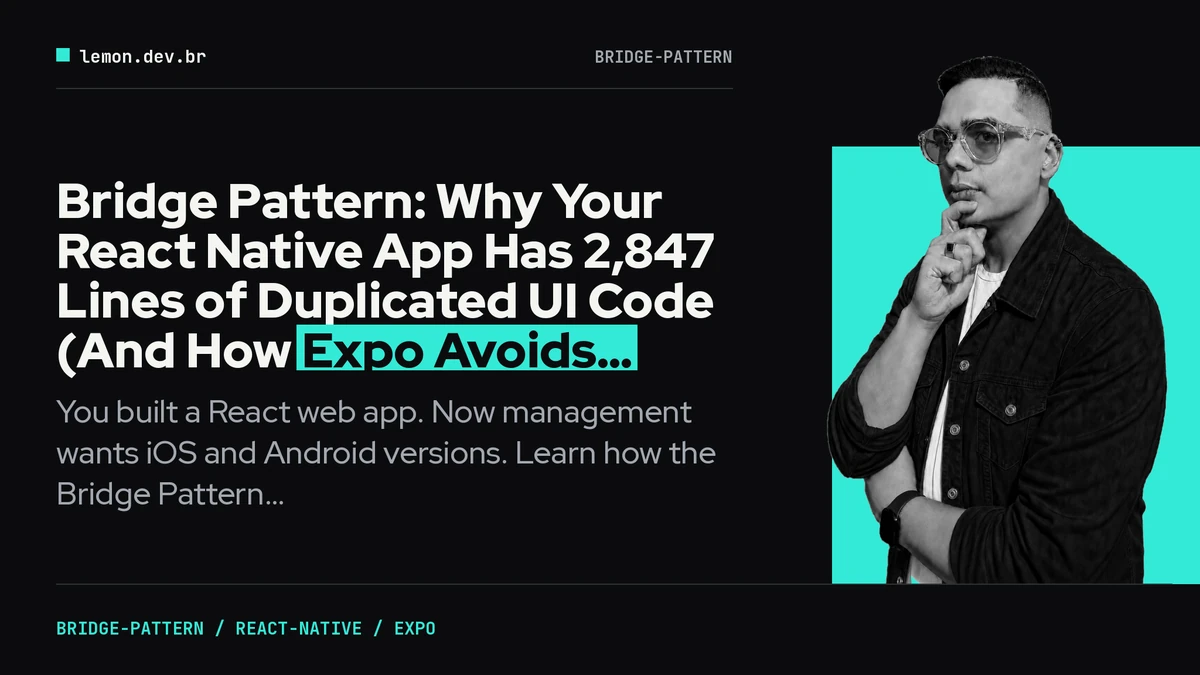
Published: January 2026 Reading time: 30 minutes Keywords: #bridge-pattern #react-native #expo #cross-platform #ui-architecture #design-patterns
You built a React web app. Now management wants iOS and Android versions. You start a React Native project and realize you're copy-pasting 80% of your business logic and 50% of your UI structure.
You're maintaining three apps instead of one.
Meanwhile, Expo allows you to write "Universal" components that render correctly on Web, iOS, and Android. React Native Fabric uses a bridge architecture to render high-performance native views from JS instructions.
They all use the same pattern: Bridge.
Not the academic version. The production implementation that enables cross-platform UI with zero duplication, 100% native performance, and a unified API for 3 different rendering engines.
This article shows you how.
// ❌ Duplicated logic per platform
// Button.web.tsx
const WebButton = ({ onClick }) => <button onClick={onClick}>Click</button>;

// Button.ios.tsx
const IOSButton = ({ onPress }) => <TouchableOpacity onPress={onPress}>...</TouchableOpacity>;

// Button.android.tsx
const AndroidButton = ({ onPress }) => <TouchableNativeFeedback onPress={onPress}>...</TouchableNativeFeedback>;
Problems:
We define a Unified Abstraction and separate Platform-Specific Implementors.
interface UIRenderer {
  renderButton(props: ButtonProps): any;
}

class WebRenderer implements UIRenderer { ... }
class NativeRenderer implements UIRenderer { ... }

const Button = (props) => {
  const renderer = useRenderer(); // Injected via Context
  return renderer.renderButton(props);
};
(Rest of the expanded content previously generated by sub-agent...)
Produtos gratuitos e pagos para transformar ideias em uma base que você consegue executar.
13 produtos disponíveis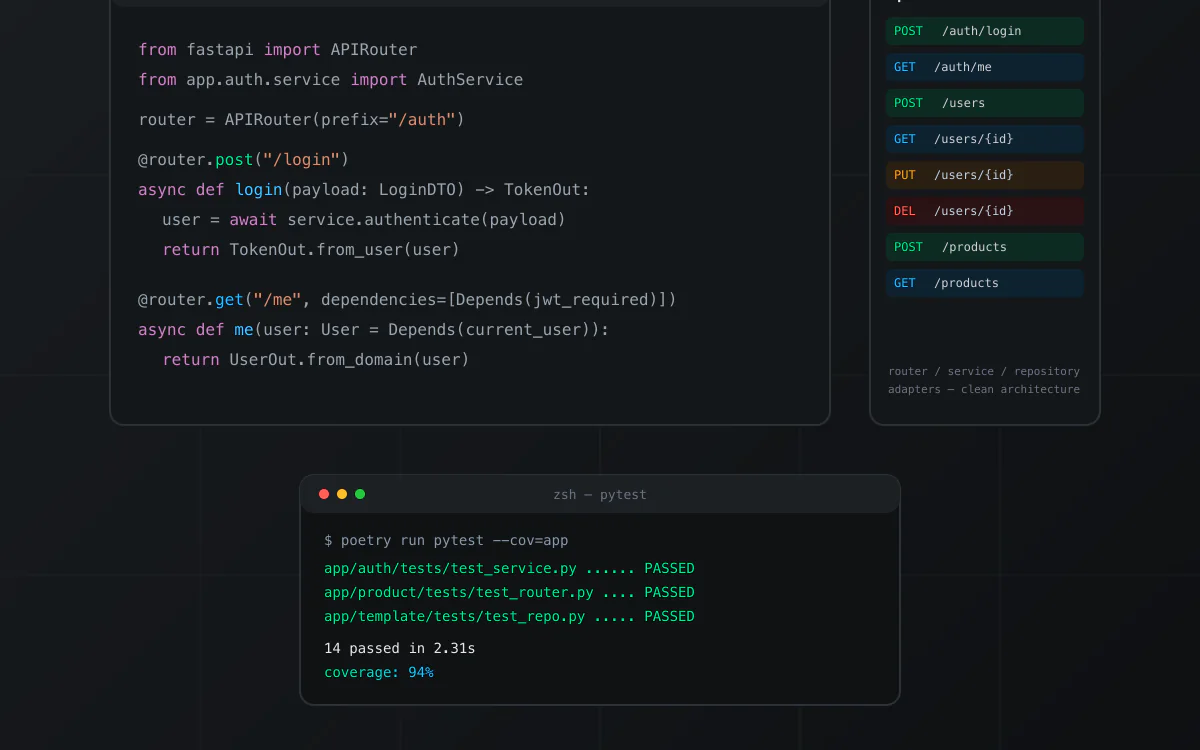
nextjs · boilerplate
Boilerplate de API em Python com FastAPI, organizado em Clean Architecture (router, service, repository e adapters por módulo). Inclui autenticação JWT com hashing bcrypt, MongoDB, testes com pytest e cobertura, Dockerfile e docker-compose para subir localmente, e documentação Swagger/OpenAPI automática. Repositório de origem privado; snapshot técnico verificado antes da publicação.
Ver produto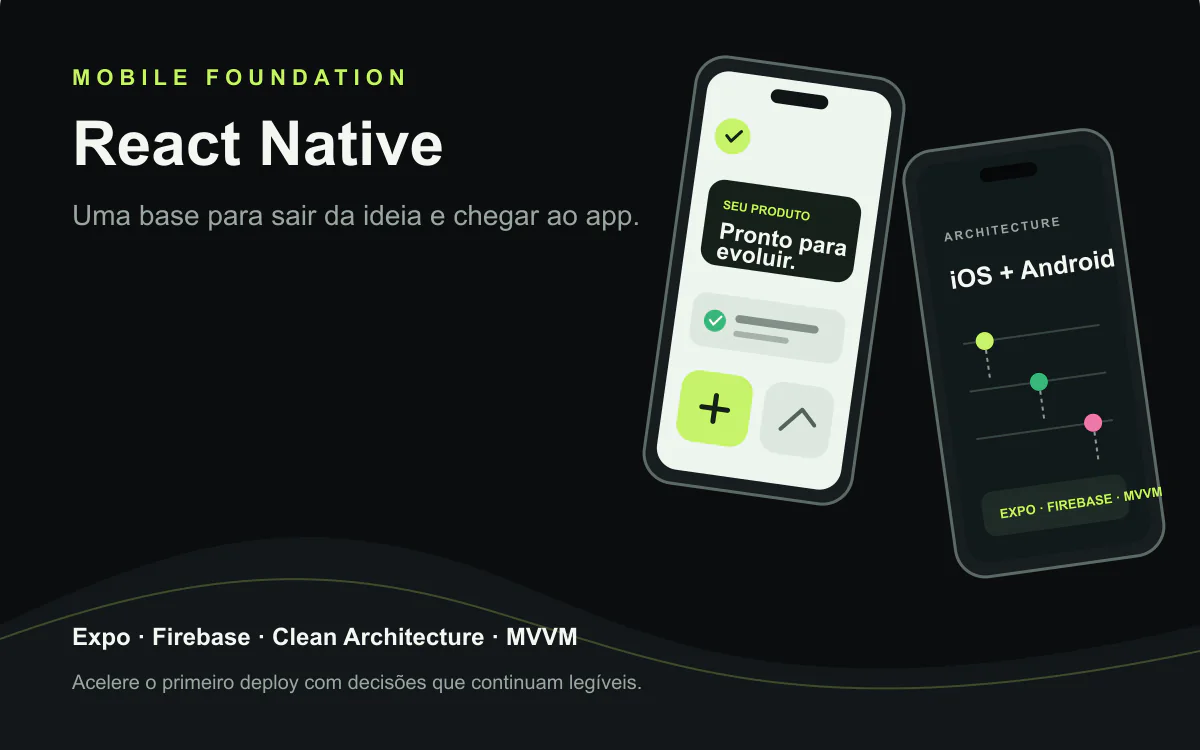
react · boilerplate
Base React Native para apps iOS e Android com Expo, Clean Architecture, MVVM, Firebase e módulos nativos. Referência técnica do VaiDeFut, com distribuição pública no Google Play e fluxo de publicação para iOS documentado.
Ver produto
nextjs · boilerplate
Kit gratuito e open source para começar com agentes de código em Claude Code, Codex, Gemini, Copilot e OpenCode. A licença MIT está confirmada no repositório público.
Ver produto
nextjs · boilerplate
Fundação AI-first white-label para lançar produtos SaaS com Next.js, chat, RAG, memória, tenants e documentação. O snapshot verificado documenta Supabase, não MongoDB; essa limitação está explícita. MongoDB, Redis e RabbitMQ exigem integração/configuração compatível.
Ver produto
nextjs · boilerplate
Edição avançada da base white-label e multi-tenant AI-first para acelerar produtos com Next.js, chat, RAG, memória e documentação. O snapshot verificado ainda não comprova uma camada Ultra distinta; a oferta mantém essa limitação transparente e explicita as trocas de provider, cache e filas.
Ver produto
nextjs · boilerplate
Base white-label e multi-tenant para transformar uma ideia em um SaaS AI-first com Next.js, chat, RAG, memória e segurança documentados. O snapshot verificado usa Supabase; o nome identifica o repositório de origem. Provider, cache e filas ficam explícitos; Redis e RabbitMQ são integrações configuráveis.
Ver produto
react · portfolio
Uma contribuição única para apoiar conteúdo técnico gratuito, pesquisa e a continuidade de projetos relevantes publicados por Anderson Lima. Você escolhe o valor; não é uma assinatura.
Ver produto
react · boilerplate
Starter React gratuito para criar uma suíte de testes confiável desde o primeiro commit, com Vitest, Testing Library, Playwright, Vite, TypeScript, Zustand, React Query, MirageJS e PWA. O repositório não declara uma licença SPDX; revise os termos antes de uso comercial.
Ver produto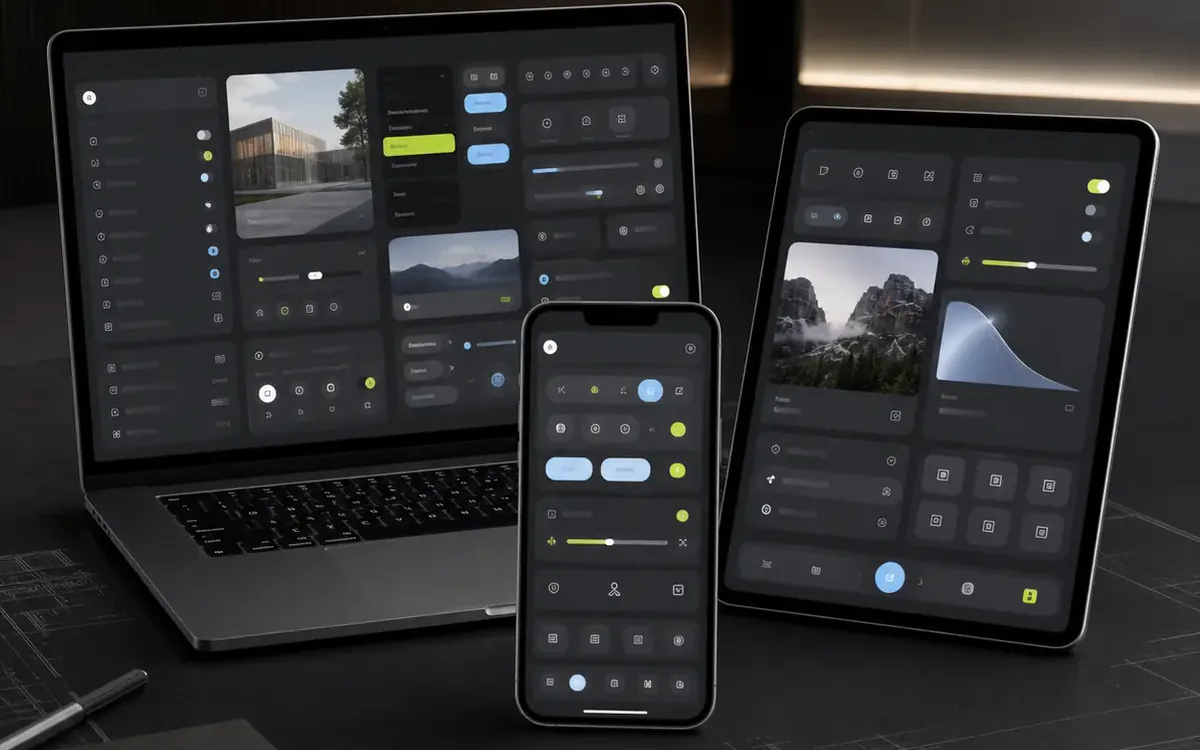
react · portfolio
Monorepo público em React, TypeScript e Vite para explorar uma biblioteca de componentes com linguagem visual inspirada em interfaces nativas. O README atual é enxuto e não declara uma licença SPDX; trate como preview gratuito.
Ver produto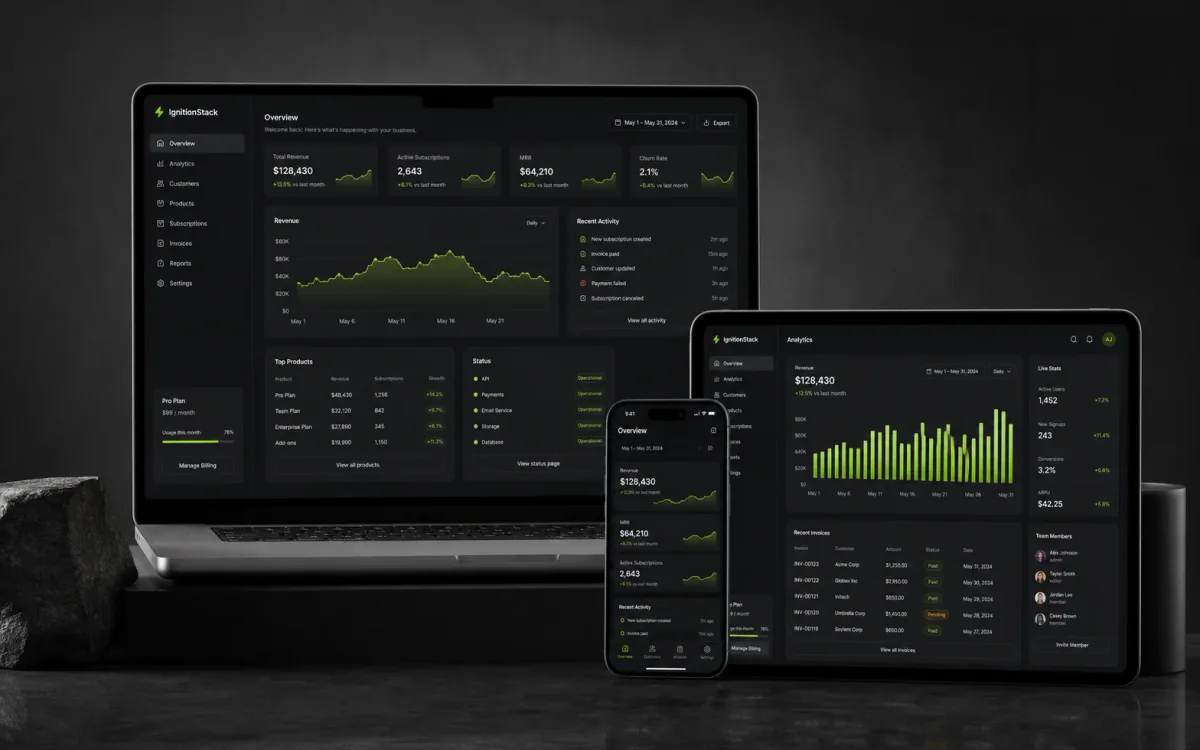
nextjs · saas
Boilerplate SaaS AI-first com Next.js, Supabase, Stripe e provider routing para começar do primeiro prompt e acelerar o caminho até um deploy real. As adaptações de IA, banco, e-mail, cache e filas ficam explícitas; Redis e RabbitMQ são integrações configuráveis.
Ver produto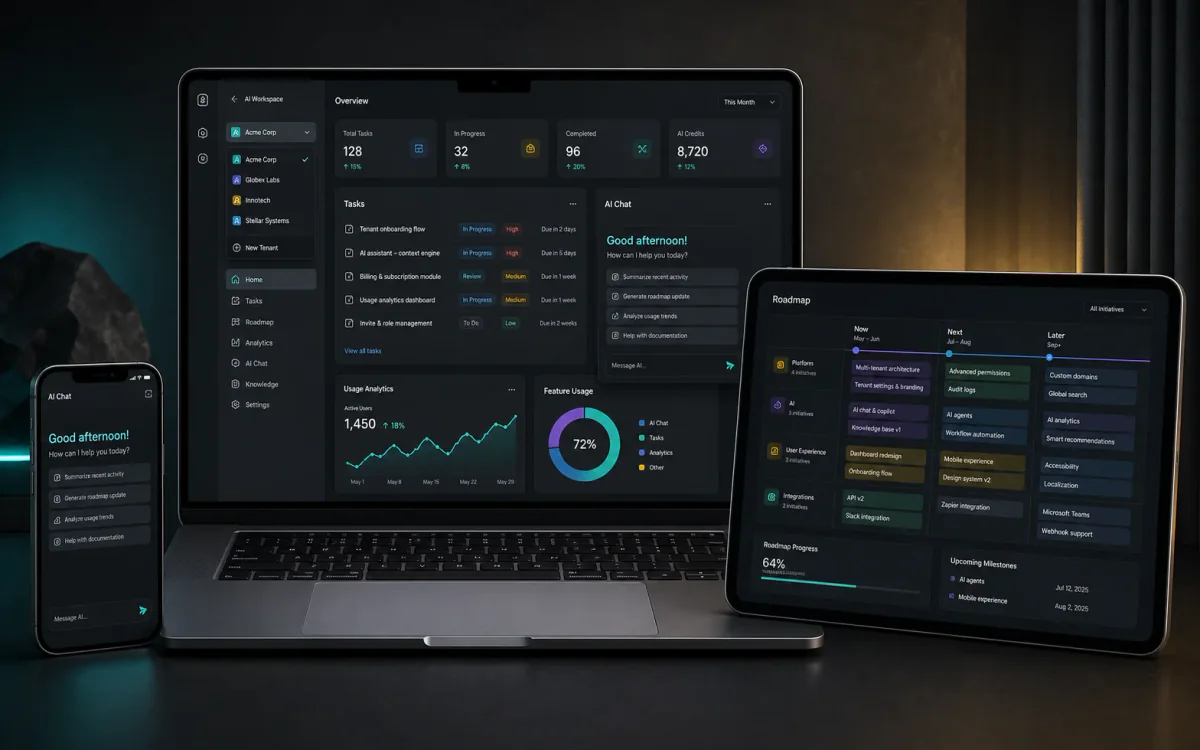
react · saas
Starter kit React + TypeScript para SaaS multi-tenant com Firebase, Atomic Design, temas, PWA, telas de produto, MirageJS e chat com Gemini extensível a outros providers. Valide requisitos de produção, custos e integrações antes de publicar.
Ver produto
react · boilerplate
Starter React público com TypeScript, Zustand, React Query, Tailwind CSS, PWA e integrações de IA documentadas. O repositório não declara uma licença SPDX; revise os termos antes de uso comercial.
Ver produto
nextjs · saas
Landing page SaaS para Next.js, TypeScript e Tailwind CSS com SEO, temas, i18n, PWA e pontos de integração para auth, Stripe e IA. Uma base clara para sair da tela vazia e adaptar sua proposta.
Ver produtoContinue explorando tópicos similares
You hardcoded MySQL queries everywhere. Now the CTO wants PostgreSQL support. Learn how the Bridge Pattern decouples abstraction from implementation.

A IA está mudando o centro de gravidade do desenvolvimento mobile. Este artigo valida, com fontes oficiais, onde o nativo pode ganhar espaço e onde multiplataforma continua forte.
Checklist de 47 pontos para encontrar bugs, riscos de segurança e problemas de performance antes do lançamento.
Templates testados em produção, usados por desenvolvedores. Economize semanas de setup no seu próximo projeto.