

Anderson LimaSoftware Engineer & Consultant
9 de abril de 2026
23 min de leitura
180 visualizações

Produtos gratuitos e pagos para transformar ideias em uma base que você consegue executar.
11 produtos disponíveis
nextjs · boilerplate
Kit gratuito e open source para começar com agentes de código em Claude Code, Codex, Gemini, Copilot e OpenCode. A licença MIT está confirmada no repositório público.
Ver produto
nextjs · boilerplate
Fundação AI-first white-label para lançar produtos SaaS com Next.js, chat, RAG, memória, tenants e documentação. O snapshot verificado documenta Supabase, não MongoDB; essa limitação está explícita. MongoDB, Redis e RabbitMQ exigem integração/configuração compatível.
Ver produtonextjs · boilerplate
Edição avançada da base white-label e multi-tenant AI-first para acelerar produtos com Next.js, chat, RAG, memória e documentação. O snapshot verificado ainda não comprova uma camada Ultra distinta; a oferta mantém essa limitação transparente e explicita as trocas de provider, cache e filas.
Ver produtonextjs · boilerplate
Base white-label e multi-tenant para transformar uma ideia em um SaaS AI-first com Next.js, chat, RAG, memória e segurança documentados. O snapshot verificado usa Supabase; o nome identifica o repositório de origem. Provider, cache e filas ficam explícitos; Redis e RabbitMQ são integrações configuráveis.
Ver produto
react · portfolio
Uma contribuição única para apoiar conteúdo técnico gratuito, pesquisa e a continuidade de projetos relevantes publicados por Anderson Lima. Você escolhe o valor; não é uma assinatura.
Ver produto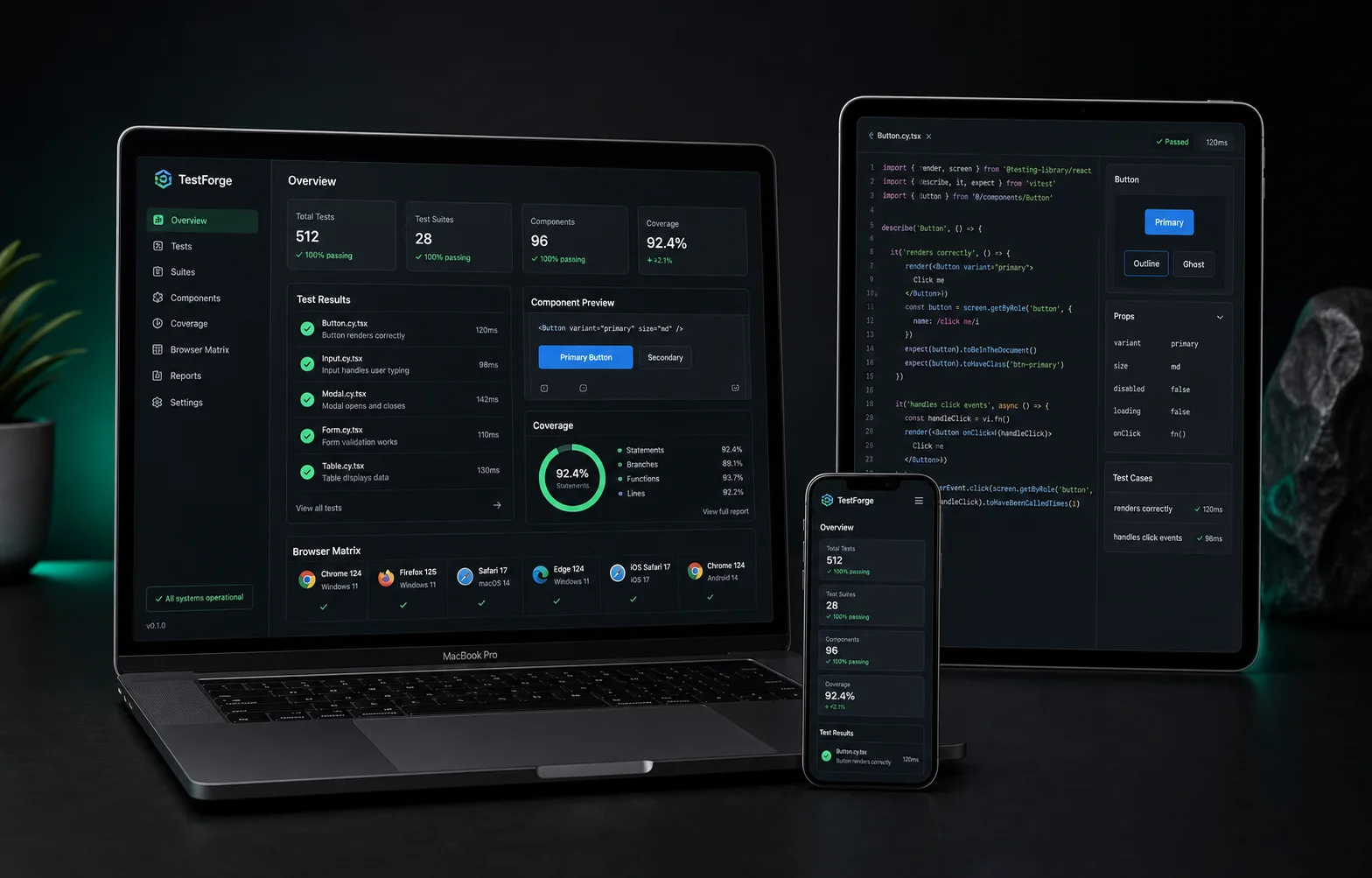
react · boilerplate
Starter React gratuito para criar uma suíte de testes confiável desde o primeiro commit, com Vitest, Testing Library, Playwright, Vite, TypeScript, Zustand, React Query, MirageJS e PWA. O repositório não declara uma licença SPDX; revise os termos antes de uso comercial.
Ver produto
react · portfolio
Monorepo público em React, TypeScript e Vite para explorar uma biblioteca de componentes com linguagem visual inspirada em interfaces nativas. O README atual é enxuto e não declara uma licença SPDX; trate como preview gratuito.
Ver produto
nextjs · saas
Boilerplate SaaS AI-first com Next.js, Supabase, Stripe e provider routing para começar do primeiro prompt e acelerar o caminho até um deploy real. As adaptações de IA, banco, e-mail, cache e filas ficam explícitas; Redis e RabbitMQ são integrações configuráveis.
Ver produto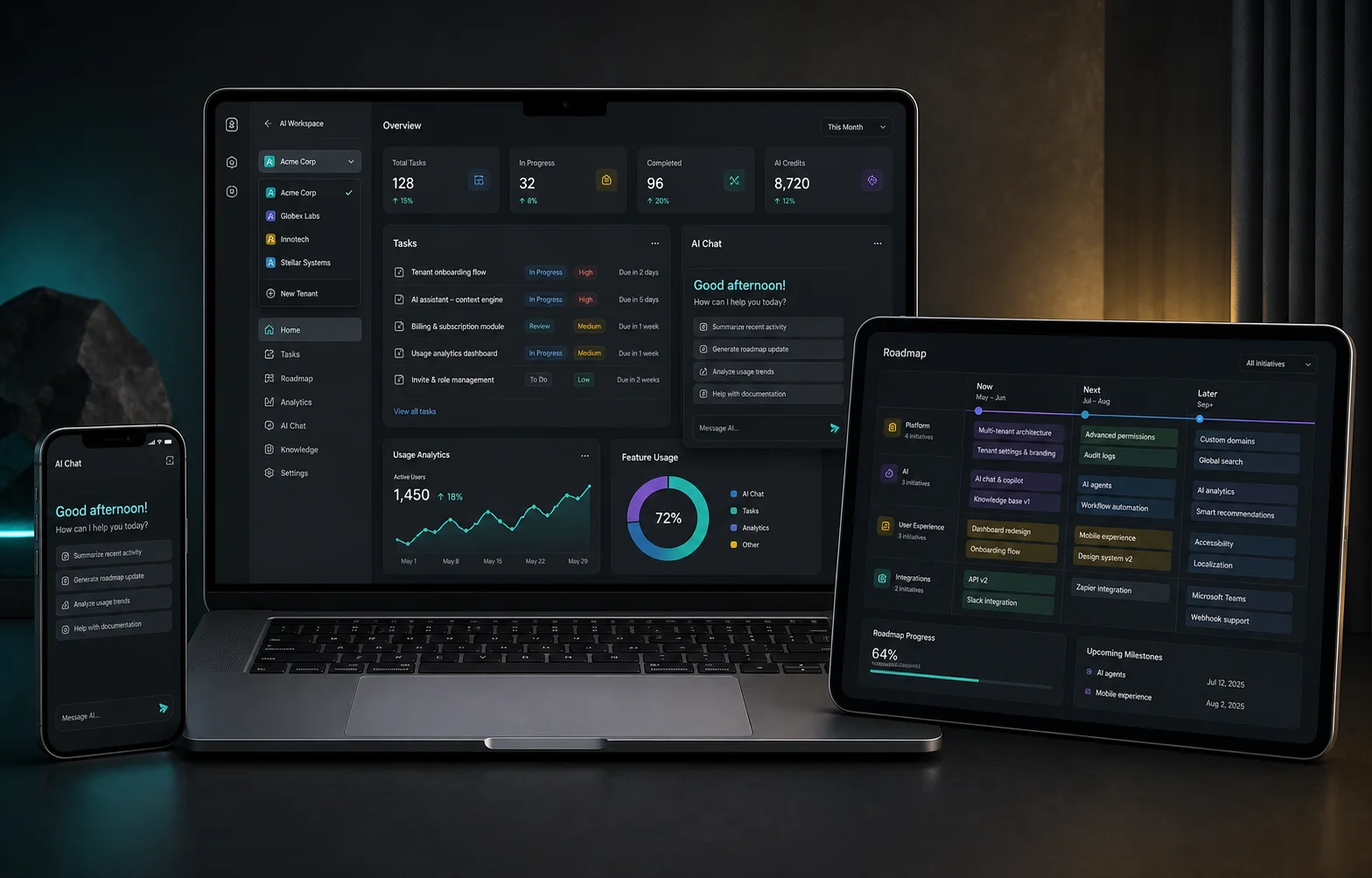
react · saas
Starter kit React + TypeScript para SaaS multi-tenant com Firebase, Atomic Design, temas, PWA, telas de produto, MirageJS e chat com Gemini extensível a outros providers. Valide requisitos de produção, custos e integrações antes de publicar.
Ver produto
react · boilerplate
Starter React público com TypeScript, Zustand, React Query, Tailwind CSS, PWA e integrações de IA documentadas. O repositório não declara uma licença SPDX; revise os termos antes de uso comercial.
Ver produto
nextjs · saas
Landing page SaaS para Next.js, TypeScript e Tailwind CSS com SEO, temas, i18n, PWA e pontos de integração para auth, Stripe e IA. Uma base clara para sair da tela vazia e adaptar sua proposta.
Ver produtoContinue explorando tópicos similares

Rodei a mesma tarefa em dois harnesses, um vazio e um tunado com skills, agents e regras, no mesmo dia e modelo. O tunado usou 59% menos turns, 43% menos tokens e todo path que citou foi verificado.

# Context Engineering no Claude Code: CLAUDE.md, memória e contexto que não apodrece English summary: Context engineering is not about feeding Claude Code an ever-growing pile of

Um único binário `codex`, vários mundos. Este tutorial mostra como isolar contas com CODEX_HOME, alternar profiles, abrir o Codex App com perfil próprio e fazer duas instâncias conversarem usando recursos nativos como codex exec, queue, agents e app-server.
Checklist de 47 pontos para encontrar bugs, riscos de segurança e problemas de performance antes do lançamento.
Templates testados em produção, usados por desenvolvedores. Economize semanas de setup no seu próximo projeto.
Last Tuesday, a team shipped a payment processing feature. Their test suite had 847 tests. Coverage sat at 94%. Every single test passed. The CI pipeline was a wall of green checkmarks.
By Thursday morning, 12% of transactions were failing silently. Money was being charged but order confirmations were not sent. The bug? A race condition between payment validation and inventory reservation that no test covered.
Here is the part that should concern every developer reading this: the AI that wrote the code also wrote the tests. And the tests tested exactly what the code did -- nothing more. They verified the happy path with surgical precision. They confirmed that valid inputs produced valid outputs. They never asked: "What happens when two requests arrive 50 milliseconds apart for the last item in stock?"
The team had 94% coverage and 0% confidence where it mattered.
This is not an isolated incident. It is the defining testing challenge of 2026: when AI generates both the code and the tests, who verifies that the tests actually test something meaningful?
This article answers that question. You will learn the specific ways AI-generated tests fail, a new testing pyramid built for the AI era, and practical techniques -- property-based testing, mutation testing, visual regression with AI -- that create real safety nets instead of green illusions.
The classic testing pyramid -- many unit tests at the base, fewer integration tests in the middle, a handful of E2E tests at the top -- was designed for human-written code. It assumed that the person writing tests had a mental model of the system that differed from the person writing the implementation.
That assumption no longer holds.
When you ask an AI to generate a function and then ask the same AI to generate tests for that function, something subtle and dangerous happens. The AI uses the same understanding of the code to produce both artifacts. The tests become mirrors of the implementation rather than independent verifications of behavior.
A tautological test is a test that only verifies what the code does, not what the code should do. It passes by definition because it was derived from the implementation rather than from the requirements.
Consider this AI-generated function and its AI-generated test:
// AI-generated implementation
function calculateDiscount(price: number, tier: string): number {
  if (tier === 'gold') return price * 0.8;
  if (tier === 'silver') return price * 0.9;
  return price;
}

// AI-generated test
describe('calculateDiscount', () => {
  it('applies 20% discount for gold tier', () => {
    expect(calculateDiscount(100, 'gold')).toBe(80);
  });

  it('applies 10% discount for silver tier', () => {
    expect(calculateDiscount(100, 'silver')).toBe(90);
  });

  it('returns original price for other tiers', () => {
    expect(calculateDiscount(100, 'bronze')).toBe(100);
  });
});
Three tests. All green. 100% line coverage. But what about:
null or undefined?Number.MAX_SAFE_INTEGER (overflow)?"Gold" or "GOLD"?19.99?The AI tested three scenarios that match exactly what the code handles. It never challenged the assumptions baked into the implementation. This is the tautological test problem, and it is everywhere in AI-generated test suites.
| Metric | Human-Written Tests | AI-Generated Tests (unreviewed) |
|---|---|---|
| Line coverage | 70-85% typical | 90-98% typical |
| Mutation score | 65-80% | 30-50% |
| Edge case coverage | Variable, experience-dependent | Consistently low |
| False confidence risk | Low to moderate | High |
| Time to write | Hours | Seconds |
The mutation score gap is the most revealing metric. Line coverage tells you which lines were executed. Mutation score tells you whether your tests actually detect changes to those lines. AI-generated tests achieve high coverage but low mutation scores because they confirm the code works as implemented, not that the code is correct.
The traditional pyramid needs additional layers. Here is the updated model:
                    /\
                   /  \
                  / E2E \
                 / (Human \
                / Scenarios) \
               /--------------\
              / Visual AI       \
             / Regression         \
            /----------------------\
           / Contract &              \
          / Integration Tests          \
         /------------------------------\
        / Mutation Testing                \
       / (Validation Layer)                 \
      /--------------------------------------\
     / Property-Based Tests                    \
    / (Edge Case Discovery)                      \
   /----------------------------------------------\
  / Unit Tests (AI-Generated + Human-Reviewed)       \
 /----------------------------------------------------\
Each layer serves a specific purpose in the AI era:
Layer 1: Unit Tests (AI-Generated + Human-Reviewed). Let AI generate the initial test suite. Then apply human review to add edge cases, remove tautological tests, and verify that tests match requirements -- not implementation.
Layer 2: Property-Based Tests. Instead of testing specific inputs and outputs, property-based testing generates hundreds or thousands of random inputs and verifies that certain properties always hold true. This catches edge cases that neither humans nor AI anticipate.
Layer 3: Mutation Testing. Automatically modifies your source code (introduces "mutants") and checks whether your tests catch the changes. If a mutant survives (tests still pass after a code change), your tests have a gap.
Layer 4: Contract and Integration Tests. Verify that components work together correctly, especially at API boundaries. AI often generates code that works in isolation but fails at integration points.
Layer 5: Visual AI Regression. Use AI-powered visual comparison (not pixel-diff) to detect unintended UI changes that functional tests miss entirely.
Layer 6: E2E Tests (Human Scenarios). Full user journey tests written from the user's perspective, not generated from implementation details. These should be designed by humans who understand real usage patterns.
Property-based testing is the single most effective technique against AI-generated code gaps. Instead of specifying exact inputs and outputs, you define properties that must always be true.
Traditional test: "When I pass 100 and 'gold', I get 80." Property-based test: "For any non-negative price and any valid tier, the discounted price is never negative and never exceeds the original price."
The testing framework generates hundreds of random inputs to try to falsify your property. When it finds a failing case, it automatically shrinks the input to the minimal reproduction case.
import { describe, it, expect } from 'vitest';
import fc from 'fast-check';
import { calculateDiscount } from './pricing';

describe('calculateDiscount - property-based', () => {
  const validTiers = ['gold', 'silver', 'bronze', 'standard'] as const;

  it('never returns a negative price', () => {
    fc.assert(
      fc.property(
        fc.float({ min: 0, max: 1_000_000, noNaN: true }),
        fc.constantFrom(...validTiers),
        (price, tier) => {
          const result = calculateDiscount(price, tier);
          expect(result).toBeGreaterThanOrEqual(0);
        }
      )
    );
  });

  it('never returns more than the original price', () => {
    fc.assert(
      fc.property(
        fc.float({ min: 0, max: 1_000_000, noNaN: true }),
        fc.constantFrom(...validTiers),
        (price, tier) => {
          const result = calculateDiscount(price, tier);
          expect(result).toBeLessThanOrEqual(price);
        }
      )
    );
  });

  it('higher tiers always get equal or better discounts', () => {
    fc.assert(
      fc.property(
        fc.float({ min: 0, max: 1_000_000, noNaN: true }),
        (price) => {
          const goldPrice = calculateDiscount(price, 'gold');
          const silverPrice = calculateDiscount(price, 'silver');
          const standardPrice = calculateDiscount(price, 'standard');

          expect(goldPrice).toBeLessThanOrEqual(silverPrice);
          expect(silverPrice).toBeLessThanOrEqual(standardPrice);
        }
      )
    );
  });

  it('discount is idempotent with same inputs', () => {
    fc.assert(
      fc.property(
        fc.float({ min: 0, max: 1_000_000, noNaN: true }),
        fc.constantFrom(...validTiers),
        (price, tier) => {
          const first = calculateDiscount(price, tier);
          const second = calculateDiscount(price, tier);
          expect(first).toBe(second);
        }
      )
    );
  });
});
Notice the difference. These tests do not care what the discount percentages are. They verify invariants: the result is never negative, never exceeds the input, higher tiers get better deals, and the function is deterministic. If someone changes the gold discount from 20% to 25%, these tests still pass (because the properties still hold). But if someone introduces a bug that makes gold more expensive than silver, the property-based test catches it immediately.
In practice, property-based testing consistently discovers these categories of bugs in AI-generated code:
0, Number.MAX_SAFE_INTEGER, Number.MIN_VALUE, empty strings, very long strings0.1 + 0.2 !== 0.3 edge casesCoverage tells you what code ran. Mutation testing tells you what code matters. The difference is critical.
Common mutations include:
// Original
if (age >= 18) { allow(); }

// Mutant 1: boundary change
if (age > 18) { allow(); }

// Mutant 2: operator swap
if (age <= 18) { allow(); }

// Mutant 3: remove call
if (age >= 18) { /* removed allow() */ }

// Mutant 4: negate condition
if (!(age >= 18)) { allow(); }
If your tests pass with Mutant 1, that means you have no test for the boundary case where age === 18. That is a real gap.
// stryker.config.mjs
/** @type {import('@stryker-mutator/api/core').PartialStrykerOptions} */
export default {
  packageManager: 'npm',
  reporters: ['html', 'clear-text', 'progress'],
  testRunner: 'vitest',
  vitest: {
    configFile: 'vitest.config.ts',
  },
  coverageAnalysis: 'perTest',
  mutate: [
    'src/**/*.ts',
    '!src/**/*.test.ts',
    '!src/**/*.spec.ts',
    '!src/**/index.ts',
  ],
  thresholds: {
    high: 80,
    low: 60,
    break: 50,
  },
};
| Mutation Score | Interpretation | Action |
|---|---|---|
| 90%+ | Excellent. Tests are highly effective. | Maintain. Focus on new features. |
| 70-89% | Good. Some gaps in edge case coverage. | Review surviving mutants in critical paths. |
| 50-69% | Concerning. Significant blind spots. | Prioritize property-based tests for key modules. |
| Below 50% | Your tests provide false confidence. | Stop and rebuild the test strategy. |
AI-generated test suites typically score 30-50% on mutation testing. After applying property-based testing and human review, scores consistently reach 75-90%.
// AI-generated test (mutation score: 38%)
describe('validateEmail', () => {
  it('accepts valid email', () => {
    expect(validateEmail('user@example.com')).toBe(true);
  });

  it('rejects invalid email', () => {
    expect(validateEmail('not-an-email')).toBe(false);
  });
});

// After mutation testing review (mutation score: 91%)
describe('validateEmail', () => {
  it('accepts standard email format', () => {
    expect(validateEmail('user@example.com')).toBe(true);
  });

  it('accepts email with subdomain', () => {
    expect(validateEmail('user@mail.example.com')).toBe(true);
  });

  it('accepts email with plus addressing', () => {
    expect(validateEmail('user+tag@example.com')).toBe(true);
  });

  it('rejects string without @ symbol', () => {
    expect(validateEmail('not-an-email')).toBe(false);
  });

  it('rejects empty string', () => {
    expect(validateEmail('')).toBe(false);
  });

  it('rejects email without domain', () => {
    expect(validateEmail('user@')).toBe(false);
  });

  it('rejects email without local part', () => {
    expect(validateEmail('@example.com')).toBe(false);
  });

  it('rejects email with spaces', () => {
    expect(validateEmail('user @example.com')).toBe(false);
  });

  it('rejects email with multiple @ symbols', () => {
    expect(validateEmail('user@@example.com')).toBe(false);
  });

  // Property-based: any valid email, when validated, returns true
  it('is consistent with its own validation', () => {
    fc.assert(
      fc.property(fc.emailAddress(), (email) => {
        expect(validateEmail(email)).toBe(true);
      })
    );
  });
});
The AI wrote two tests and called it done. Mutation testing revealed that 62% of meaningful code changes went undetected. The expanded suite, guided by surviving mutants, covers boundaries, special characters, and structural requirements.
AI can be an excellent testing assistant. The problem is not AI generating tests. The problem is AI generating tests without human direction and review.
Step 1: Write the spec (human)
     |
Step 2: Generate tests from spec (AI)
     |
Step 3: Review generated tests (human)
     |
Step 4: Add property-based tests (human + AI)
     |
Step 5: Run mutation testing (automated)
     |
Step 6: Fill gaps from mutation results (human + AI)
     |
Step 7: Approve final suite (human)
The key insight: AI generates the bulk of tests in Step 2, but Steps 3 through 7 ensure those tests are meaningful. This workflow takes 30-40% longer than pure AI generation but produces suites with mutation scores 2-3x higher.
When asking AI to generate tests, the prompt makes a massive difference. Compare these two approaches:
Bad prompt:
"Write tests for the UserService class."

Good prompt:
"Write tests for the UserService class. Focus on:
1. Error handling: what happens when the database is unavailable?
2. Edge cases: empty strings, null values, extremely long inputs
3. Concurrent access: what if two requests modify the same user?
4. Security: SQL injection in search queries, XSS in user names
5. Do NOT test implementation details. Test observable behavior only.
6. Include at least one property-based test for each public method.
7. Each test name should describe the scenario, not the method being called."
// Prompt: "Generate tests for this order processing service.
// Focus on concurrency, error recovery, and financial accuracy.
// Test behavior, not implementation."

import { describe, it, expect, vi, beforeEach } from 'vitest';
import { OrderService } from './order-service';
import { PaymentGateway } from './payment-gateway';
import { InventoryService } from './inventory-service';

describe('OrderService', () => {
  let orderService: OrderService;
  let paymentGateway: PaymentGateway;
  let inventoryService: InventoryService;

  beforeEach(() => {
    paymentGateway = {
      charge: vi.fn(),
      refund: vi.fn(),
    } as unknown as PaymentGateway;

    inventoryService = {
      reserve: vi.fn(),
      release: vi.fn(),
      check: vi.fn(),
    } as unknown as InventoryService;

    orderService = new OrderService(paymentGateway, inventoryService);
  });

  describe('when payment succeeds but inventory reservation fails', () => {
    it('refunds the payment automatically', async () => {
      vi.mocked(paymentGateway.charge).mockResolvedValue({
        id: 'pay_123',
        status: 'succeeded',
      });
      vi.mocked(inventoryService.reserve).mockRejectedValue(
        new Error('Out of stock')
      );

      await expect(
        orderService.processOrder({
          userId: 'user_1',
          items: [{ sku: 'ITEM-001', quantity: 1 }],
          paymentMethod: 'pm_visa',
        })
      ).rejects.toThrow('Out of stock');

      expect(paymentGateway.refund).toHaveBeenCalledWith('pay_123');
    });
  });

  describe('when payment gateway times out', () => {
    it('does not reserve inventory', async () => {
      vi.mocked(paymentGateway.charge).mockRejectedValue(
        new Error('Gateway timeout')
      );

      await expect(
        orderService.processOrder({
          userId: 'user_1',
          items: [{ sku: 'ITEM-001', quantity: 1 }],
          paymentMethod: 'pm_visa',
        })
      ).rejects.toThrow('Gateway timeout');

      expect(inventoryService.reserve).not.toHaveBeenCalled();
    });
  });

  describe('financial accuracy', () => {
    it('calculates total with cent-level precision', () => {
      fc.assert(
        fc.property(
          fc.array(
            fc.record({
              price: fc.integer({ min: 1, max: 100_000 }),
              quantity: fc.integer({ min: 1, max: 100 }),
            }),
            { minLength: 1, maxLength: 20 }
          ),
          (items) => {
            const total = orderService.calculateTotal(items);
            const expected = items.reduce(
              (sum, item) => sum + item.price * item.quantity,
              0
            );
            expect(total).toBe(expected);
            expect(Number.isInteger(total)).toBe(true);
          }
        )
      );
    });
  });
});
Notice how the directed prompt produced tests that focus on failure modes (payment succeeds but inventory fails, gateway timeouts) and financial correctness (cent-level precision with property-based testing). An undirected prompt would have generated happy-path tests that verify successful order processing.
Traditional visual regression testing compares screenshots pixel by pixel. A single-pixel shift from a font rendering difference triggers a false positive. AI-powered visual regression changes the game.
AI-powered visual regression tools (like Applitools Eyes, Percy with smart diffing, or Chromatic) understand the intent of UI elements. They distinguish between:
This matters especially when AI generates UI components. AI-generated React components often look correct visually but have subtle layout issues that only appear at certain viewport sizes or with specific content lengths.
// visual-regression.spec.ts
import { test, expect } from '@playwright/test';

test.describe('Dashboard visual regression', () => {
  test.beforeEach(async ({ page }) => {
    // Seed consistent test data
    await page.goto('/api/test/seed-dashboard');
    await page.goto('/dashboard');
    await page.waitForLoadState('networkidle');
  });

  const viewports = [
    { width: 1920, height: 1080, name: 'desktop' },
    { width: 768, height: 1024, name: 'tablet' },
    { width: 375, height: 812, name: 'mobile' },
  ];

  for (const viewport of viewports) {
    test(`matches baseline on ${viewport.name}`, async ({ page }) => {
      await page.setViewportSize({
        width: viewport.width,
        height: viewport.height,
      });

      // Wait for animations to settle
      await page.waitForTimeout(500);

      await expect(page).toHaveScreenshot(
        `dashboard-${viewport.name}.png`,
        {
          maxDiffPixelRatio: 0.01,
          animations: 'disabled',
        }
      );
    });
  }

  test('charts render correctly with empty data', async ({ page }) => {
    await page.goto('/api/test/seed-empty-dashboard');
    await page.goto('/dashboard');
    await page.waitForLoadState('networkidle');

    await expect(page.locator('[data-testid="chart-container"]'))
      .toHaveScreenshot('empty-charts.png', {
        maxDiffPixelRatio: 0.01,
      });
  });

  test('handles long text without overflow', async ({ page }) => {
    await page.goto('/api/test/seed-long-text-dashboard');
    await page.goto('/dashboard');
    await page.waitForLoadState('networkidle');

    // Check that no horizontal scrollbar appears
    const hasHorizontalScroll = await page.evaluate(() => {
      return document.documentElement.scrollWidth >
        document.documentElement.clientWidth;
    });

    expect(hasHorizontalScroll).toBe(false);

    await expect(page).toHaveScreenshot('long-text-dashboard.png', {
      maxDiffPixelRatio: 0.02,
    });
  });
});
These are real issues found in AI-generated UI components through visual regression:
When AI generates both the frontend API client and the backend API endpoint, an insidious problem emerges: both sides agree on the wrong contract. The frontend expects what the backend provides, because the AI derived both from the same mental model.
Contract testing introduces an independent source of truth.
// consumer.pact.spec.ts - Frontend defines expectations
import { PactV4, MatchersV3 } from '@pact-foundation/pact';

const provider = new PactV4({
  consumer: 'dashboard-frontend',
  provider: 'user-api',
});

describe('User API contract', () => {
  it('returns user profile with required fields', async () => {
    await provider
      .addInteraction()
      .given('user exists with id user_123')
      .uponReceiving('a request for user profile')
      .withRequest('GET', '/api/users/user_123')
      .willRespondWith(200, (builder) => {
        builder.jsonBody({
          id: MatchersV3.string('user_123'),
          email: MatchersV3.email('user@example.com'),
          name: MatchersV3.string('Jane Doe'),
          role: MatchersV3.regex('admin|editor|viewer', 'editor'),
          createdAt: MatchersV3.iso8601DateTime(),
          preferences: {
            theme: MatchersV3.regex('light|dark|system', 'system'),
            language: MatchersV3.regex('[a-z]{2}-[A-Z]{2}', 'en-US'),
          },
        });
      });

    await provider.executeTest(async (mockServer) => {
      const client = new UserApiClient(mockServer.url);
      const user = await client.getProfile('user_123');

      expect(user.id).toBe('user_123');
      expect(user.email).toContain('@');
      expect(['admin', 'editor', 'viewer']).toContain(user.role);
    });
  });
});
The contract acts as an independent specification that neither the AI-generated frontend nor the AI-generated backend can silently violate. When the backend changes its response shape, the contract test fails before the change reaches production.
Not all AI-generated tests need the same level of scrutiny. The TRUST framework helps you decide where to invest review effort:
Does the test verify behavior or mirror implementation? Read the test without looking at the source code. Can you understand what the correct behavior should be from the test alone? If not, it is tautological.
Red flag: Test assertions that match implementation line by line. Green flag: Test describes a user-visible behavior or a documented requirement.
Can you trace the test back to a specification, user story, or documented requirement? Tests derived from requirements are inherently more trustworthy than tests derived from implementation.
Red flag: Test name describes a method (testCalculateDiscount).
Green flag: Test name describes a scenario (gold tier customers receive 20 percent discount).
Does the test suite include inputs that the implementation does not explicitly handle? The best tests challenge the code rather than confirm it.
Red flag: All test inputs appear in the implementation (e.g., only testing tiers that have if branches).
Green flag: Tests include null, undefined, empty strings, negative numbers, extreme values.
Run mutation testing on the module. A mutation score below 60% means the tests are not catching real bugs.
Red flag: Mutation score below 50%. Green flag: Mutation score above 75%.
Does the test suite verify error handling, not just success cases? AI-generated code often has error handling that is never exercised by AI-generated tests.
Red flag: No test calls rejects.toThrow() or verifies error responses.
Green flag: Error paths are tested with specific error types and messages.
| Score | Verdict | Action |
|---|---|---|
| 5/5 | High trust | Approve with minor review |
| 3-4/5 | Moderate trust | Add targeted tests for failing criteria |
| 1-2/5 | Low trust | Significant rewrite needed |
| 0/5 | No trust | Discard and rewrite from requirements |
This is the most dangerous anti-pattern. Coverage numbers from AI-generated tests create a false sense of security. Always validate with mutation testing.
// Anti-pattern: testing internal state
it('sets isLoading to true when fetching', () => {
  const service = new UserService();
  service.fetchUser('123');
  expect(service['isLoading']).toBe(true); // accessing private state
});

// Correct: testing observable behavior
it('shows loading indicator while fetching user data', async () => {
  render(<UserProfile userId="123" />);
  expect(screen.getByRole('progressbar')).toBeInTheDocument();
  await waitForElementToBeRemoved(screen.queryByRole('progressbar'));
});
AI-generated code + snapshot testing = tests that pass by definition. The snapshot captures whatever the code produces, regardless of correctness. Use snapshots sparingly and only for specific, stable outputs.
AI-generated tests are disproportionately flaky because they often include timing assumptions, hardcoded test data, or order-dependent assertions. A flaky test is worse than no test because it erodes trust in the entire suite.
Coverage is a tool, not a target. When AI can generate tests to hit any coverage number, the number becomes meaningless. Focus on mutation score and behavior coverage instead.
Here is a practical CI/CD pipeline that implements the new testing strategy:
# .github/workflows/test-pipeline.yml
name: Complete Test Pipeline

on:
  pull_request:
    branches: [main]

jobs:
  unit-tests:
    runs-on: ubuntu-latest
    steps:
      - uses: actions/checkout@v4
      - uses: actions/setup-node@v4
        with:
          node-version: '22'

      - run: npm ci

      - name: Run unit tests with coverage
        run: npx vitest run --coverage

      - name: Check coverage thresholds
        run: |
          npx vitest run --coverage --coverage.thresholds.lines=80 \
            --coverage.thresholds.branches=75

  property-based-tests:
    runs-on: ubuntu-latest
    steps:
      - uses: actions/checkout@v4
      - uses: actions/setup-node@v4
        with:
          node-version: '22'

      - run: npm ci

      - name: Run property-based tests
        run: npx vitest run --project property-tests
        timeout-minutes: 10

  mutation-testing:
    runs-on: ubuntu-latest
    needs: unit-tests
    steps:
      - uses: actions/checkout@v4
      - uses: actions/setup-node@v4
        with:
          node-version: '22'

      - run: npm ci

      - name: Run mutation testing
        run: npx stryker run
        timeout-minutes: 30

      - name: Check mutation score threshold
        run: |
          SCORE=$(cat reports/mutation/mutation-report.json | \
            jq '.schemaVersion' -r)
          if [ "$SCORE" -lt 70 ]; then
            echo "Mutation score below threshold"
            exit 1
          fi

  visual-regression:
    runs-on: ubuntu-latest
    steps:
      - uses: actions/checkout@v4
      - uses: actions/setup-node@v4
        with:
          node-version: '22'

      - run: npm ci
      - run: npx playwright install --with-deps

      - name: Run visual regression tests
        run: npx playwright test --project=visual-regression

  e2e-tests:
    runs-on: ubuntu-latest
    needs: [unit-tests, property-based-tests]
    steps:
      - uses: actions/checkout@v4
      - uses: actions/setup-node@v4
        with:
          node-version: '22'

      - run: npm ci
      - run: npx playwright install --with-deps

      - name: Run E2E tests
        run: npx playwright test --project=e2e

  contract-tests:
    runs-on: ubuntu-latest
    steps:
      - uses: actions/checkout@v4
      - uses: actions/setup-node@v4
        with:
          node-version: '22'

      - run: npm ci

      - name: Run contract tests
        run: npx vitest run --project contract-tests
// vitest.config.ts
import { defineConfig } from 'vitest/config';

export default defineConfig({
  test: {
    projects: [
      {
        test: {
          name: 'unit',
          include: ['src/**/*.test.ts'],
          exclude: ['src/**/*.property.test.ts', 'src/**/*.contract.test.ts'],
        },
      },
      {
        test: {
          name: 'property-tests',
          include: ['src/**/*.property.test.ts'],
          testTimeout: 30_000,
        },
      },
      {
        test: {
          name: 'contract-tests',
          include: ['src/**/*.contract.test.ts'],
        },
      },
    ],
  },
});
You do not need to adopt everything at once. Here is a phased approach:
npm install -D fast-checknpm install -D @stryker-mutator/core @stryker-mutator/vitest-runnerThe AI era demands a new relationship with testing. The tools are more powerful than ever. Test generation that used to take hours now takes seconds. But speed without rigor creates something worse than no tests: it creates false confidence.
The strategy is clear:
A test that espelha the implementation is not a test. It is an echo. Your job in 2026 is not to write more tests. It is to write tests that actually matter.