


Anderson LimaSoftware Engineer & Architect
October 16, 2026
4 min read
50 views
How lemon-code keeps telemetry disabled by default, uses a local Collector and omits prompt, response and file content

Published: November 4, 2026
Reading time: 8 min
Series: lemon-code in 30 days, part 8 of 13
lemon-code's telemetry ships disabled. When enabled, its default endpoint is localhost. The instrumented signals do not include prompts, responses, tool arguments or file paths.
It still answers useful questions: how long each turn took, how often it fell back and why that model was chosen.
estimated_cost is an observability estimate; local SQLite remains the canonical source.A plane has two data sources. The black box records everything, stays on board and is the source of truth. The panel and the tower link show a live summary. If the link drops, the plane keeps flying and the black box keeps recording.
In lemon-code, local SQLite is the black box. OpenTelemetry is the tower link: an extra output that recomputes nothing, replaces nothing and must never block an execution.
lc config set telemetry.endpoint http://localhost:4318
lc config set telemetry.exportIntervalMs 60000
lc config set telemetry.enabled true
And the pattern that keeps telemetry from ever taking the agent down (rewritten and simplified):
// export without ever blocking the turn (illustrative)
import { metrics } from "@opentelemetry/api";

const meter = metrics.getMeter("lemon-code");
const tokens = meter.createCounter("gen_ai.client.token.usage");

export function recordTurn(t: { provider: string; model: string; input: number; output: number }) {
  try {
    const attrs = { "gen_ai.system": t.provider, "gen_ai.request.model": t.model };
    tokens.add(t.input, { ...attrs, "gen_ai.token.type": "input" });
    tokens.add(t.output, { ...attrs, "gen_ai.token.type": "output" });
    // no prompt, response, path or tool argument here
  } catch {
    // telemetry is best-effort: failing here must not affect the agent
  }
}
Attributes are identifiers and numbers only.
Free and paid products to turn ideas into a foundation you can actually ship.
13 products available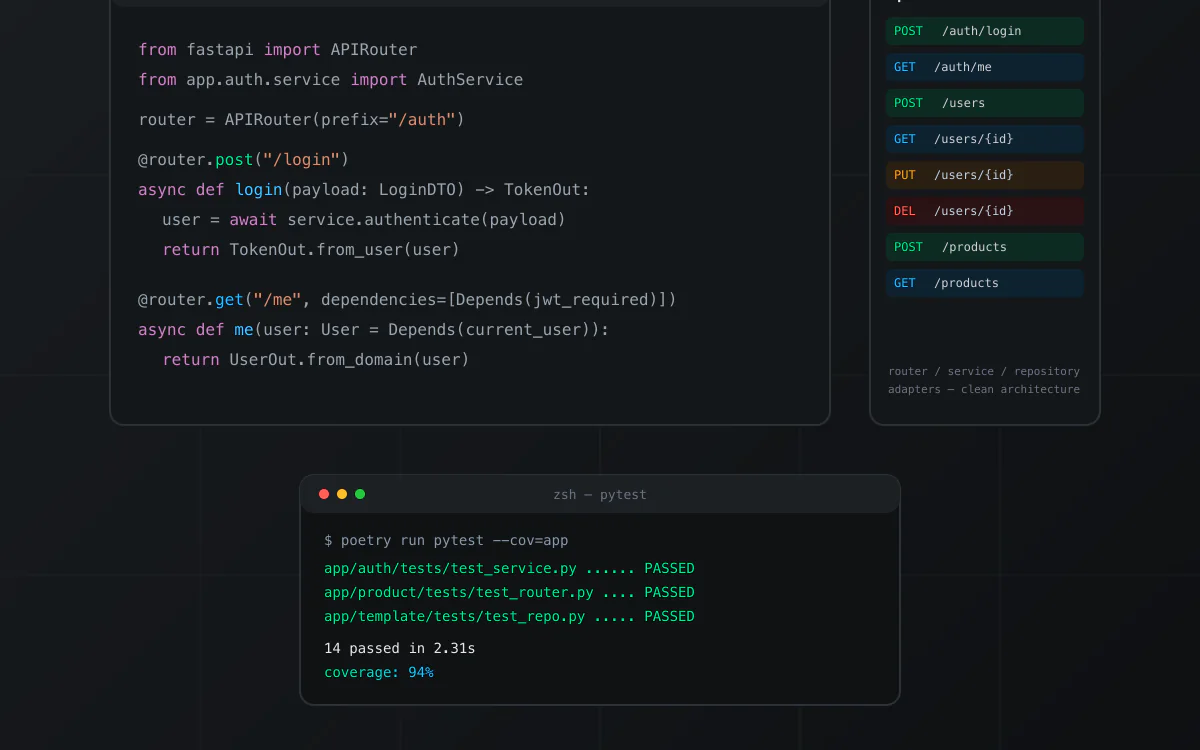
nextjs · boilerplate
Boilerplate de API em Python com FastAPI, organizado em Clean Architecture (router, service, repository e adapters por módulo). Inclui autenticação JWT com hashing bcrypt, MongoDB, testes com pytest e cobertura, Dockerfile e docker-compose para subir localmente, e documentação Swagger/OpenAPI automática. Repositório de origem privado; snapshot técnico verificado antes da publicação.
View product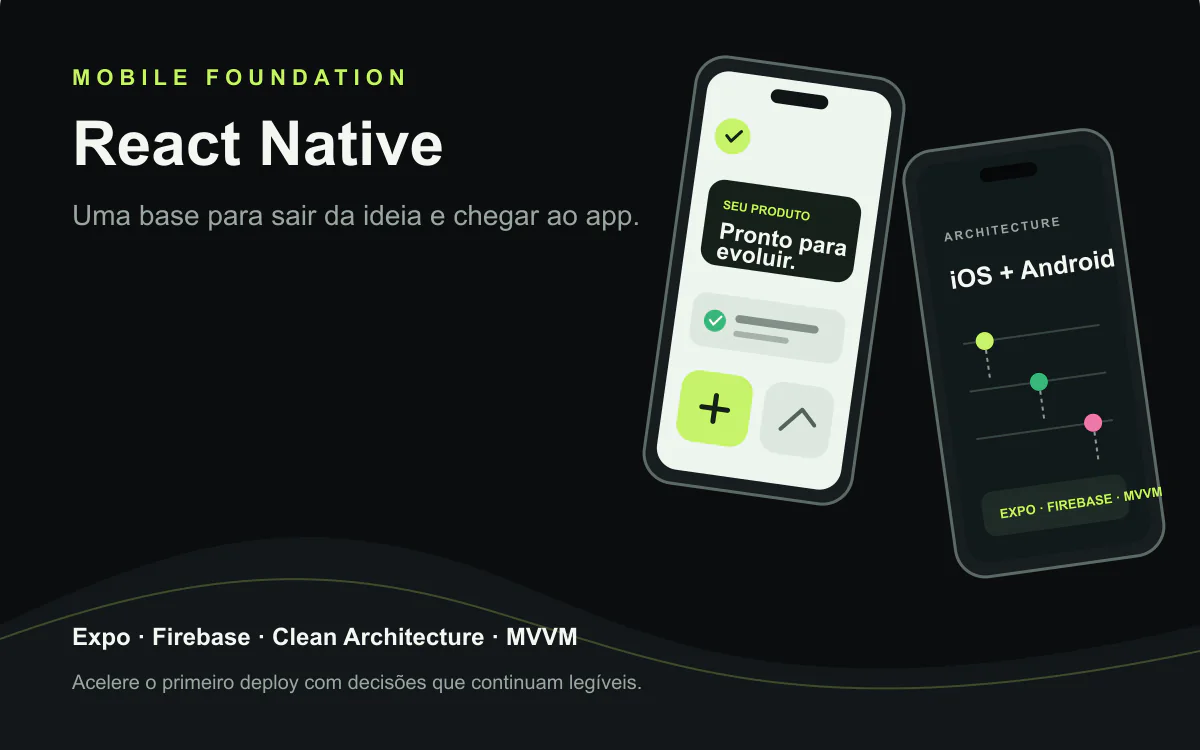
react · boilerplate
A React Native foundation for iOS and Android apps with Expo, Clean Architecture, MVVM, Firebase, and native modules. Technical reference from VaiDeFut, with public Google Play distribution and a documented iOS publishing flow.
View product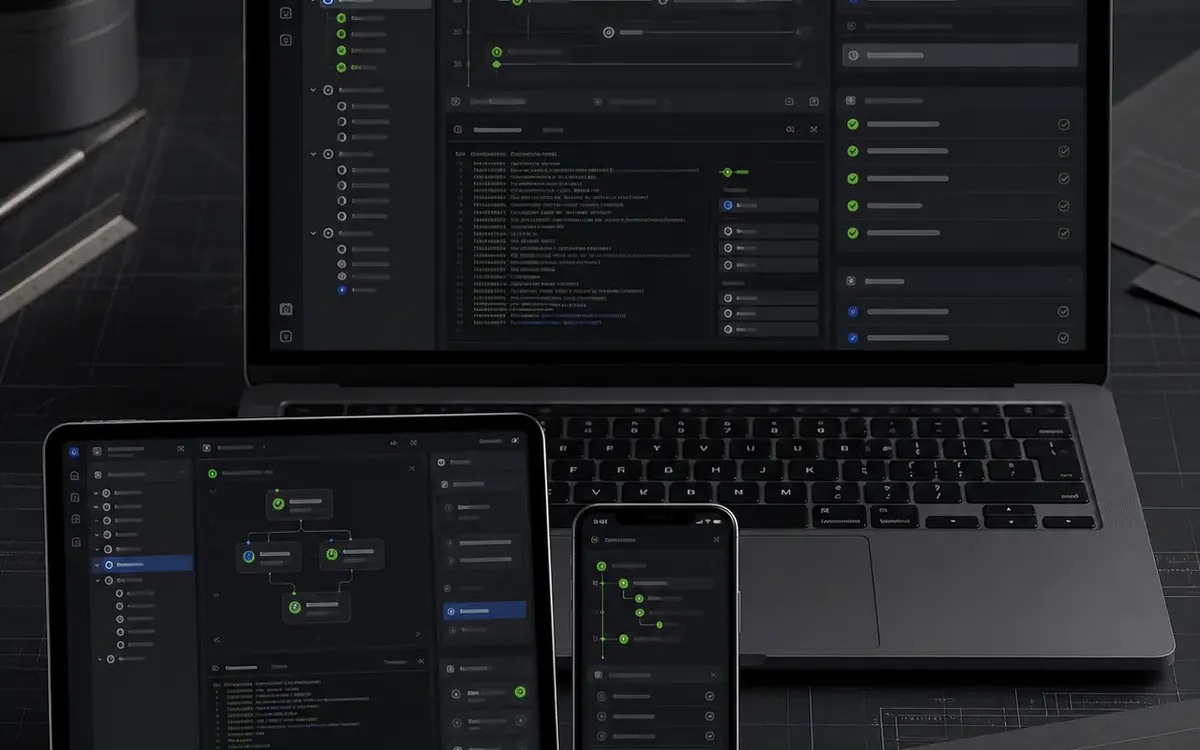
nextjs · boilerplate
A free open-source kit for getting started with coding agents across Claude Code, Codex, Gemini, Copilot, and OpenCode. The public repository confirms an MIT license.
View product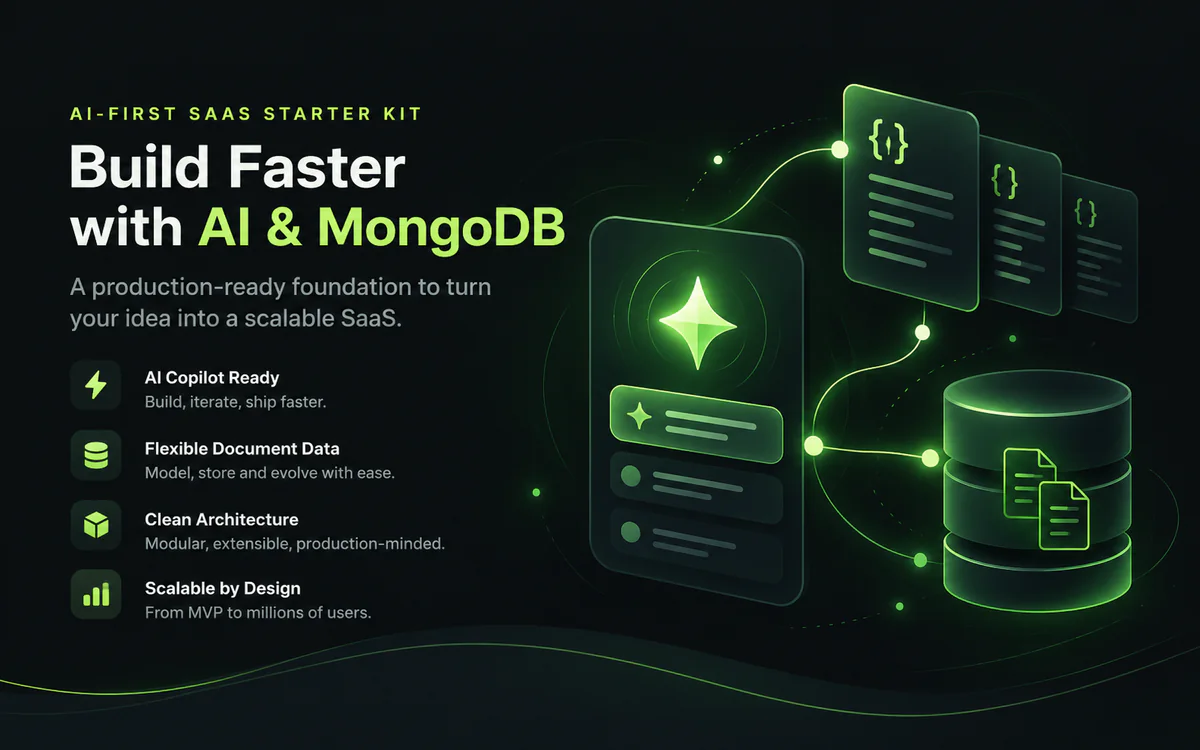
nextjs · boilerplate
A white-label AI-first foundation for shipping SaaS products with Next.js, chat, RAG, memory, tenants, and documentation. The verified snapshot documents Supabase rather than MongoDB; that limitation is explicit. MongoDB, Redis, and RabbitMQ require a compatible integration/configuration.
View product
nextjs · boilerplate
An advanced white-label, multi-tenant AI-first foundation for accelerating products with Next.js, chat, RAG, memory, and documentation. The verified snapshot does not prove a distinct Ultra layer; that limitation stays explicit while provider, cache, and queue swaps remain visible.
View product
nextjs · boilerplate
A white-label, multi-tenant foundation for turning an idea into an AI-first SaaS with Next.js, chat, RAG, memory, and documented security. The verified snapshot uses Supabase; the name identifies the source repository. Provider, cache, and queue boundaries stay explicit; Redis and RabbitMQ are configurable integrations.
View product
react · portfolio
A one-time contribution that supports free technical content, research, and the continuity of relevant projects published by Anderson Lima. You choose the amount; there is no subscription.
View product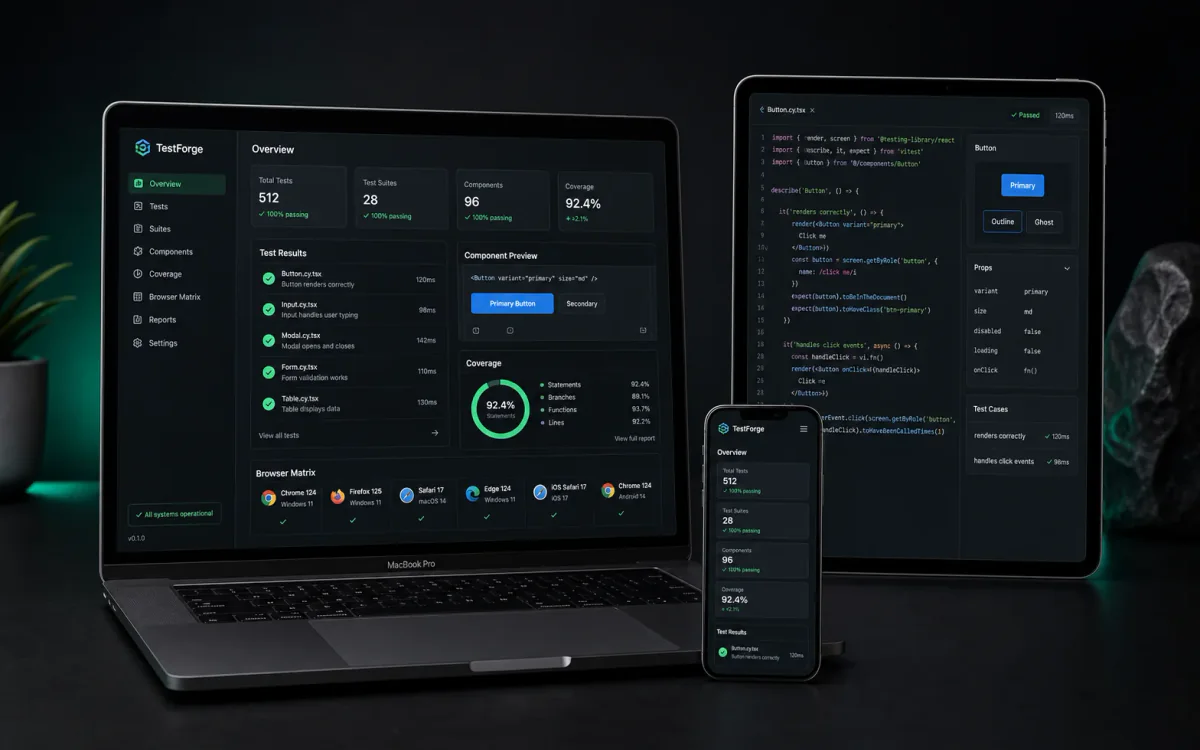
react · boilerplate
A free React starter for building a reliable test suite from the first commit, combining Vitest, Testing Library, Playwright, Vite, TypeScript, Zustand, React Query, MirageJS, and PWA. The repository does not declare an SPDX license; review its terms before commercial use.
View product
react · portfolio
A public React, TypeScript, and Vite monorepo for exploring a component library with a native-inspired visual language. The current README is minimal and does not declare an SPDX license; treat it as a free preview.
View product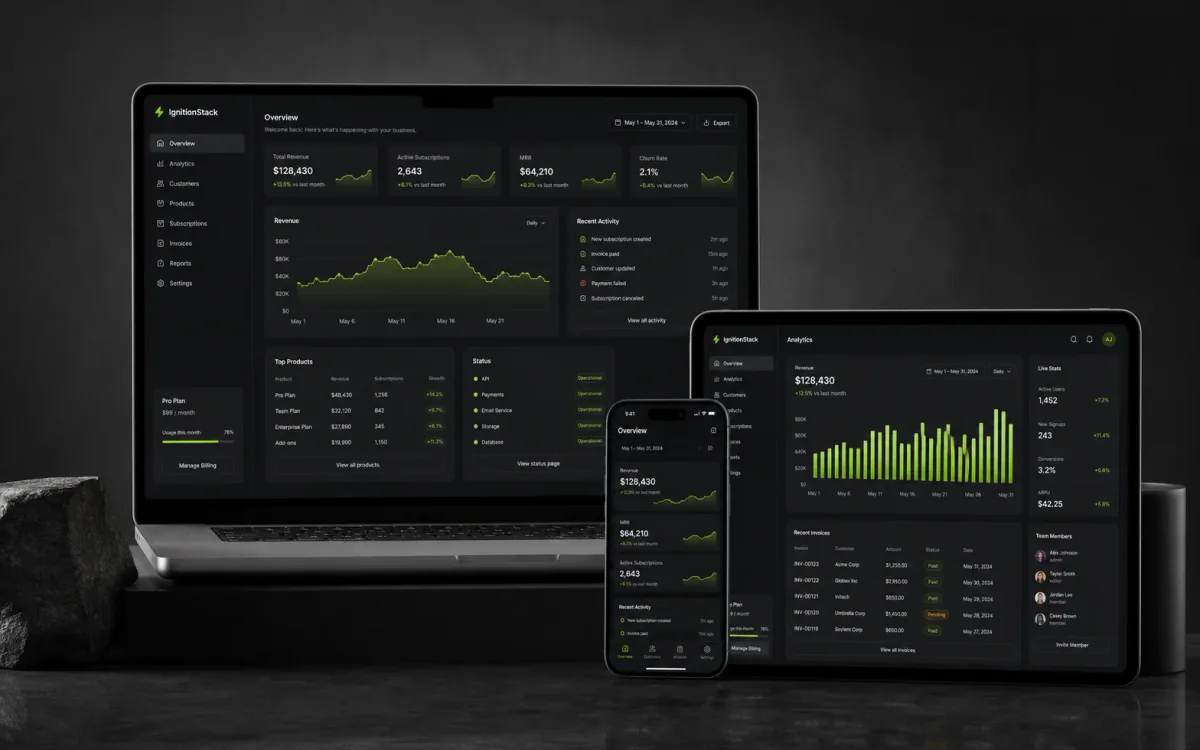
nextjs · saas
An AI-first SaaS boilerplate with Next.js, Supabase, Stripe, and provider routing to move from the first prompt toward a real deployment faster. AI, data, email, cache, and queue adaptations stay explicit; Redis and RabbitMQ are configurable integrations.
View product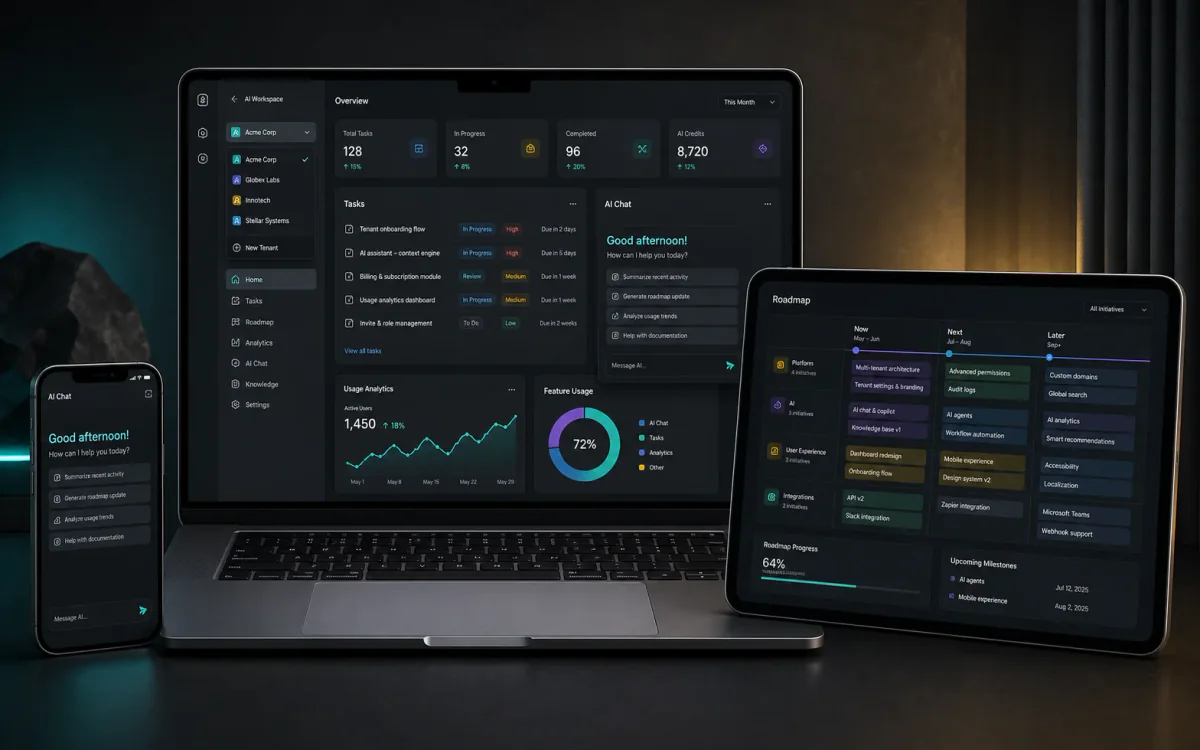
react · saas
A React + TypeScript starter for multi-tenant SaaS with Firebase, Atomic Design, themes, PWA, product screens, MirageJS, and Gemini chat extensible to other providers. Validate production requirements, costs, and integrations before publishing.
View product
react · boilerplate
A public React starter with TypeScript, Zustand, React Query, Tailwind CSS, PWA, and documented AI integrations. The repository does not declare an SPDX license; review its terms before commercial use.
View product
nextjs · saas
A Next.js, TypeScript, and Tailwind CSS SaaS landing page with SEO, themes, i18n, PWA, and integration points for auth, Stripe, and AI. A clear foundation for leaving the blank screen behind and shaping your positioning.
View productContinue exploring similar topics

For HTTP-provider routes, lemon-code records score factors. This teaching example shows how to read the sum and distinguish it from the JEV layer.

Seis meses depois, alguém pergunta por que o sistema classificou aquele caso assim. Se a resposta depende de lembrar qual prompt estava no ar, você não tem sistema auditável — tem folclore.

Preço por token é o número do fornecedor. Custo por tarefa concluída é o seu. Entre os dois existem retries, tarefas que falham, contexto que cresce e um nível de esforço que ninguém varre.
A practical checklist to validate security, cost, evals, and observability before you ship your AI app to production.
Production-tested templates trusted by developers. Save weeks of setup on your next project.
| Default | Reason |
|---|---|
telemetry.enabled=false | no exporter runs by default |
endpoint http://localhost:4318 | local Collector over OTLP/HTTP; the endpoint is configurable |
| export every 60 s | periodic metrics export |
| no content | prompts, responses, tool args and results, paths and secrets stay out |
Collector auth headers go in OTEL_EXPORTER_OTLP_HEADERS, never in the repo.
gen_ai.client.token.usage and gen_ai.client.operation.duration.lemon.gen_ai.executions, lemon.gen_ai.fallbacks, lemon.gen_ai.estimated_cost.invoke_agent span with provider, model, outcome, tokens, estimated cost and local correlation IDs.lemon.dispatch.task.score, lemon.prompt.quality.score and lemon.resource.utilization.Prompt quality is a local deterministic heuristic. It doesn't call an LLM and isn't answer quality.
lemon.gen_ai.estimated_cost is an observability estimate, not a complete accounting record. Local SQLite remains the canonical source for executions and usage.
Double-counted usage. Some providers send cumulative usage in the last streaming chunk and again in the tool-use result. lemon-code counts once per call and reuses the last total.
Observing an agent doesn't require attaching conversation content to telemetry. Numbers, identifiers and scores help track duration, fallback and routing. SQLite remains the local black box.
Friday's post wraps up the engineering side with lessons from building the CLI and native app together.
If your team needs observability for agents or LLM features without exposing user data, that's work I do at LEMON.DEV.